The complete catalog
The Gallery
Football in art and print, seven collections deep — from the engravers of the first internationals to the first morning of the World Cup. Each piece printed faithful to its source scan.
On walls around the world
Not a poster — the centrepiece of a room
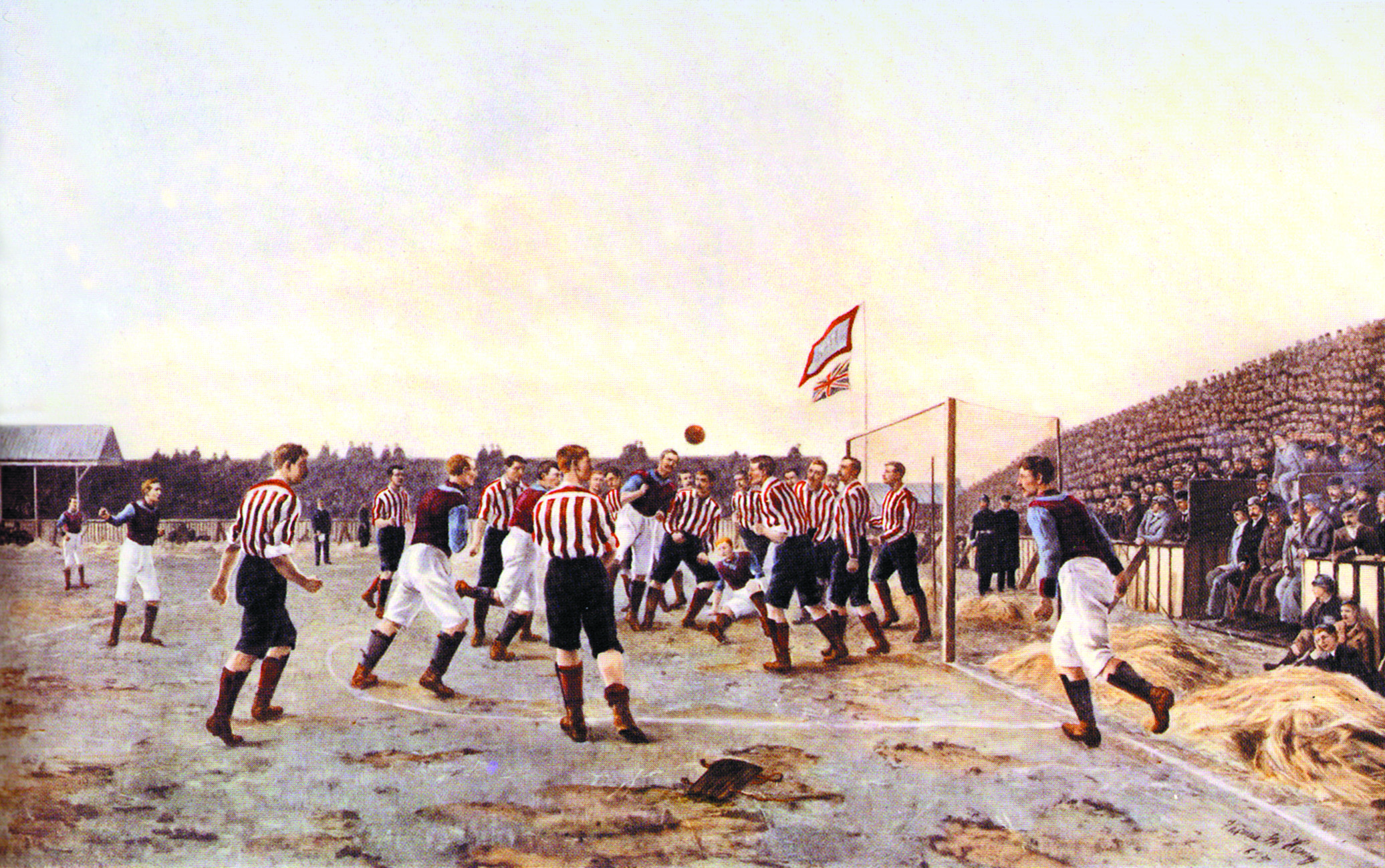
Printed large on archival paper, gallery canvas, or framed — den, club bar, and supporters’-bar sizes first-class. Here, Thomas M. M. Hemy’s canvas of 1895 hung in four very different rooms.



The curated sets
The curated sets
The Illustrated Papers · 1870s–1880s
The First Game
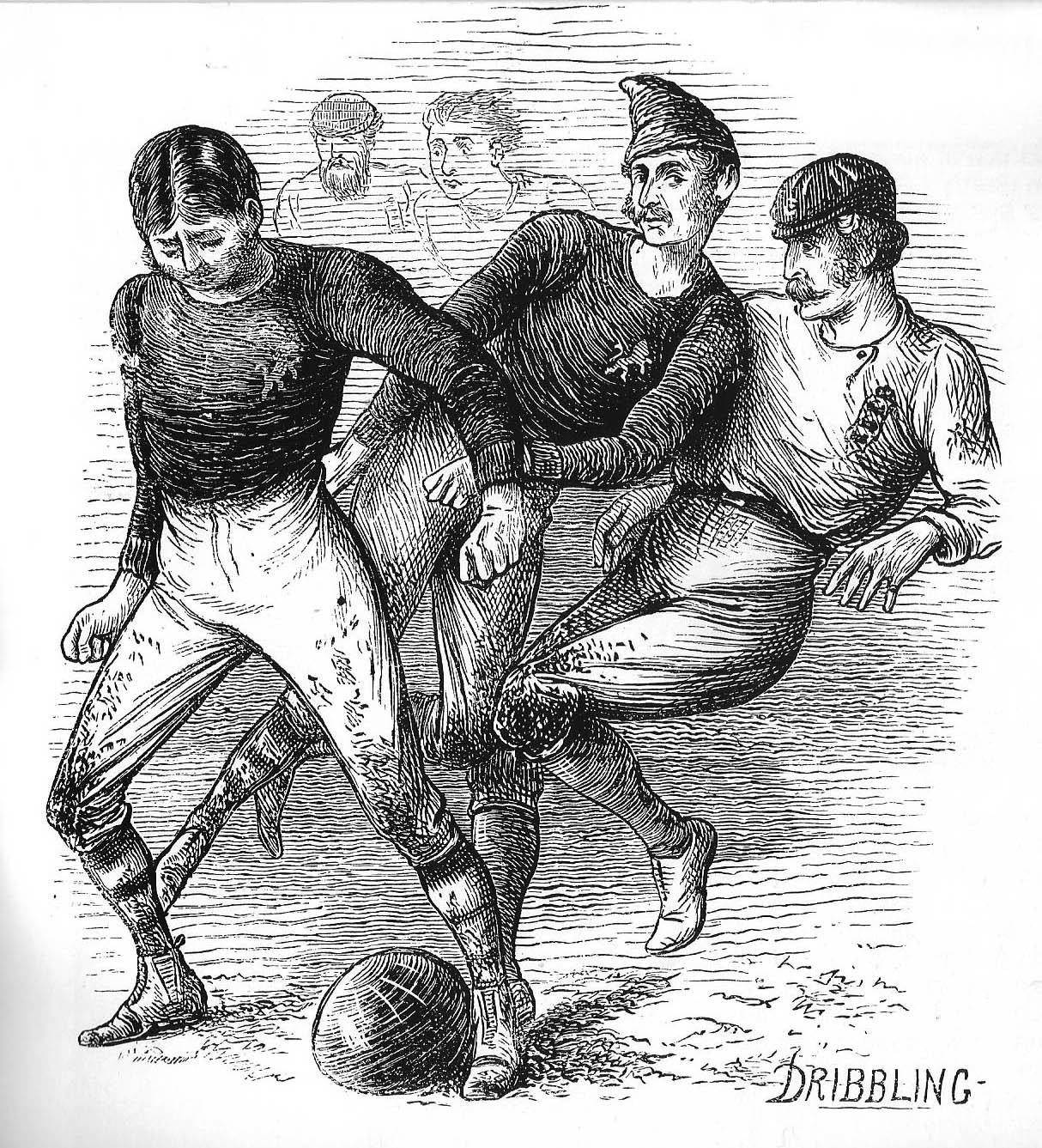
The illustrated papers’ engravings of the 1870s and 80s — the early internationals and cup ties rendered as Victorian news. Before the photograph could catch a match, the engravers did.
the illustrated papers · 1870s
An International Football Match
The new game as Victorian news — top hats on the touchline, the scrimmage in wood engraving.
Every institution was once a novelty item.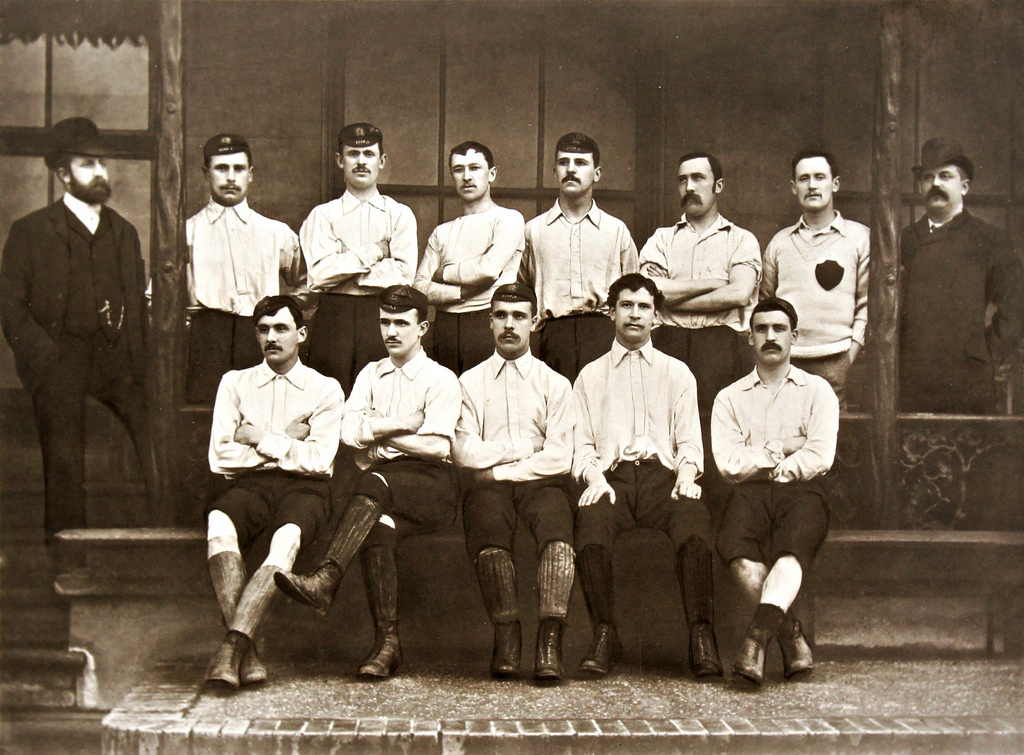
period photograph · 1888–89
The Invincibles, 1888–89
Preston North End, the first champions of the first league season — unbeaten, and photographed like it.
Some seasons never need replacing.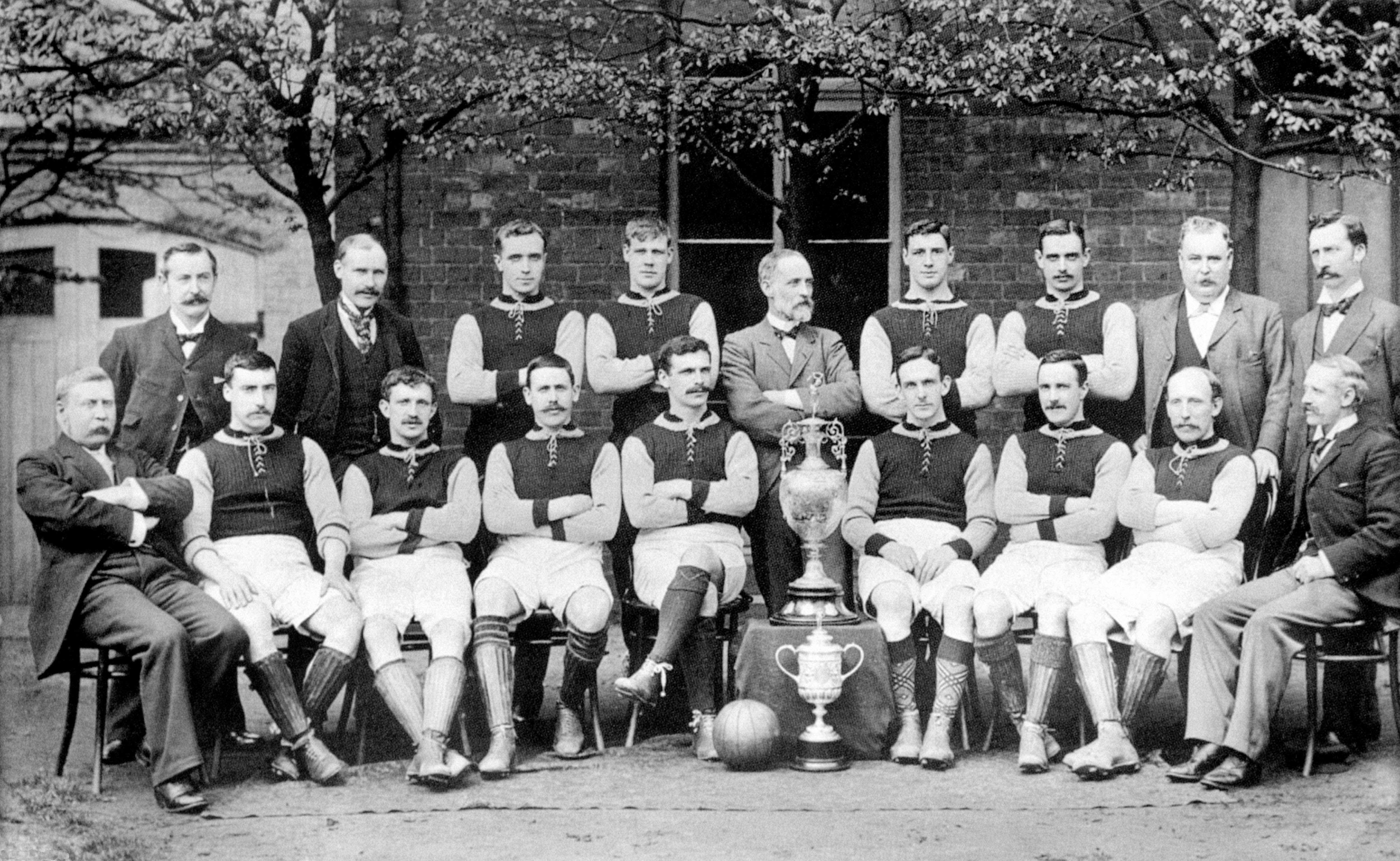
period photograph · 1896–97
The Double Winners, 1896–97
League and Cup in one season — the Victorian double, photographed at full plumage.
Sixty-four years passed before it was done again.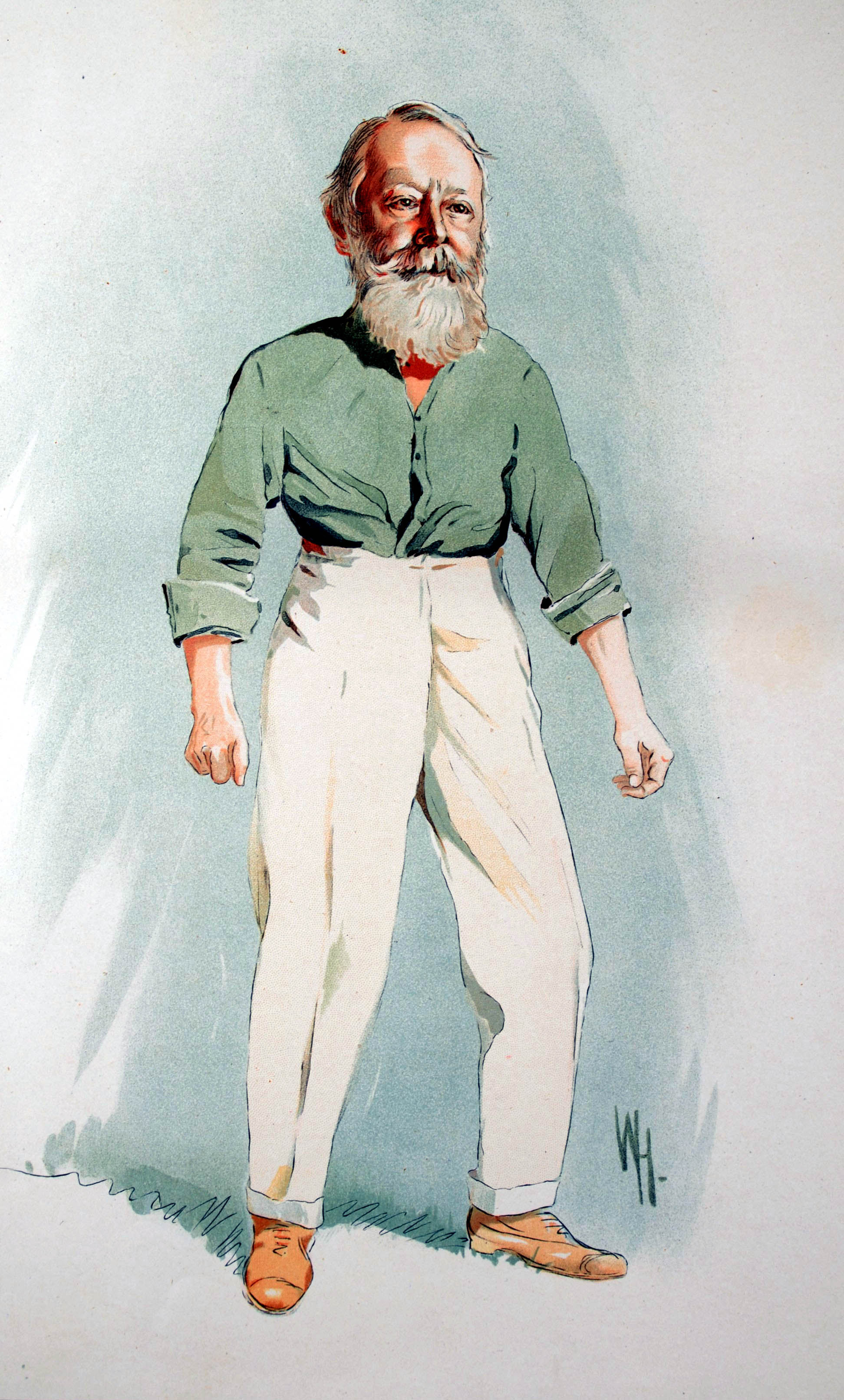
Vanity Fair · 1912
Lord Kinnaird, by Vanity Fair
Nine Cup finals, five winner’s medals, one red beard — the great amateur, in chromolithograph.
The first celebrity of the game tackled like a landslide.Newcastle Road, Sunderland · 1895
The Painted Match
Thomas M. M. Hemy’s Sunderland v. Aston Villa (1895) leads — the game’s great Victorian canvas, the sport admitted to the gallery while still in its boyhood.
Thomas M. M. Hemy · 1895
Sunderland v. Aston Villa
The great Victorian football canvas — the match in oil, mid-attack, the crowd packed to the touchline.
Somebody always sees the future first and paints it.Crystal Palace 110,000 · Wembley 126,047
The Crowd
The Crystal Palace cup-final panoramas and the 1923 White Horse Final at Wembley — the terraces as the subject. A crowd this size is a kind of weather.
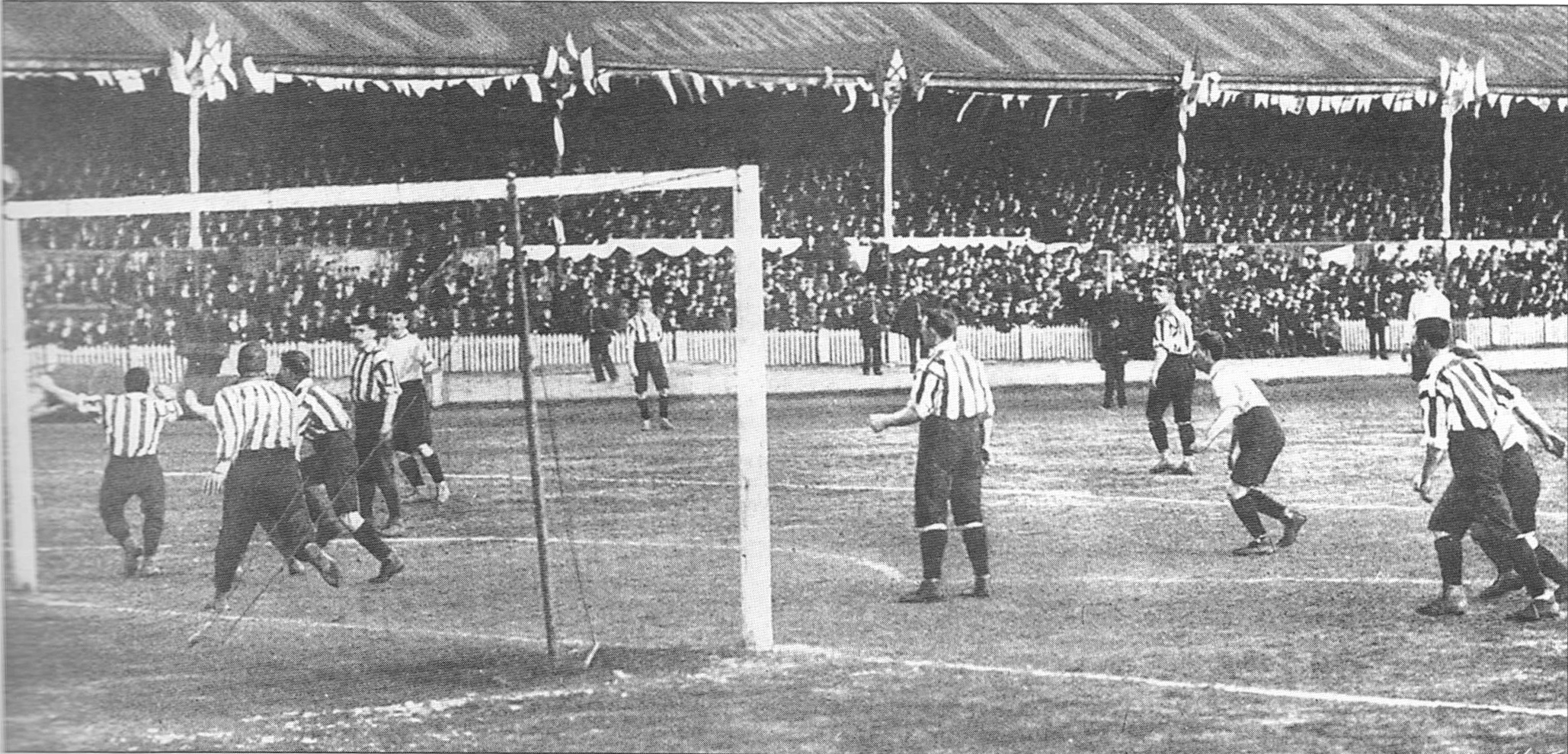
press photograph · 1901
The Cup Final at the Crystal Palace
A hundred and ten thousand on the slopes of the Palace grounds, the pitch a distant rumor.
A crowd this size is a kind of weather.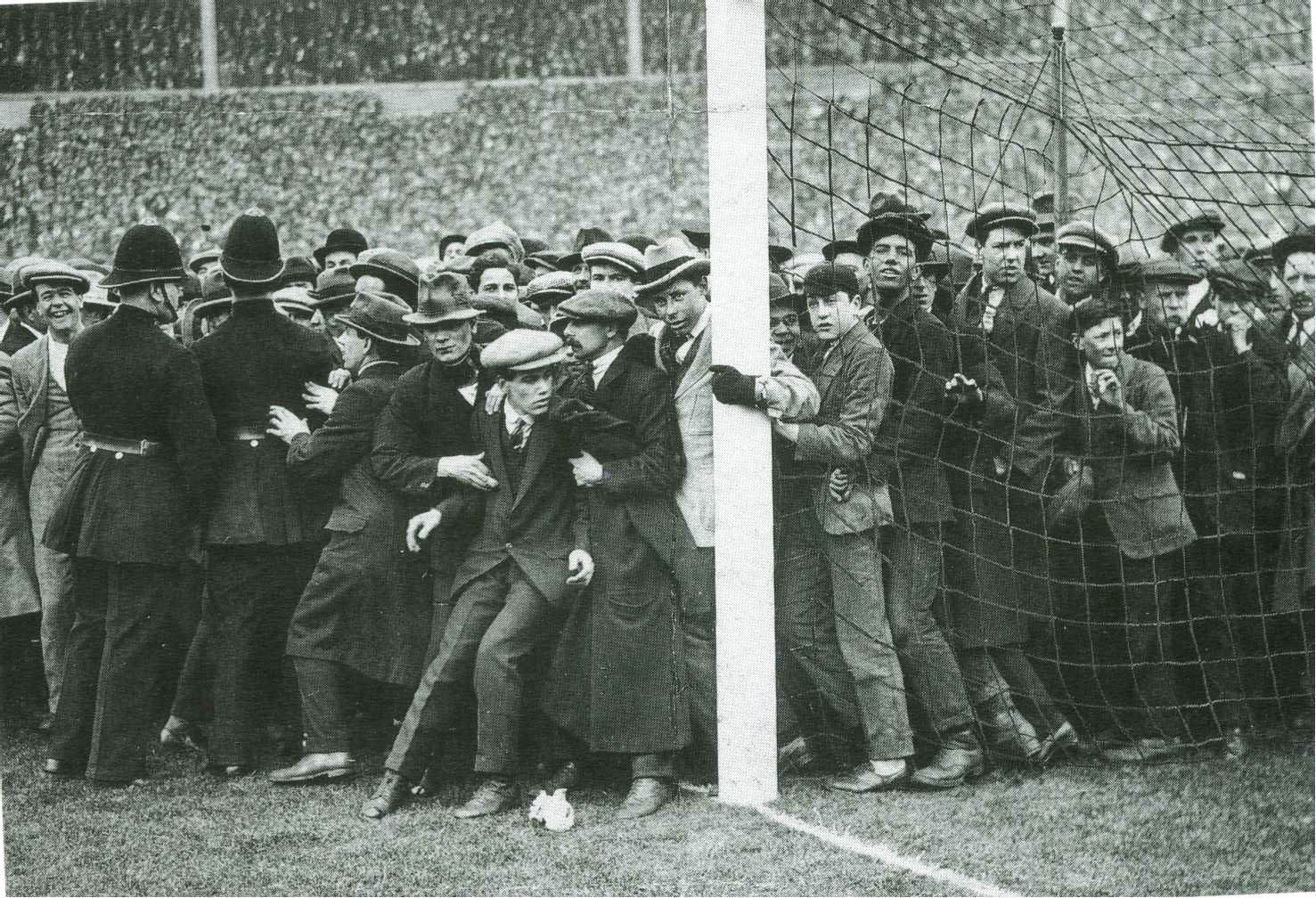
press photograph · 1923
The White Horse Final
Billie the grey police horse, alone in a sea that swallowed the pitch — Wembley’s first final.
The game belongs to whoever shows up.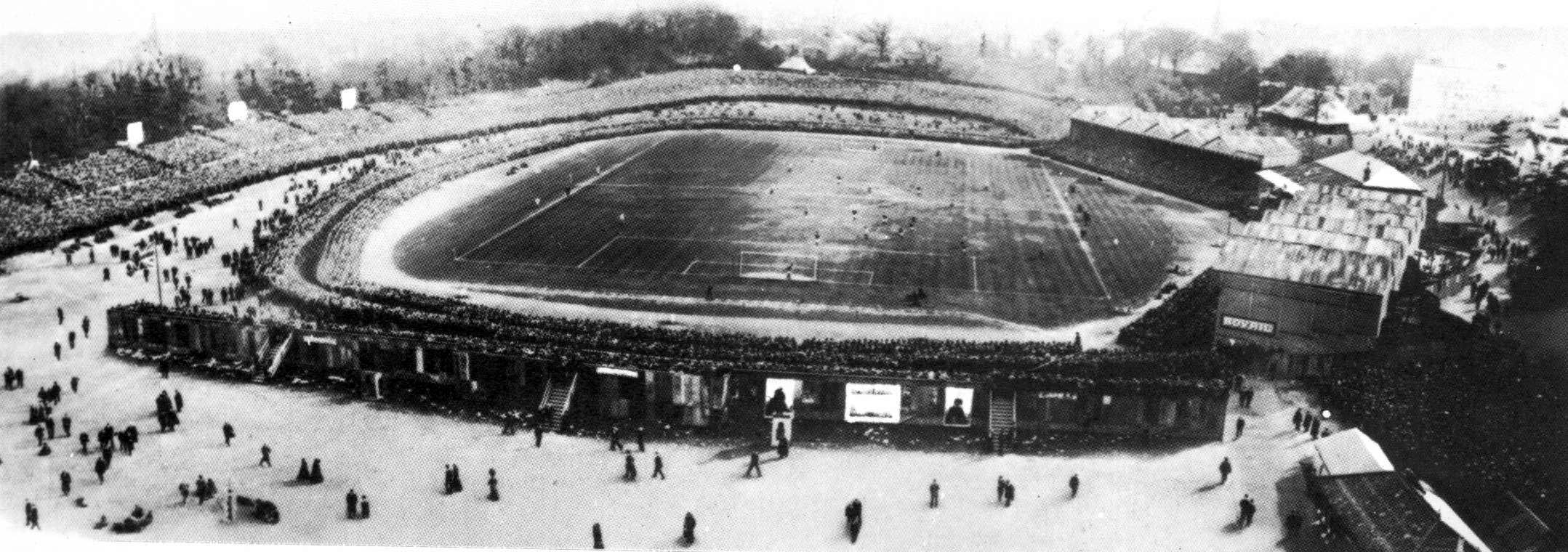
press photograph · 1905
The Cup Final Crowd, 1905
The Palace slopes at their Edwardian height — the hillside as grandstand, the hats as weather.
The gathering was the story.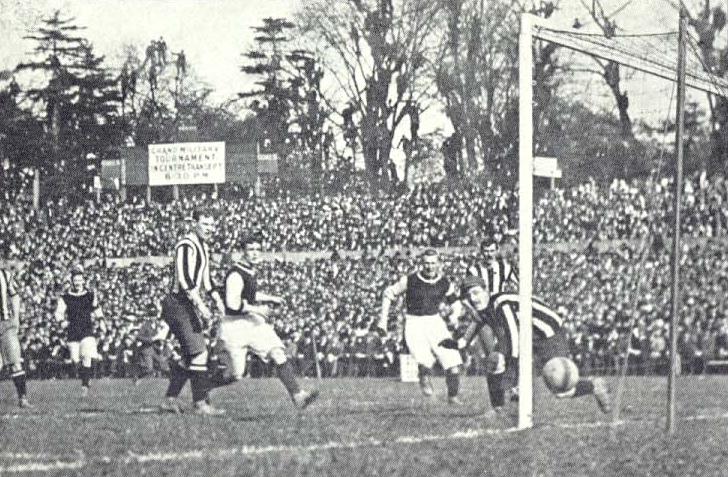
press photograph · 1905
The Final in Play, 1905
Aston Villa and Newcastle United at the Palace — the Edwardian final caught mid-motion.
The shutter gave the game its first evidence.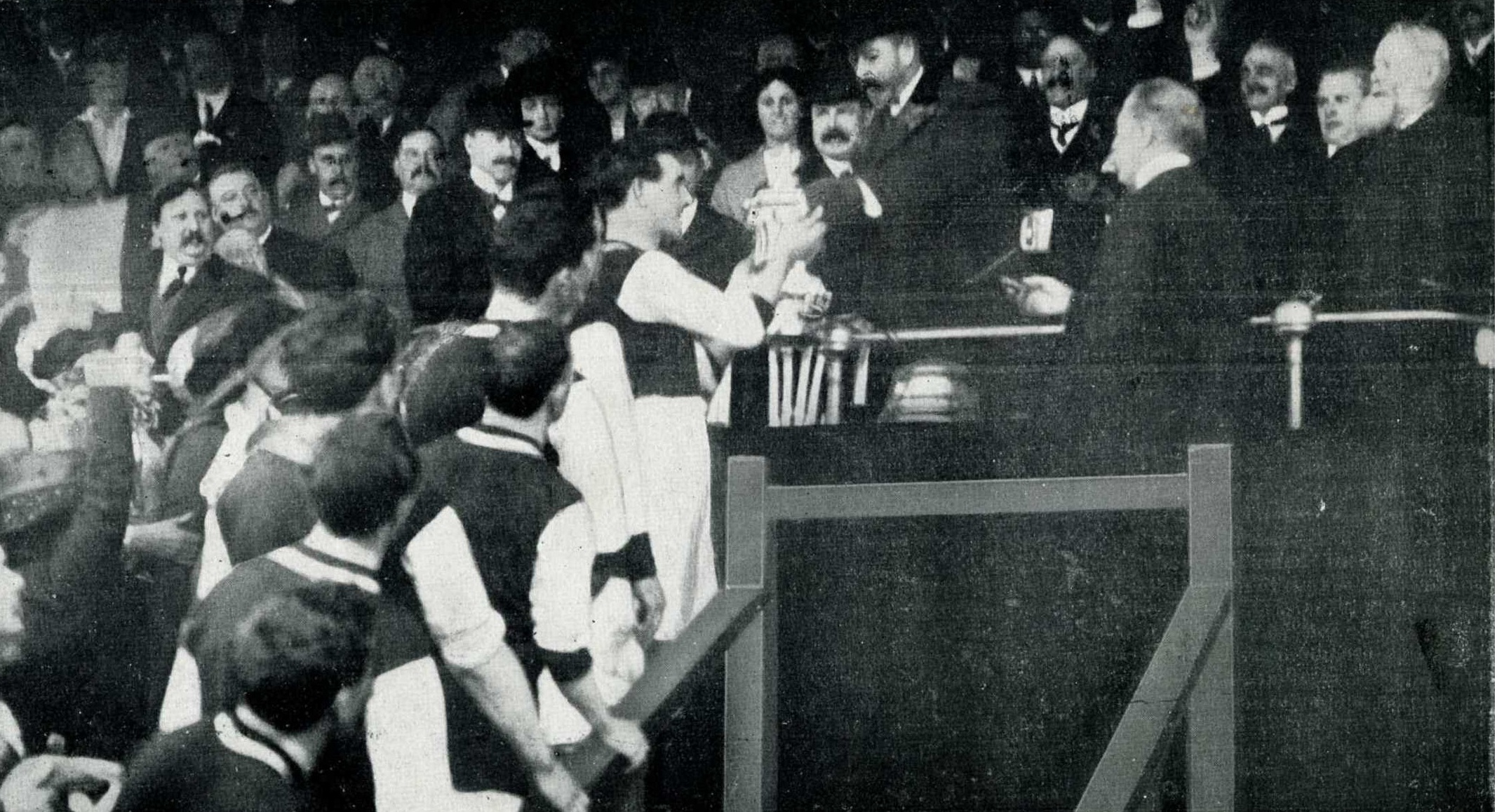
press photograph · 1914
The King at the Final, 1914
George V presents the Cup at the Palace — the first monarch ever to attend a final.
The game joined the national furniture.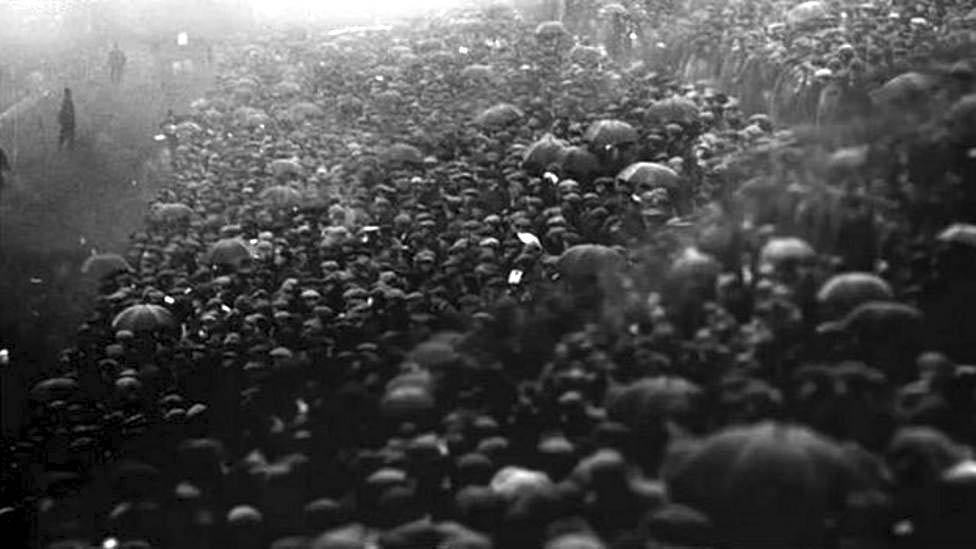
press photograph · 1915
The Khaki Final, 1915
The last final before the guns — the terraces half in uniform, the game about to stop.
The fixture list is a kind of peace treaty.J. Baines Ltd., Bradford · 1880s–1900s
The Card Collection
Pre-1931 footballer cards: the Baines shield cards of Bradford and the cigarette-card era. The playground currency of the first football generation — sold singly and as framed flights, because the set is the product.
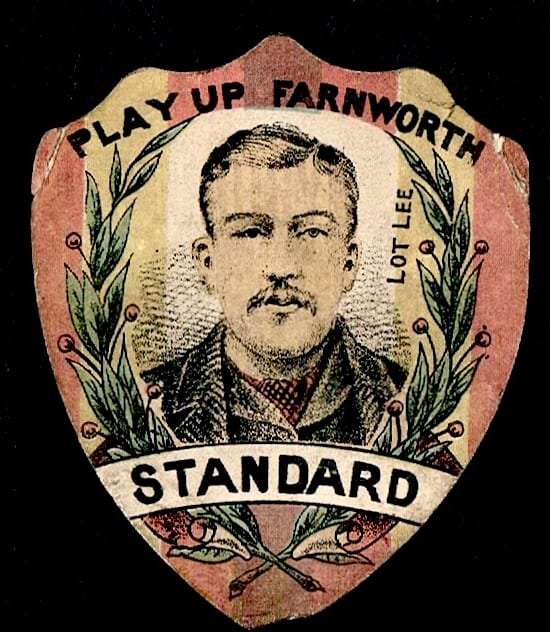
J. Baines Ltd., Bradford · 1880s–1900s
Baines Shield Cards (framed flight)
The playground currency of the first football generation — shield-shaped chromolith cards, bold as banners.
Collecting is the first form of supporting.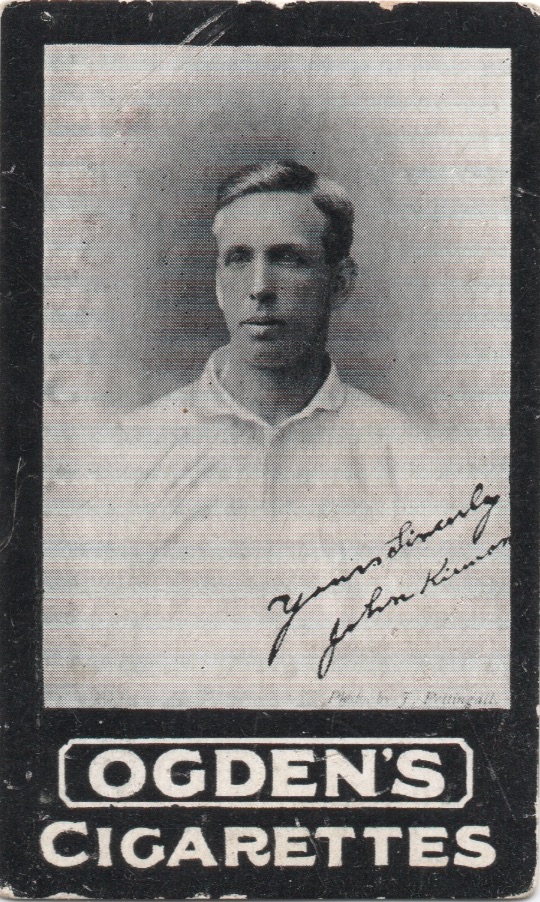
tobacco card lithographers · c. 1908
Footballers of the Edwardian Series (framed flight)
The Edwardian professionals in chromolith miniature — arms folded, hair parted, immortal at two inches tall.
Fame used to fit in a waistcoat pocket.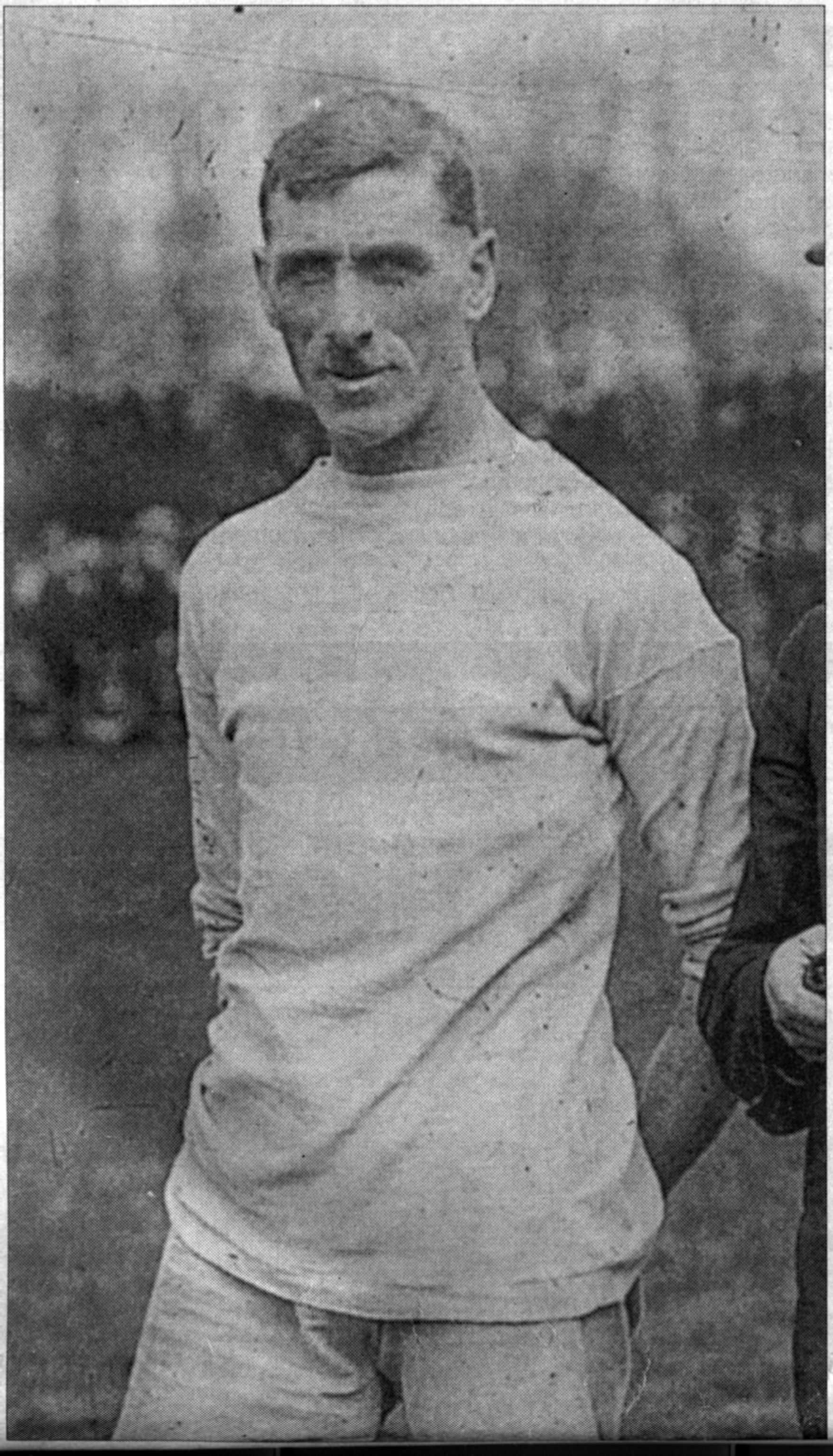
period photograph · c. 1905
Billy Meredith
The Welsh wizard at the wing, toothpick in place — the game’s first superstar, thirty seasons long.
Longevity is the rarest trophy.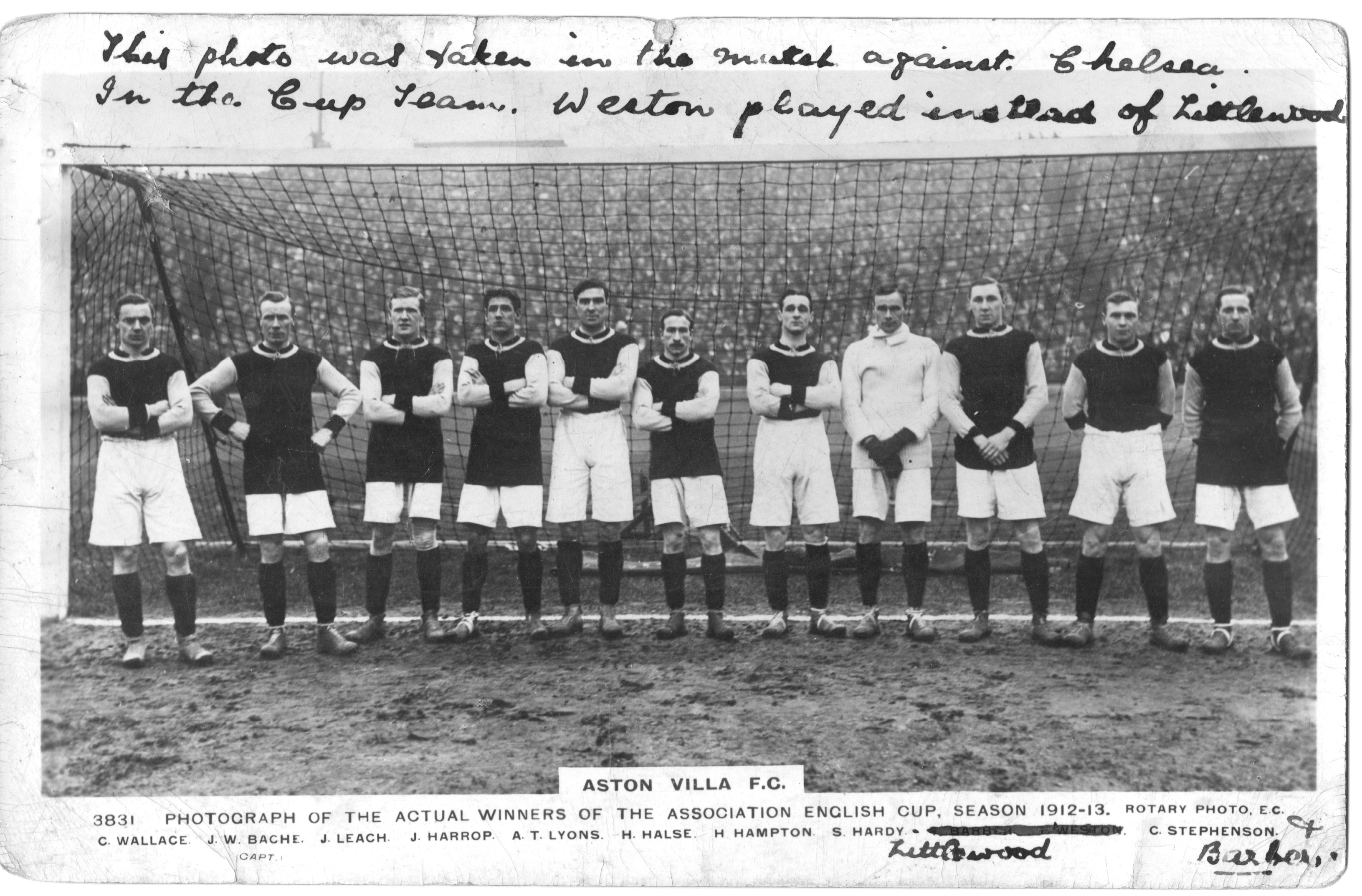
postcard publishers · 1913
The Cup Winners’ Postcard, 1913
The team as a picture postcard — Edwardian football’s answer to the broadcast.
The postman was the first football broadcaster.Goodison Park, Boxing Day 1920 · 53,000
The Dick, Kerr Ladies
The women’s game at its first peak, 1917–1921 — the munitionettes of Preston, the best-drawing side in Britain, and the 53,000 who paid at Goodison Park.
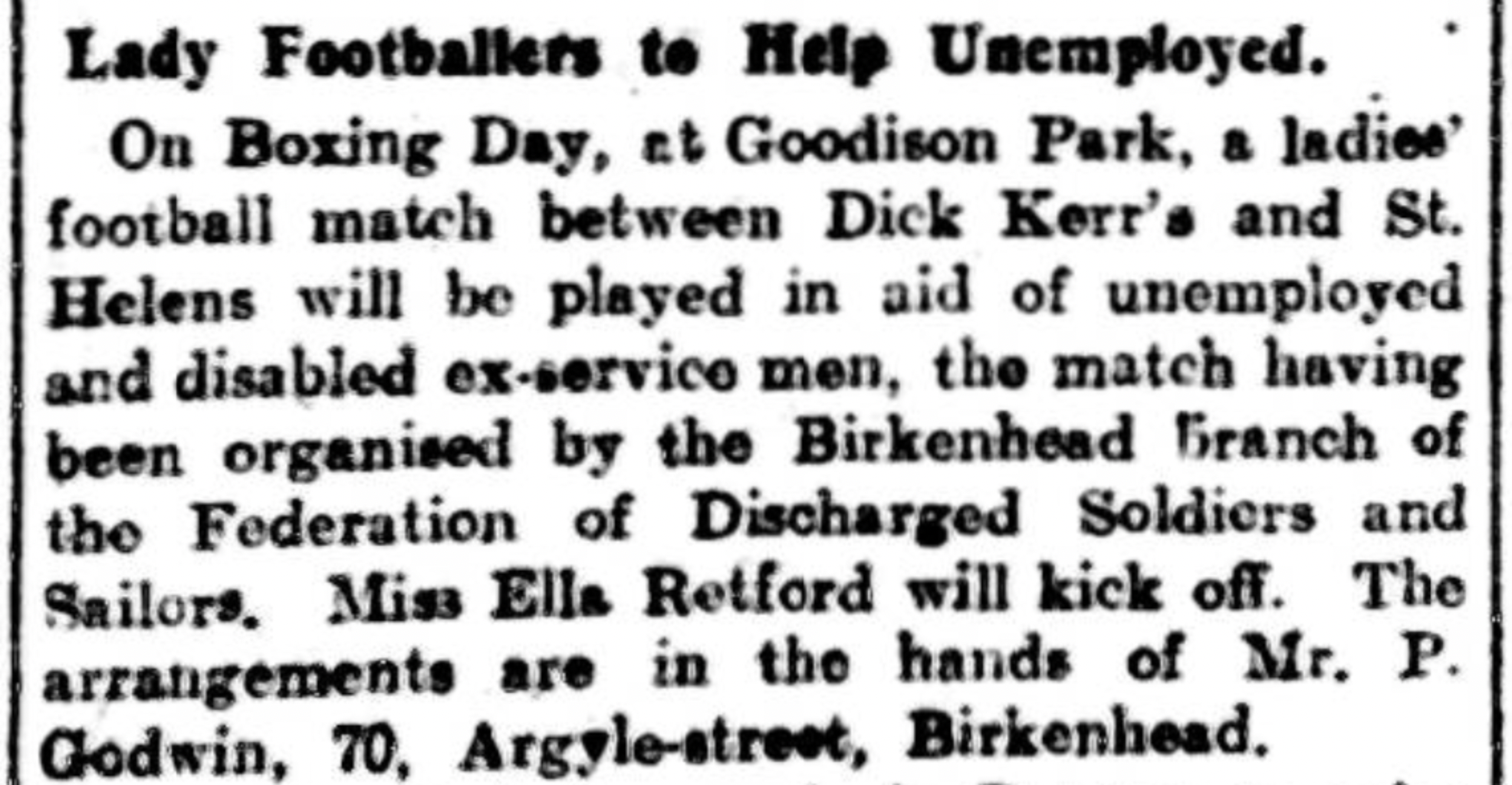
press photograph · 1920
The Dick, Kerr Ladies at Goodison Park
Boxing Day 1920: fifty-three thousand paid to watch the munition works’ team.
The gate receipts knew the truth first.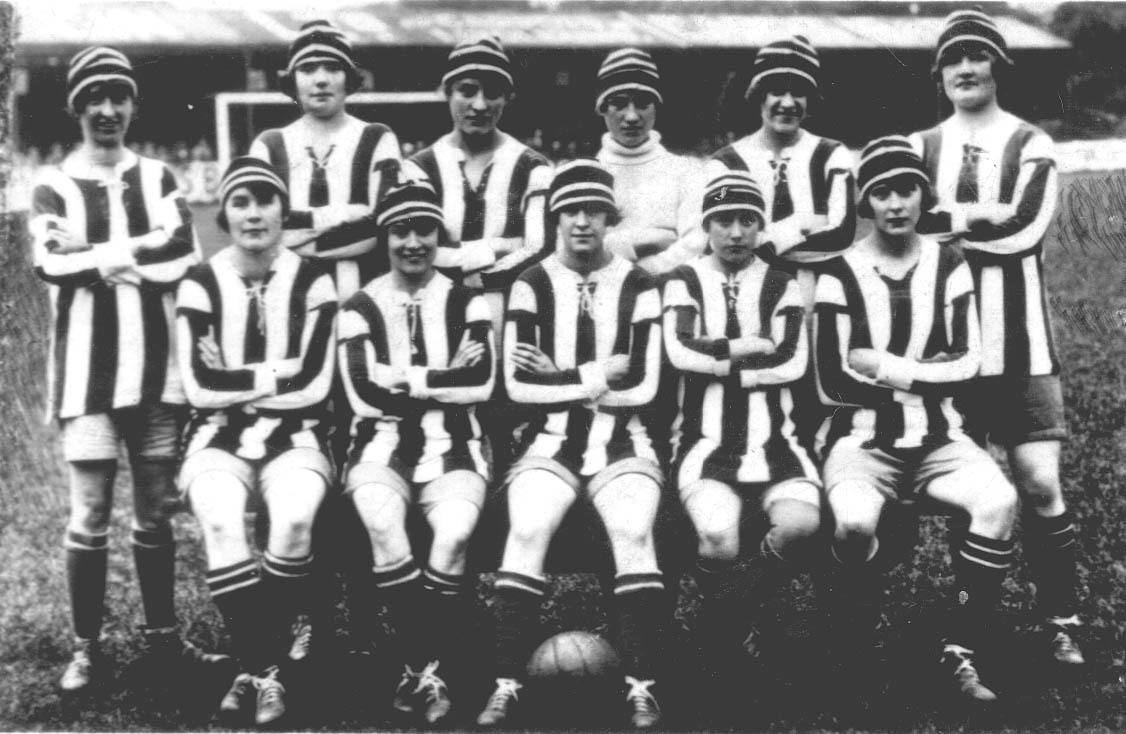
period photograph · c. 1921
The Dick, Kerr Ladies (team photograph)
The team in stripes and bobbed hair — factory workers who became the best-drawing side in Britain.
History keeps the team sheet.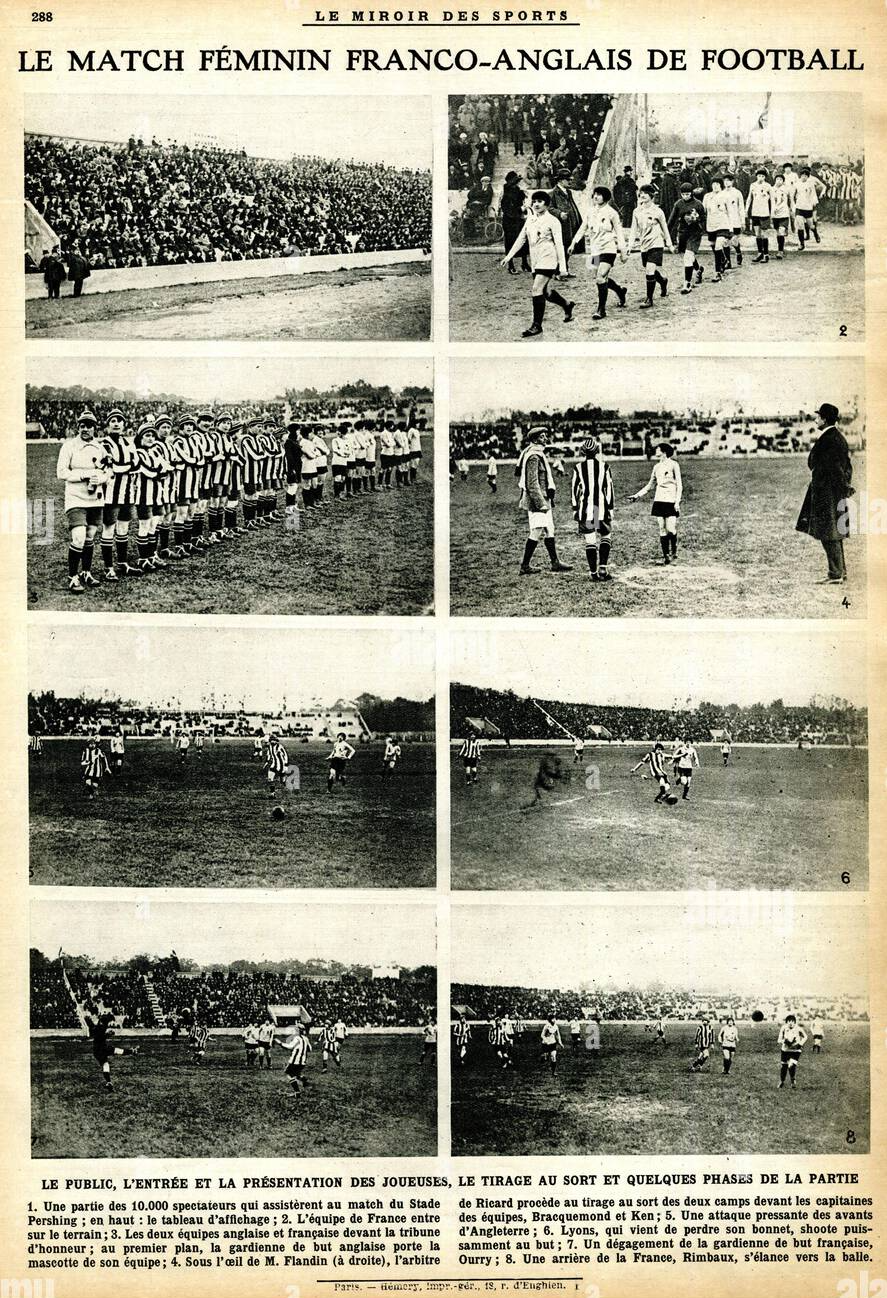
the French sporting press · 1920
France v. England, November 1920
The women’s international as a magazine cover — the game’s first golden age, printed in Paris.
The magazines had already printed the truth.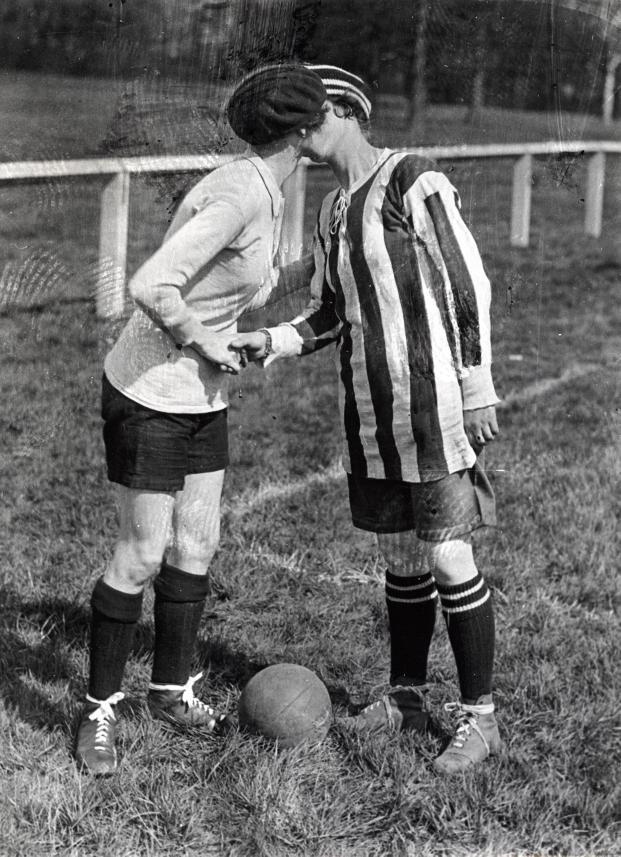
press photograph · c. 1921
The Pre-Match Kiss
Dick, Kerr’s captain and her opposite number — the handshake the women’s game improved on.
The fixture ran on its own manners.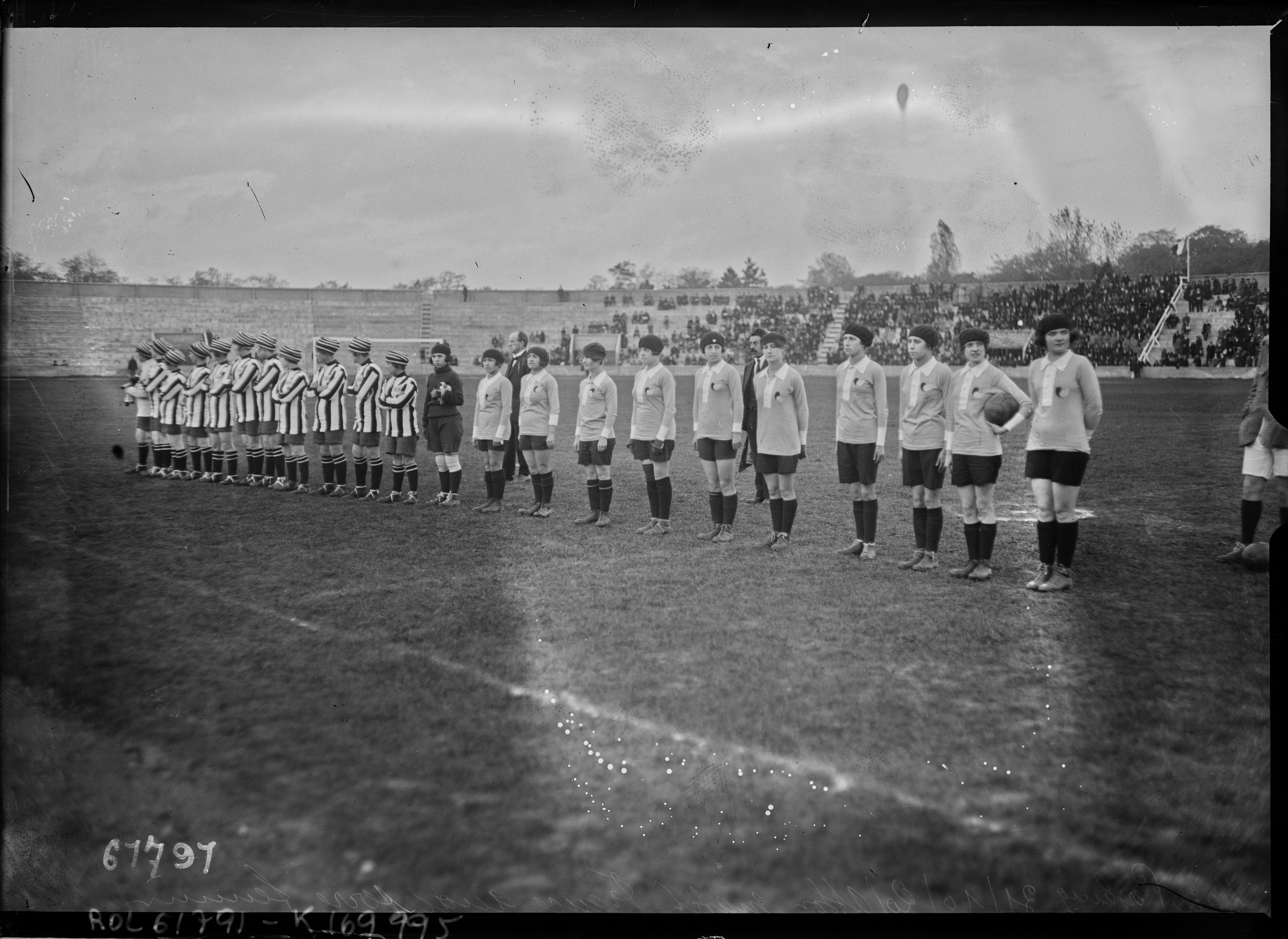
Agence Rol · 1920
France v. England, Paris, 31 October 1920
The women’s international in play — thirteen months before the English ban.
The ban was not a response to failure.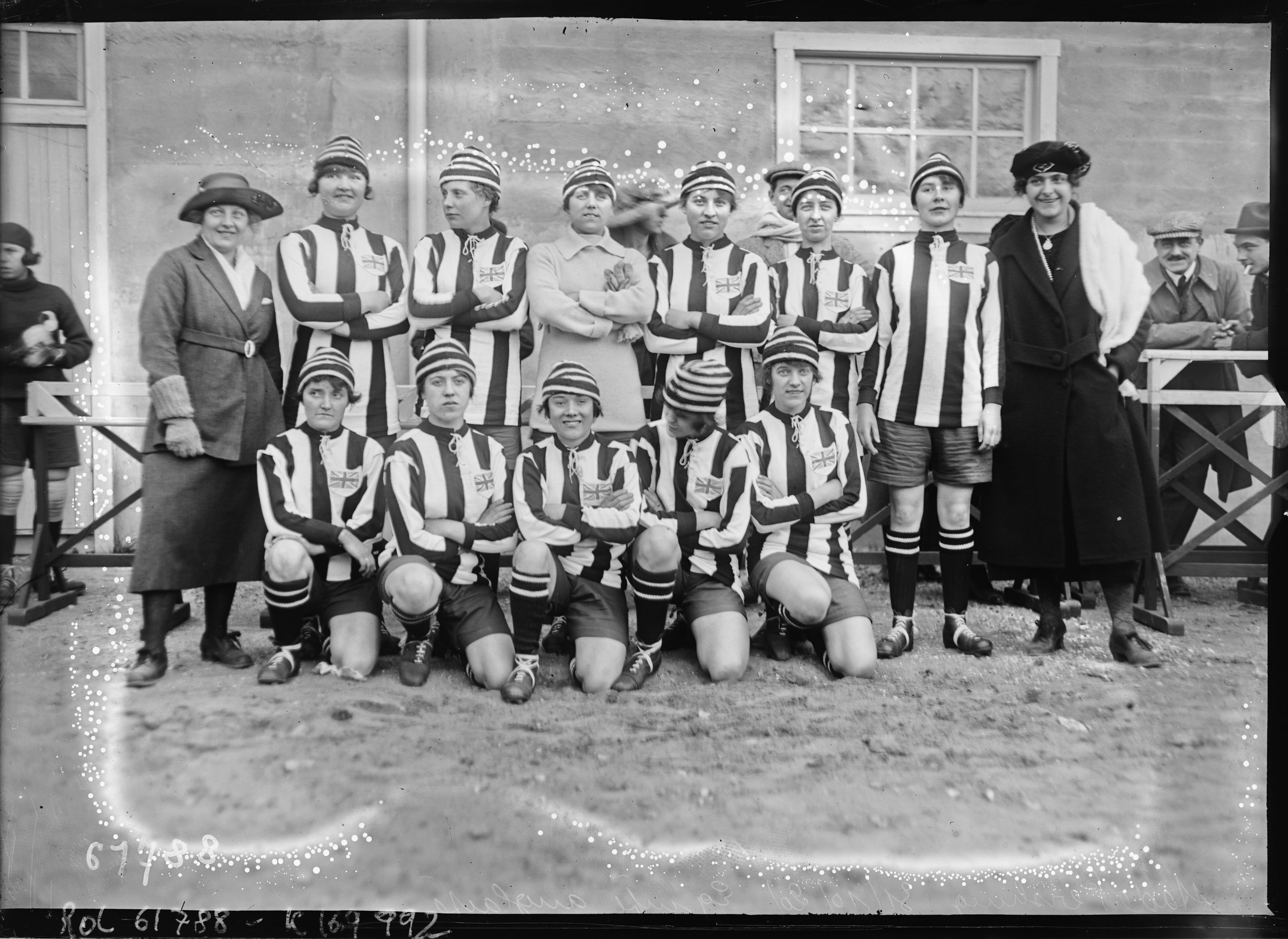
Agence Rol · 1920
The England Eleven, Paris, 1920
The touring side, in the standard pose — arms folded, ball in front, the year on it.
They stood for the same photograph, because they were footballers.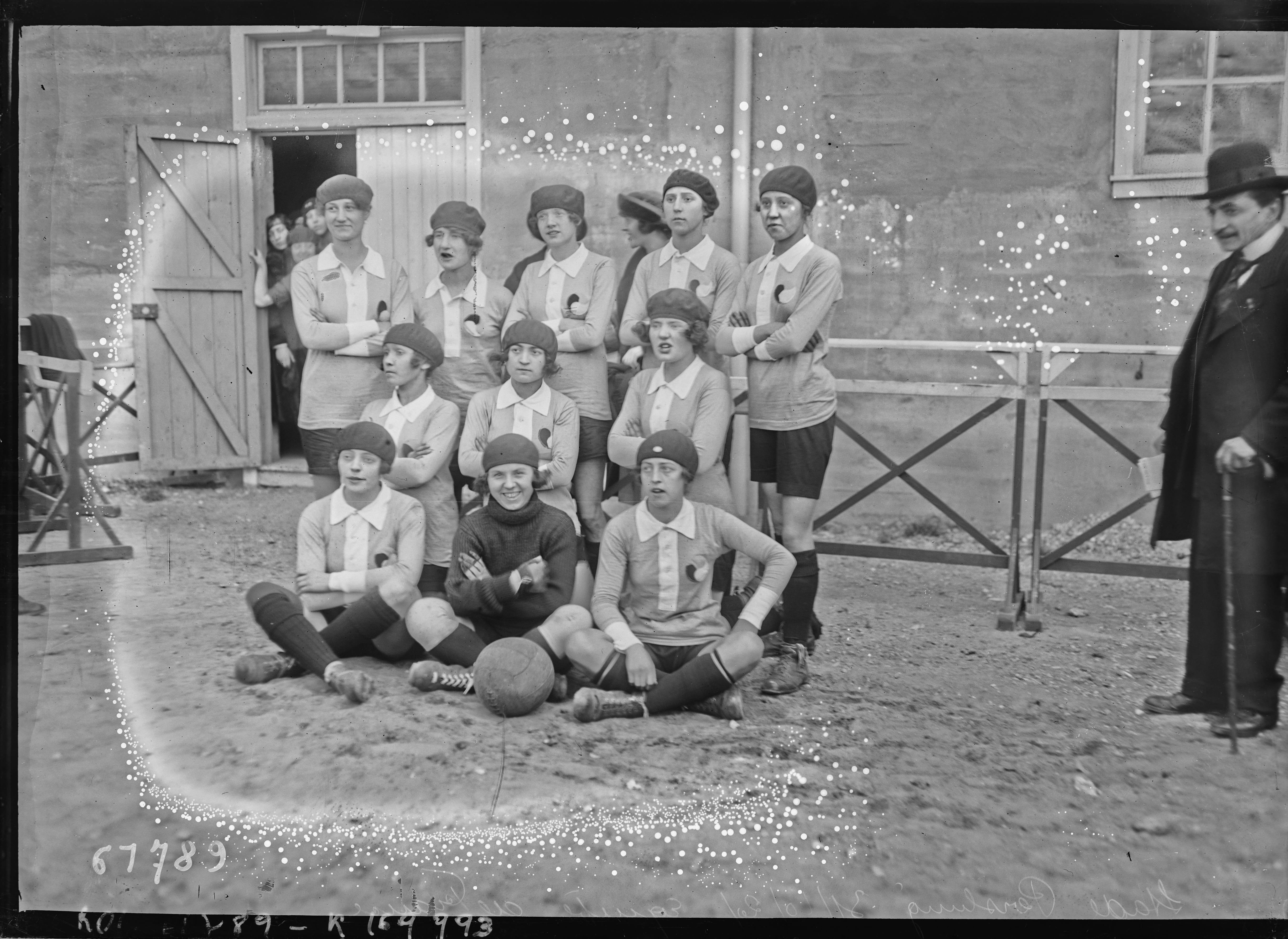
Agence Rol · 1920
The France Eleven, Paris, 1920
The French women’s side — a national team, four years before the men’s game noticed.
The record exists because somebody thought it worth a plate.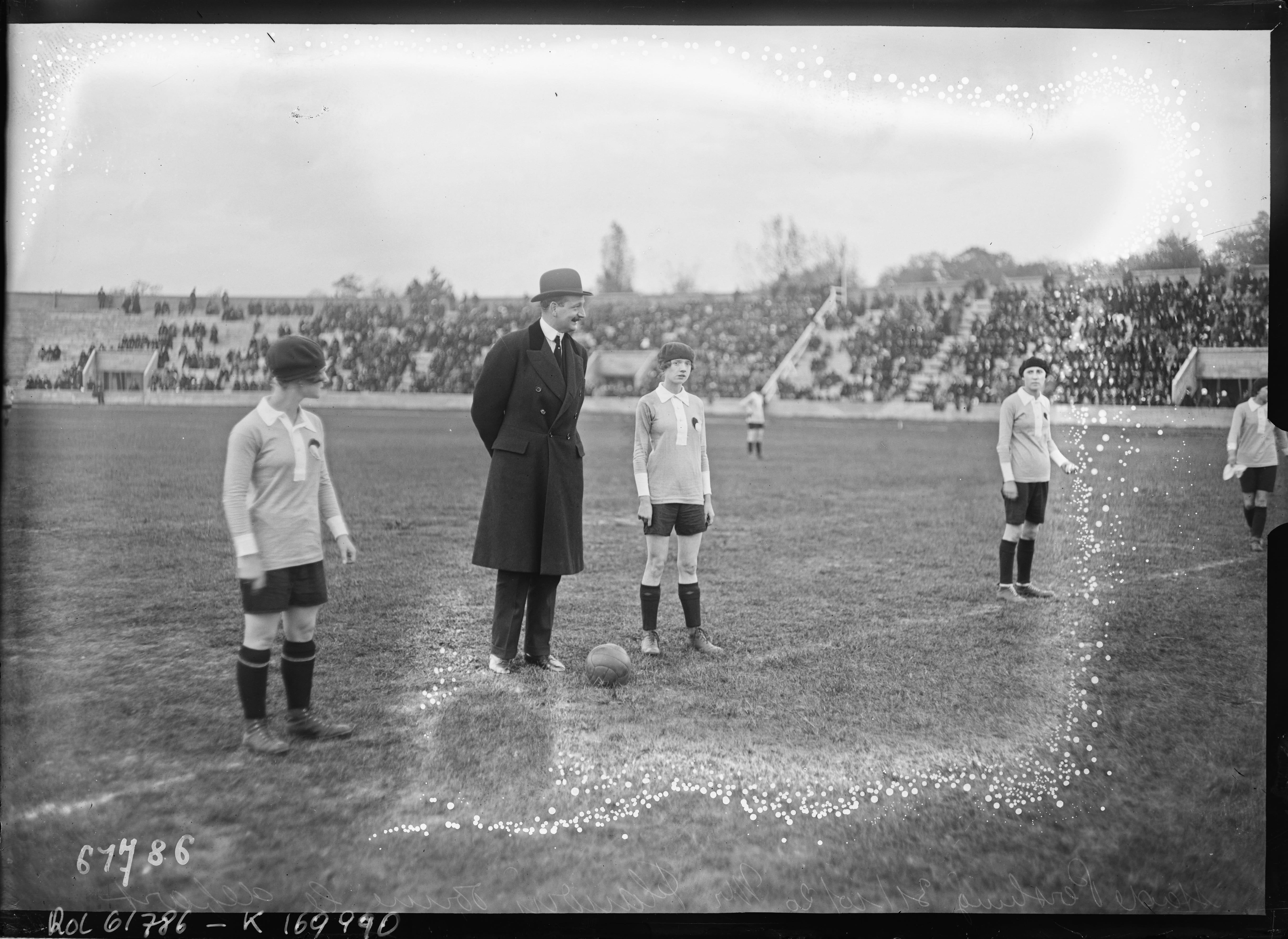
Agence Rol · 1920
The Kick-Off, Paris, 31 October 1920
A government minister starts the women’s international — the establishment, present and approving.
The establishment showed up. Then, deliberately, it left.Montevideo · July 1930
El Primer Mundial
Montevideo, 1930 — the newly unlocked wing. Laborde’s tournament poster and the Estadio Centenario, published 1930 and public domain in the United States as of January 2026. The newest old thing in the portfolio.
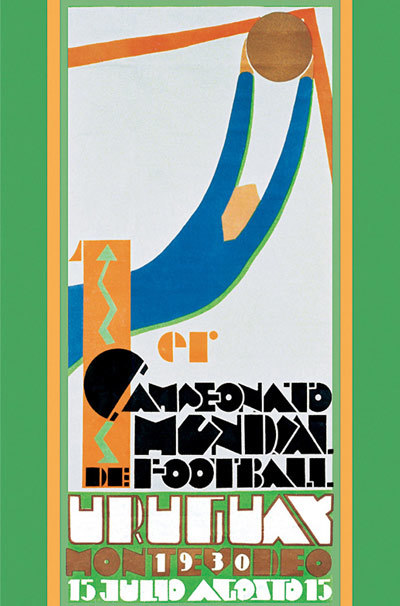
Guillermo Laborde · Montevideo, 1930
El Primer Campeonato Mundial de Football
The deco goalkeeper reaching across the sky — the poster of the first World Cup.
Every century’s game has a first morning.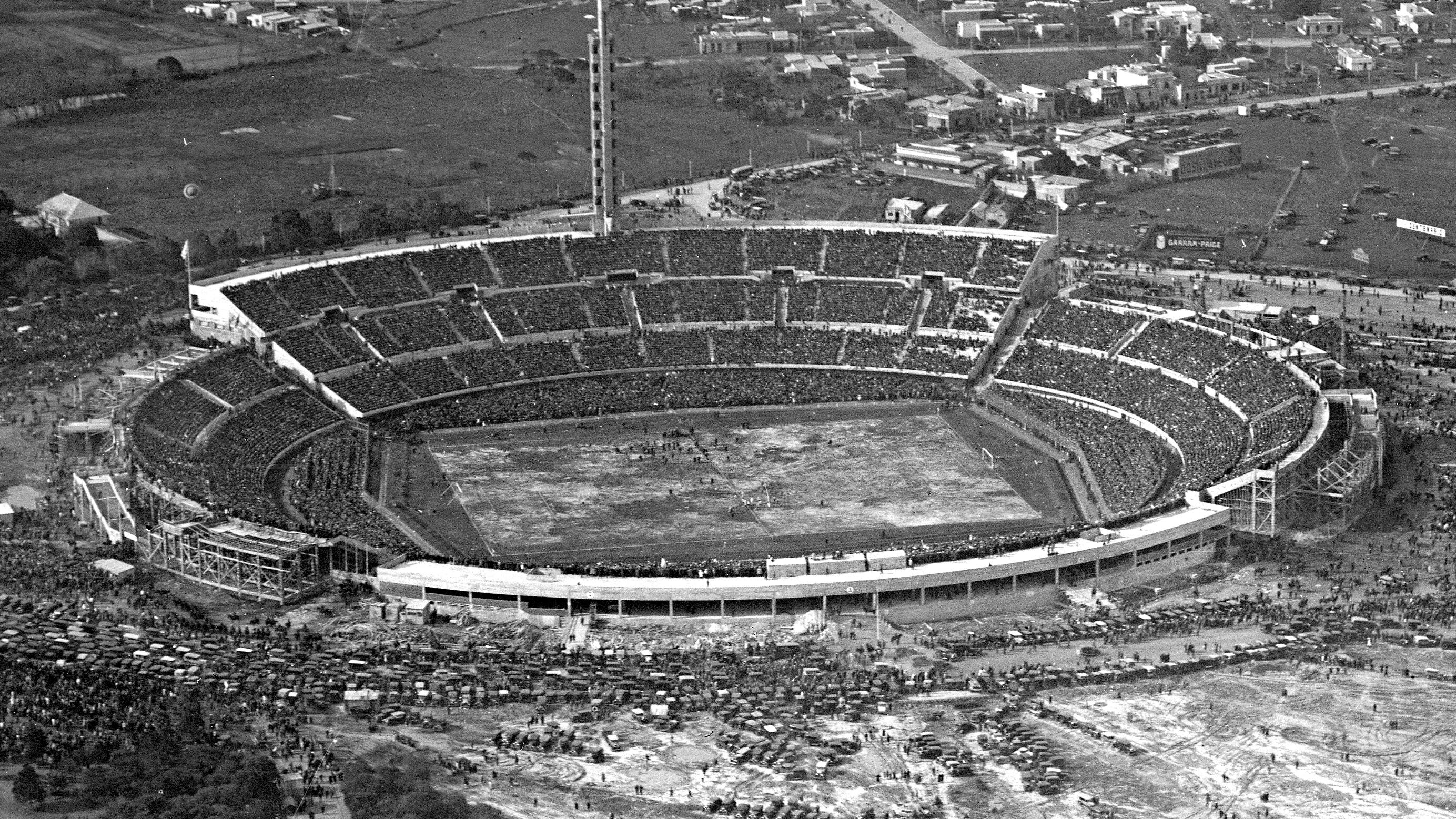
period photograph · Montevideo, 1930
The Estadio Centenario, Opening Year
The stadium Uruguay raised for its centenary and the world’s first cup — concrete still curing as the teams arrived.
Build it before the legend, and the legend moves in.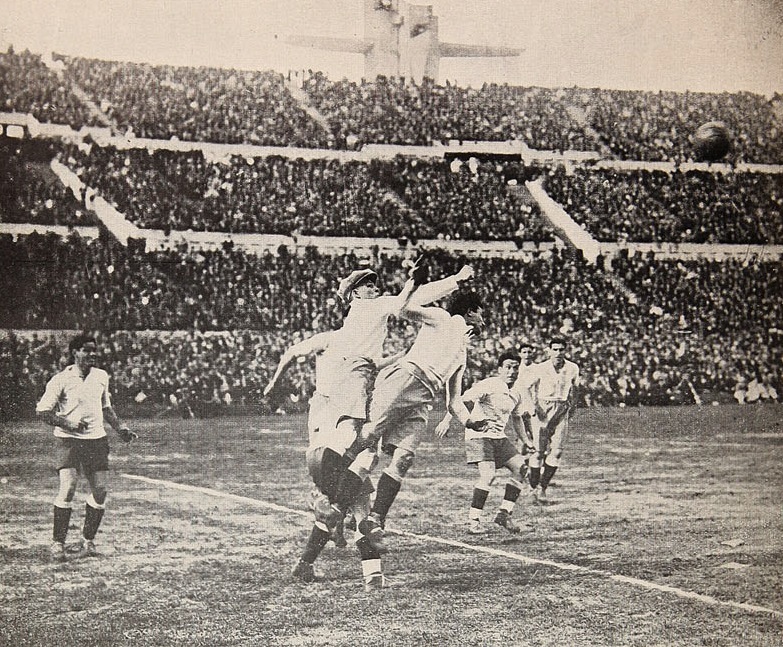
Los Sports magazine · 1930
The First Final: Uruguay v. Argentina
The 30th of July, 1930 — the world’s first final, from the pages of Los Sports.
The century’s tournament began as a magazine spread.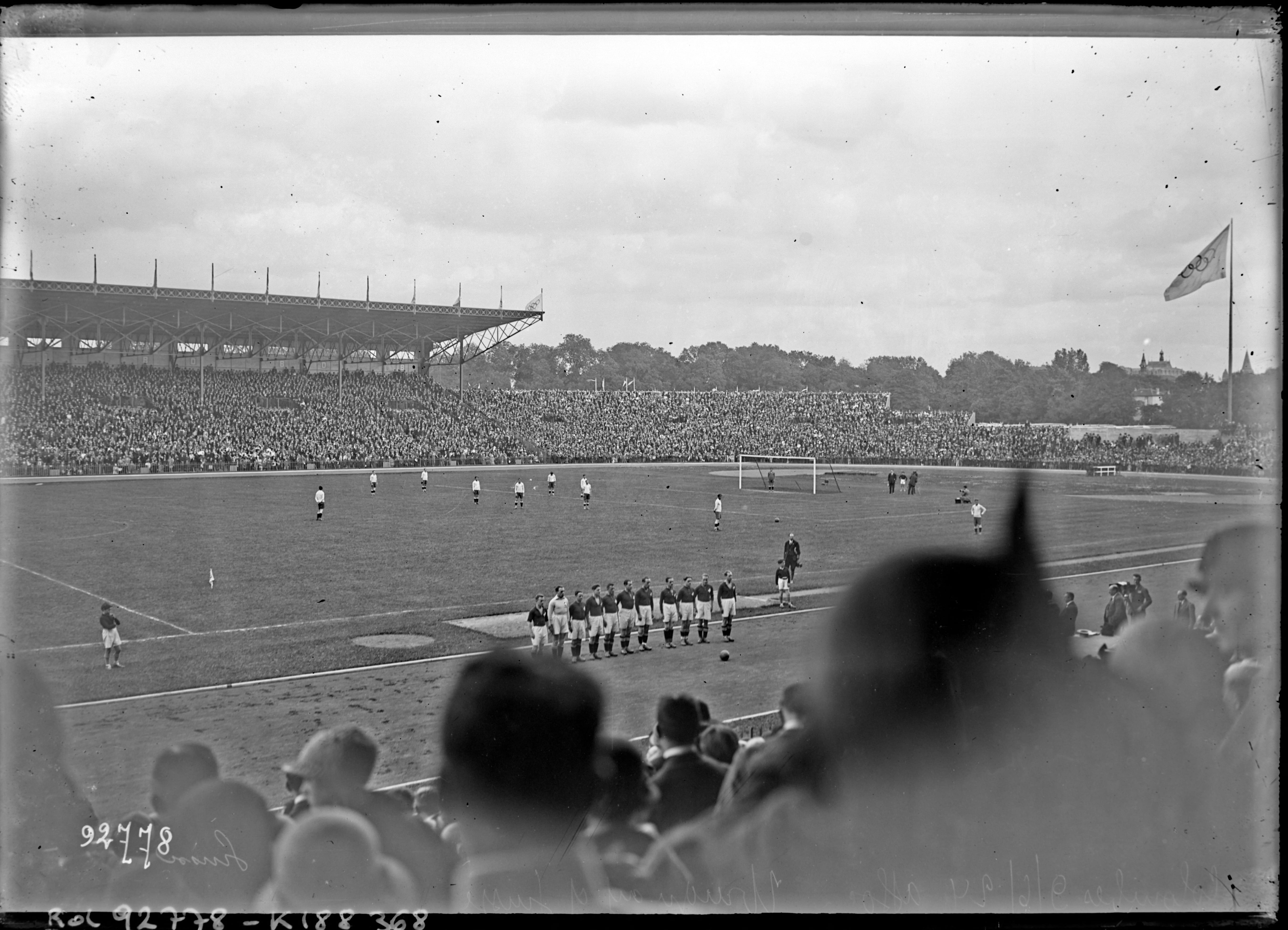
Agence Rol · 1924
The Olympic Final, Colombes, 9 June 1924
Uruguay against Switzerland for the world title before there was a World Cup.
Won by a country of a million and a half.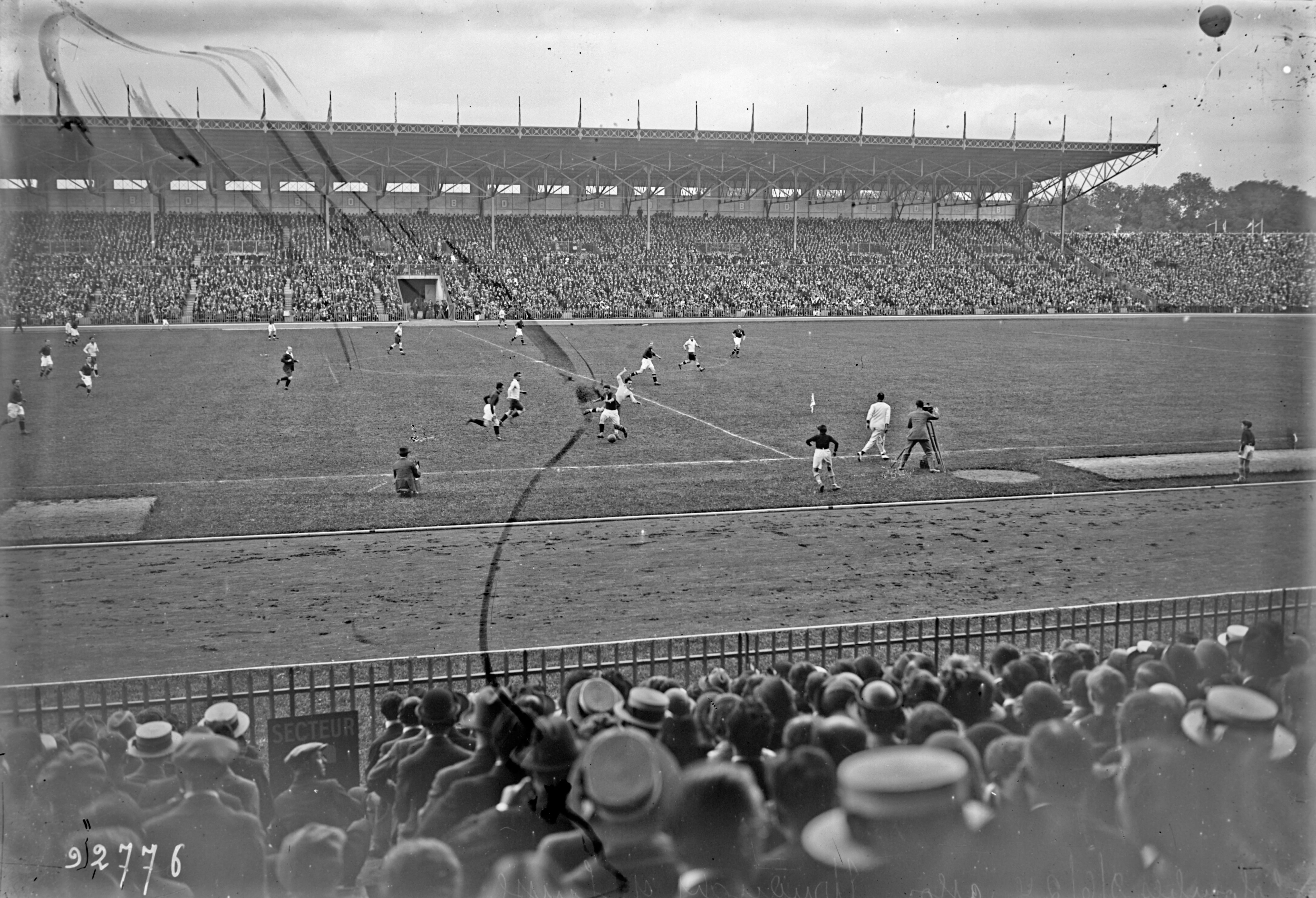
Unknown photographer · 1924
Colombes, the Final in Play, 1924
The 1924 final from the terrace side — the match that made Uruguay the game’s teachers.
They came to win a tournament and left having changed the subject.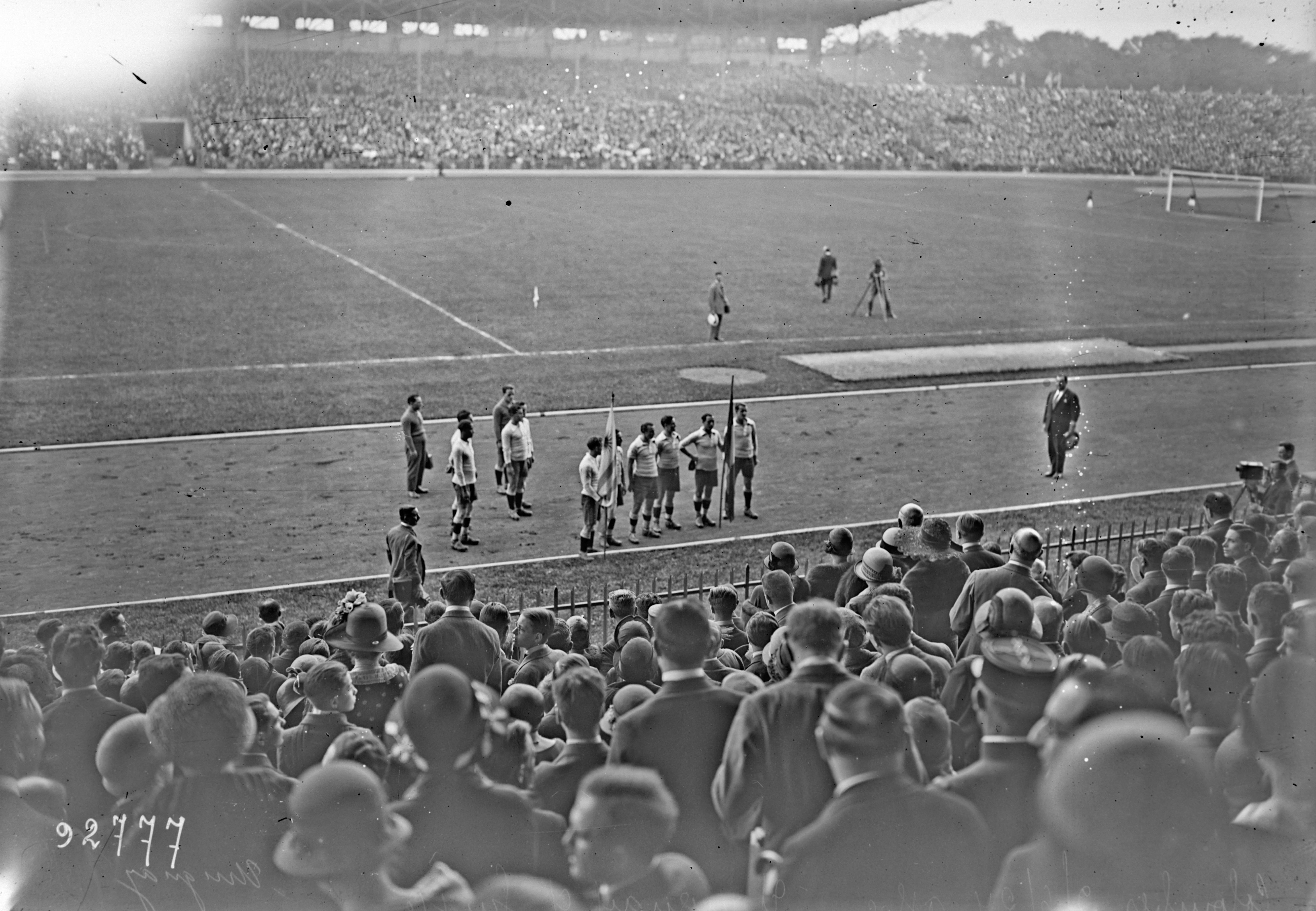
Unknown photographer · 1924
The Uruguay Eleven, Colombes, 1924
The team photograph of the first world champions, taken on the day.
The same eleven men, twice, six years apart.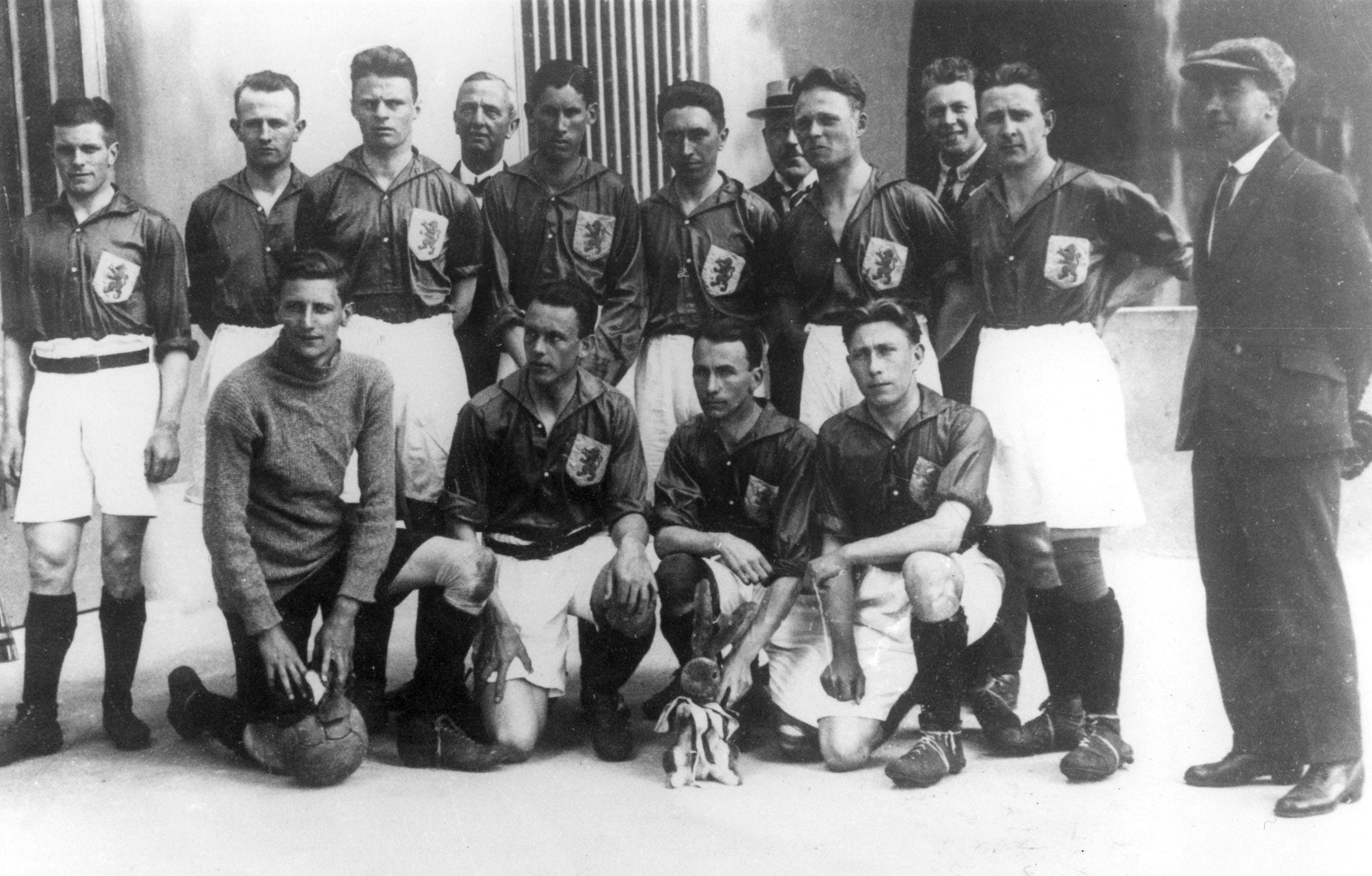
Unknown photographer · 1924
The Dutch Eleven Before Uruguay, 1924
A team photographed minutes before the semi-final that ended their tournament.
Half of football history is the photograph taken just before.Jobbing printers · c. 1910
The Match Bill
Period letterpress fixture bills and programmes — the typography of Saturday. The kick-off hour, the admission price, the exclamation points earned.
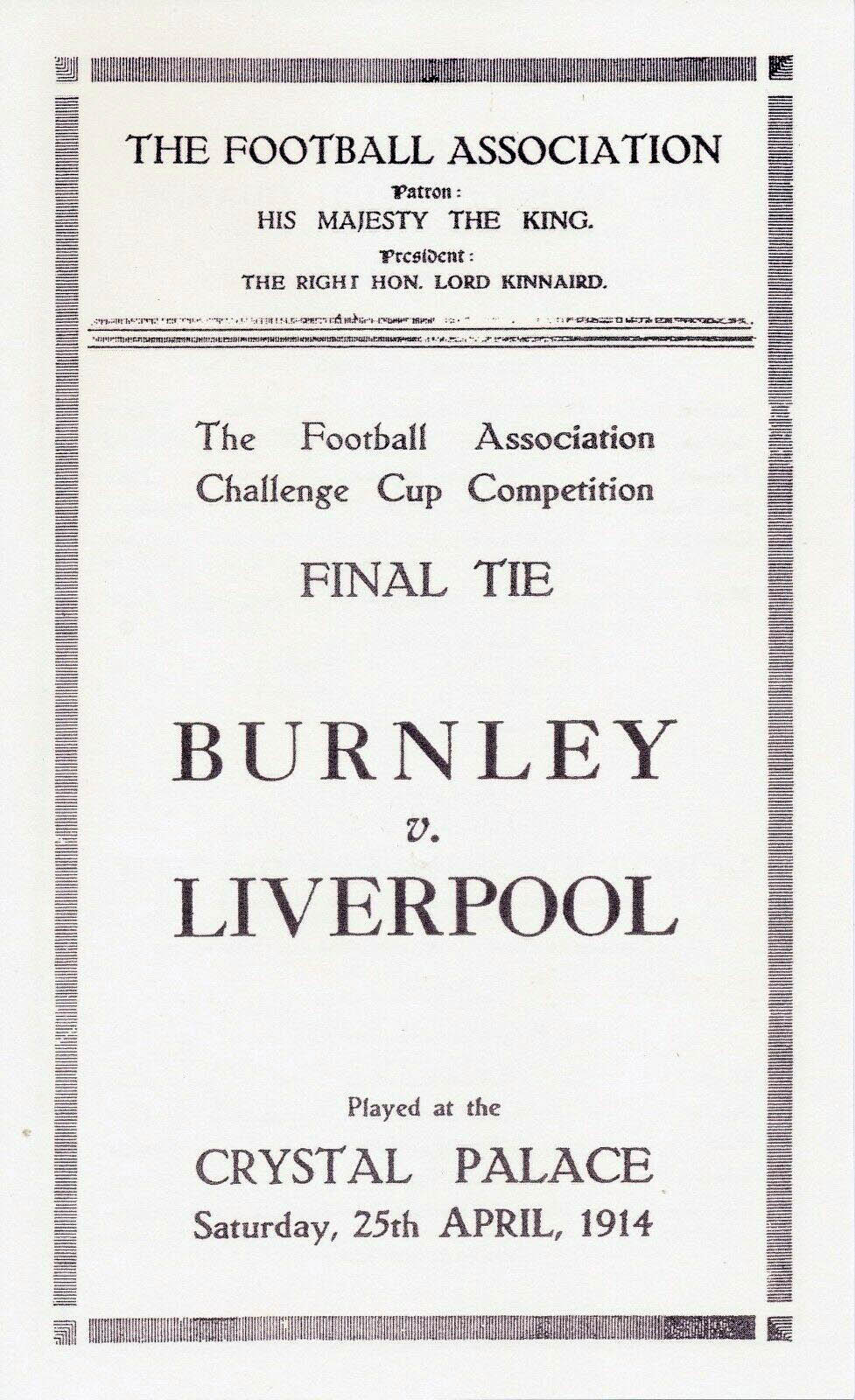
jobbing printers · c. 1910
A Letterpress Fixture Bill
Saturday, set in wood type: the kick-off hour, the admission price, the exclamation points earned.
Kick-off is the oldest deadline that makes people happy.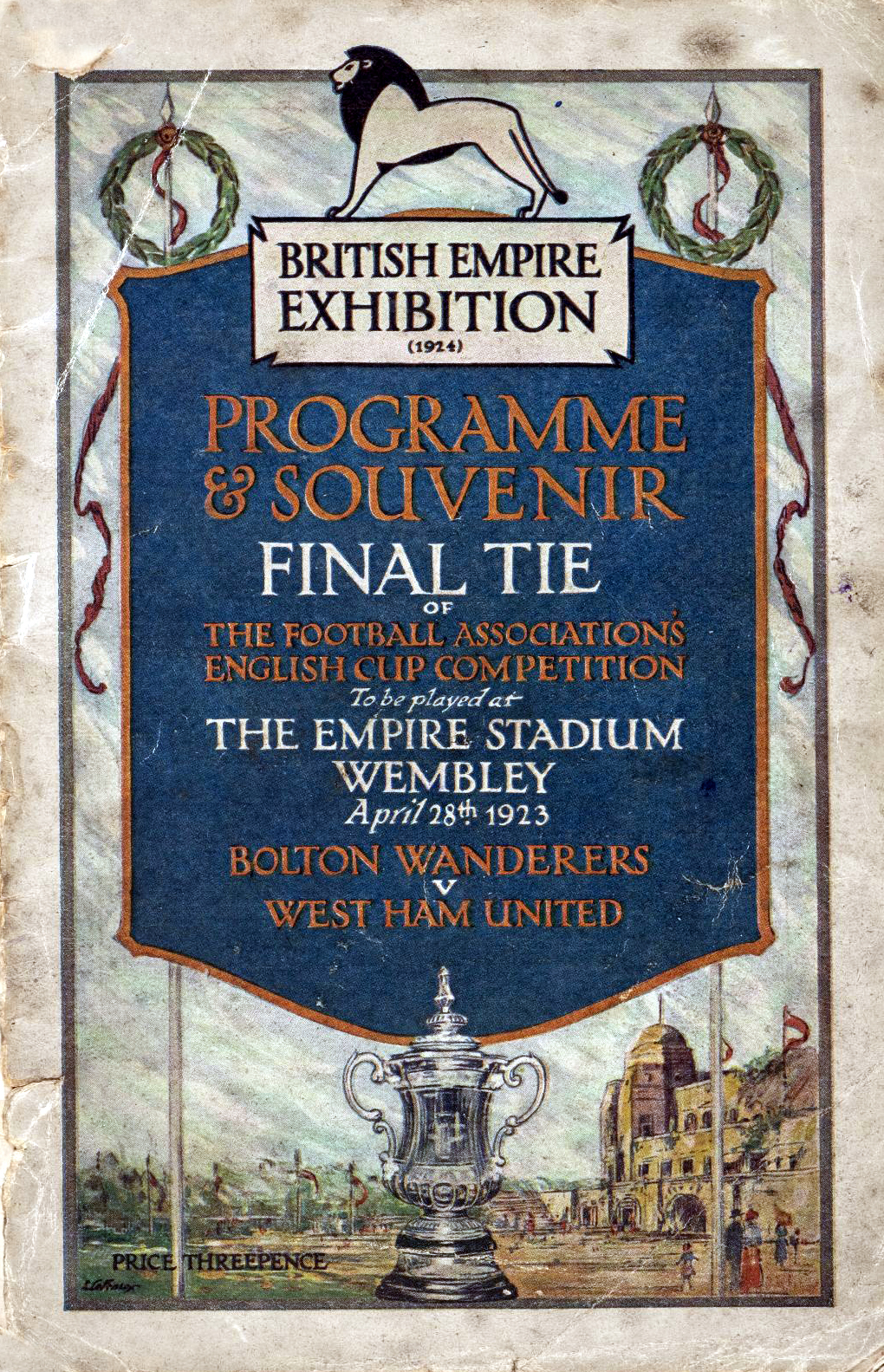
programme printers for the Empire Stadium · 1923
The First Wembley Programme, 1923
The programme of the White Horse Final — sold to a crowd that could not open its arms to read it.
The ephemera outlived the emergency.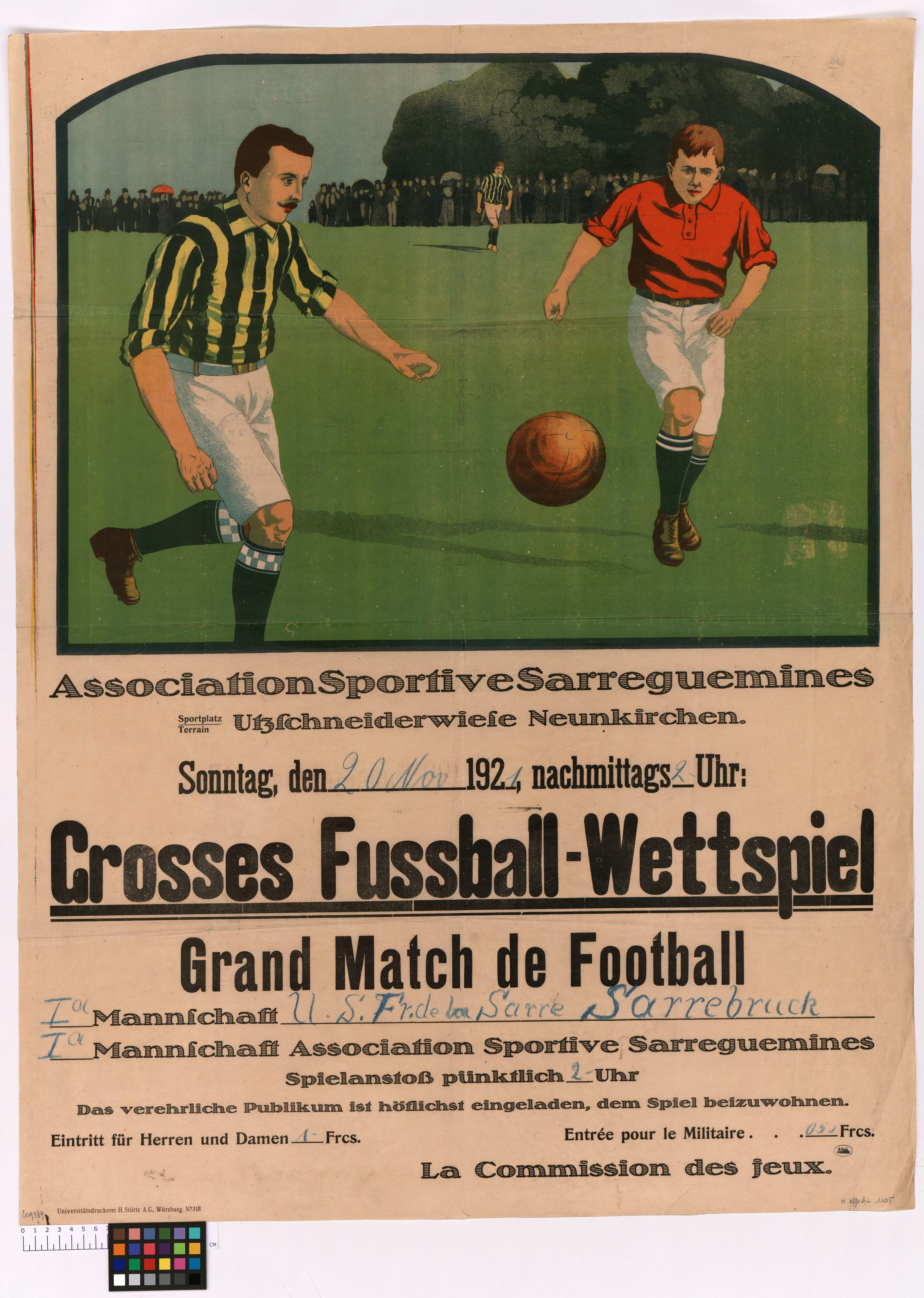
Jobbing printer, Sarreguemines · 1921
Grand Match de Football, 21 November 1921
A jobbing-printer match bill from the Moselle, at nearly thirteen thousand pixels.
A poster is a hierarchy of shouts, well arranged.Agence Rol · Paris · 1920–1927
The Continent
Paris between the wars, on glass. The Agence Rol photographers worked the Bergeyre, the Pershing, Colombes and the Buffalo every Sunday for a decade, and the plates survive at a resolution nothing else from this period comes close to. The game had left Britain; here is where it went.
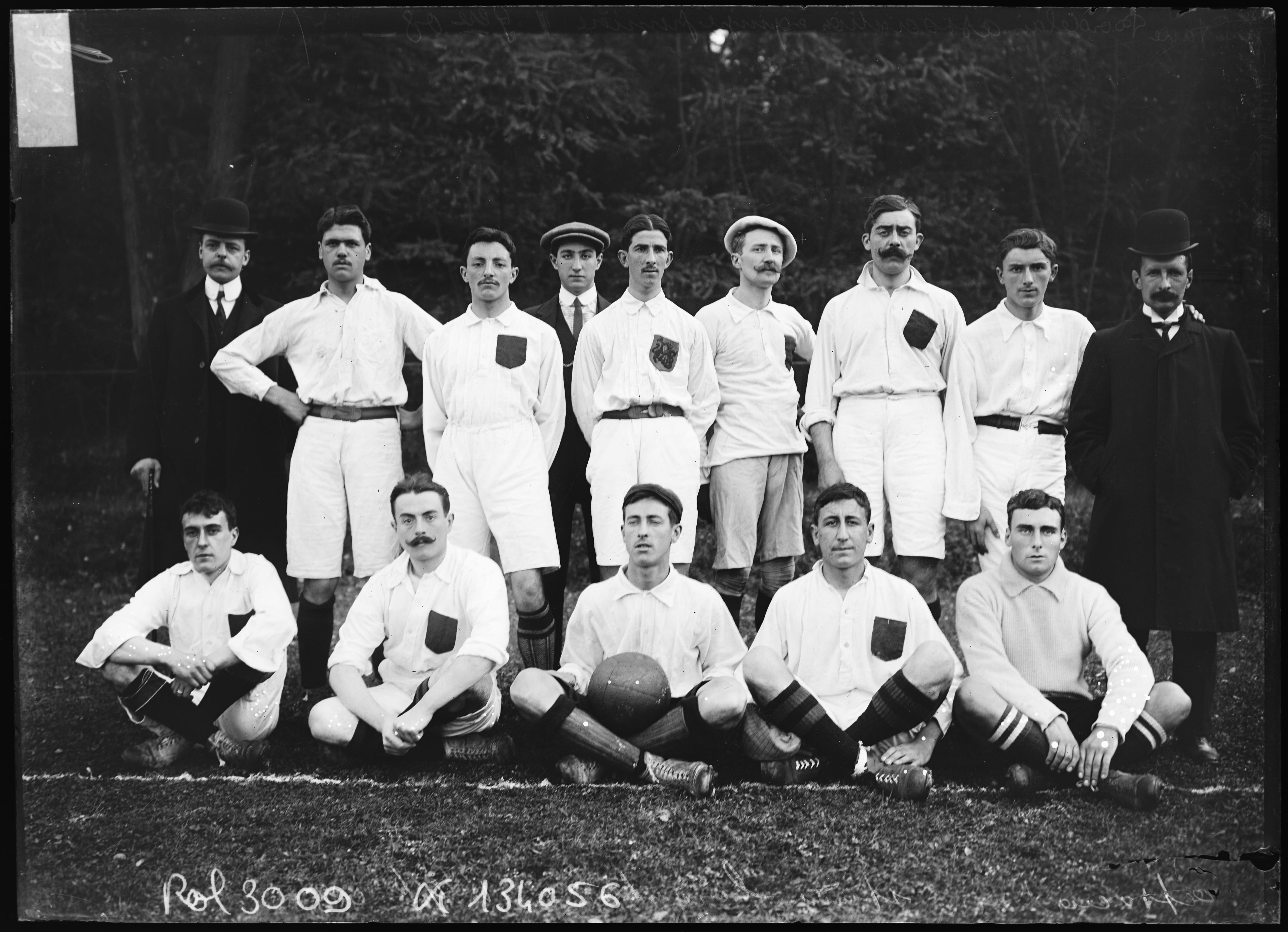
Agence Rol · 1908
The Bordeaux Ground, 1908
The earliest surviving Rol plate of the French game — a provincial ground before the crowds arrived.
Everything starts on a field with a rope round it.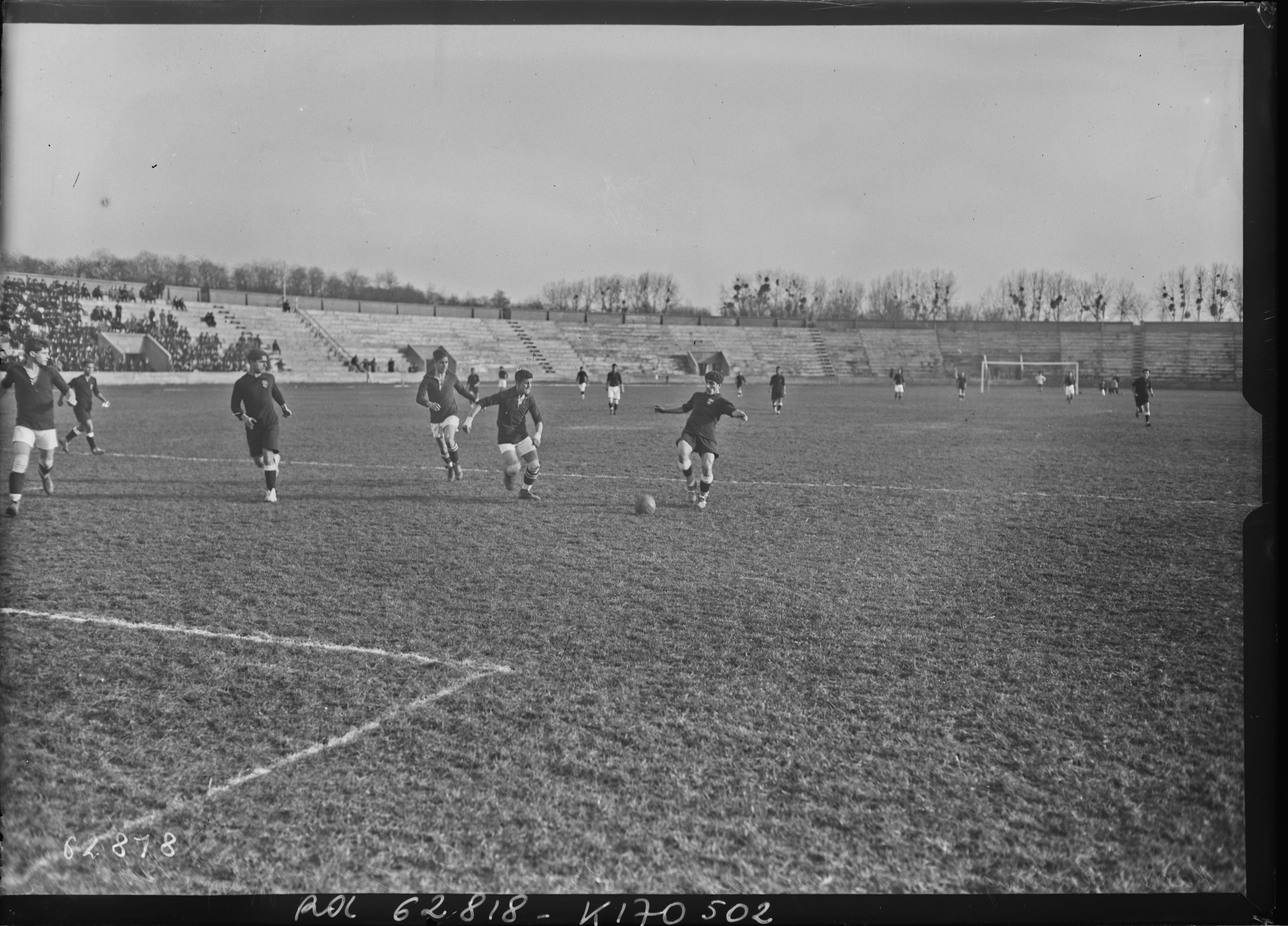
Agence Rol · 1920
Lisbon and Barcelona in Paris, Boxing Day 1920
A Portuguese club against a Catalan one, in France, two days after Christmas — the game already stateless.
The rules travelled faster than anything else Britain exported.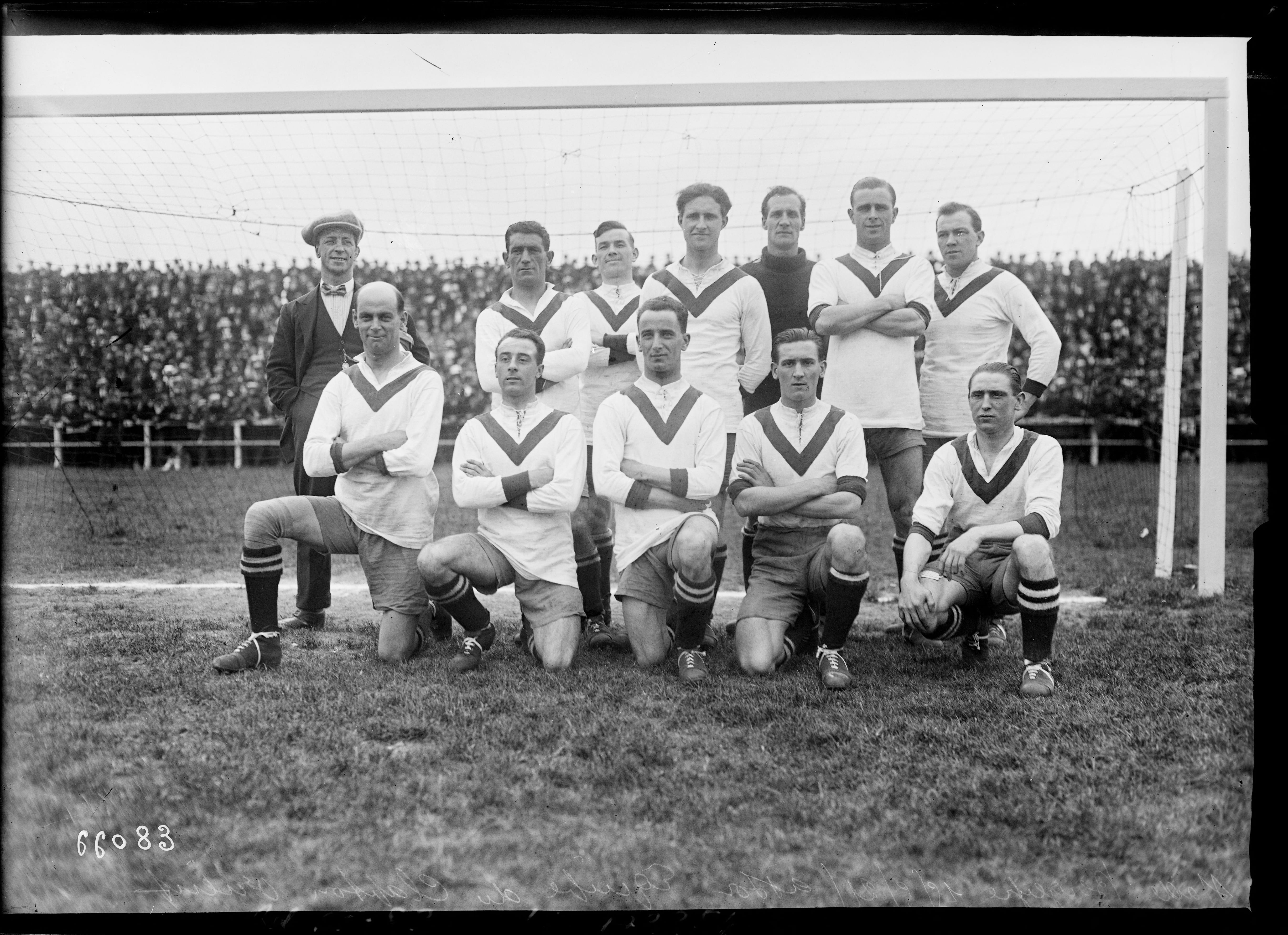
Agence Rol · 1921
An English Club in Paris, May 1921
A London side lines up at the Bergeyre — the missionary fixture, photographed at last.
Football was taught by demonstration, on tour, in the spring.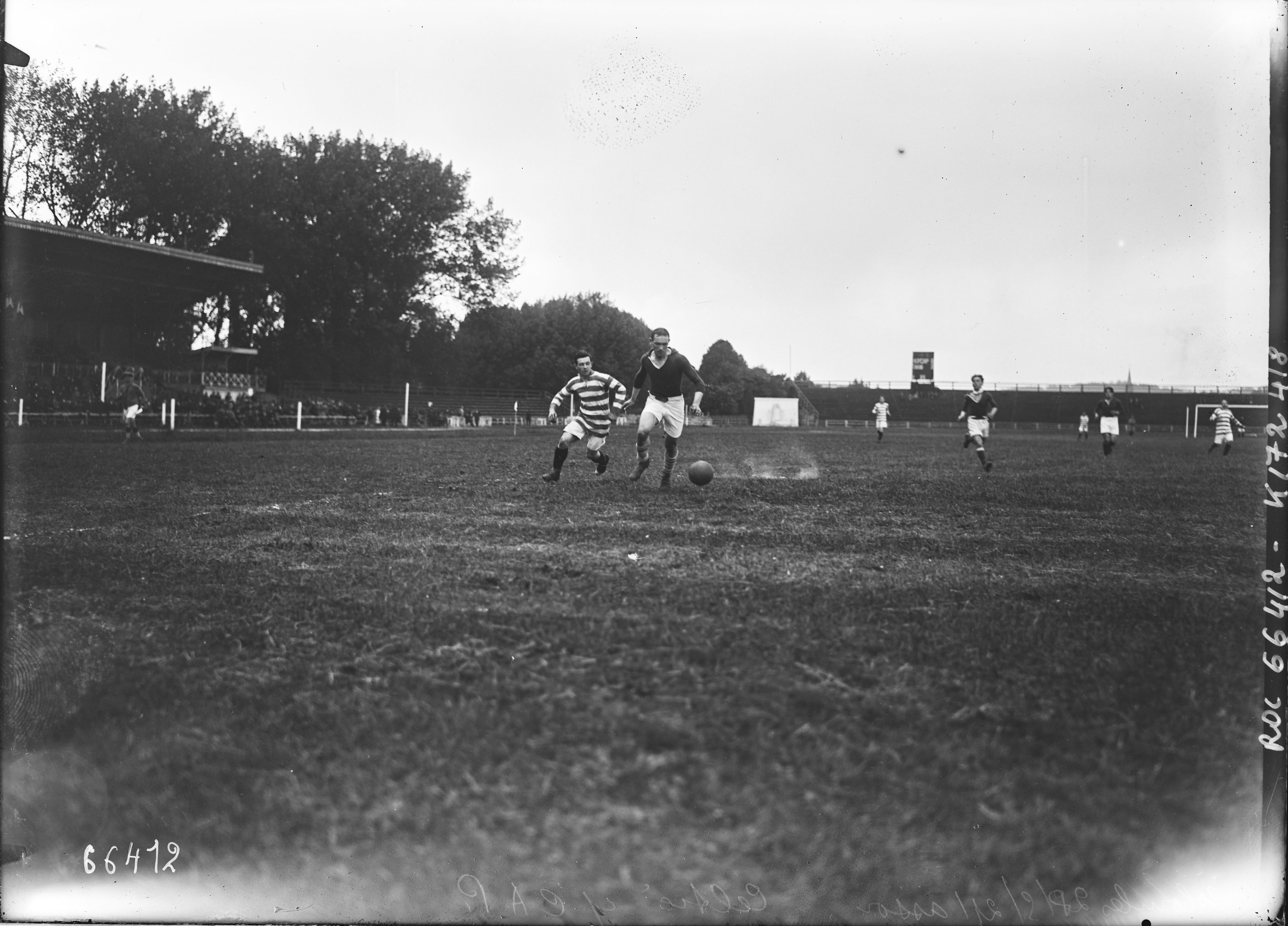
Agence Rol · 1921
Glasgow at Colombes, May 1921
A Scottish side against a Paris one — the Scots brought the passing game and everyone copied it.
What the Continent learned, it learned in a Scottish accent.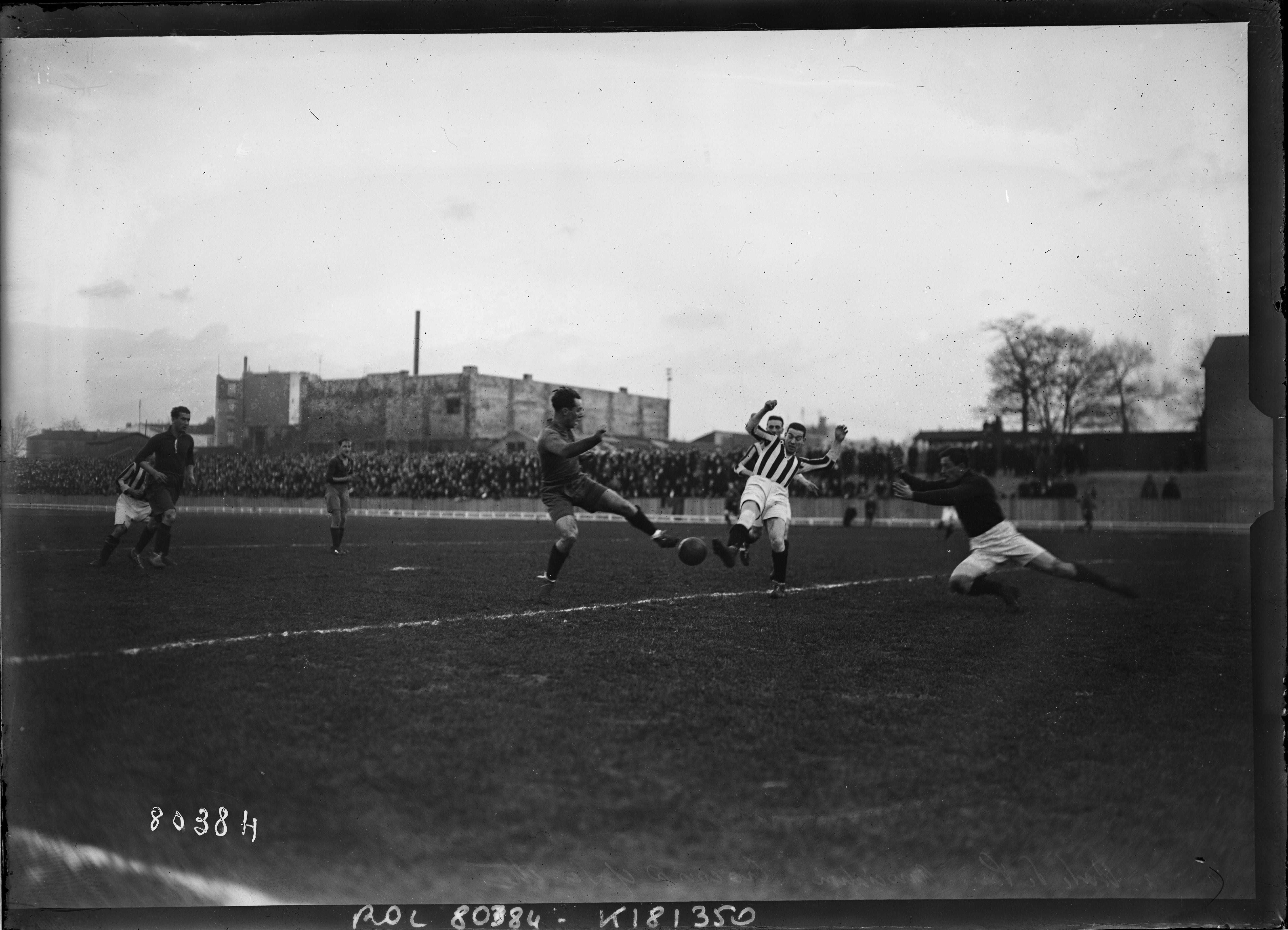
Agence Rol · 1922
Kraków v. Geneva, New Year’s Eve 1922
A Polish club against a Swiss one at Saint-Ouen, on the last day of the year.
The fixture list organised Europe before the treaties did.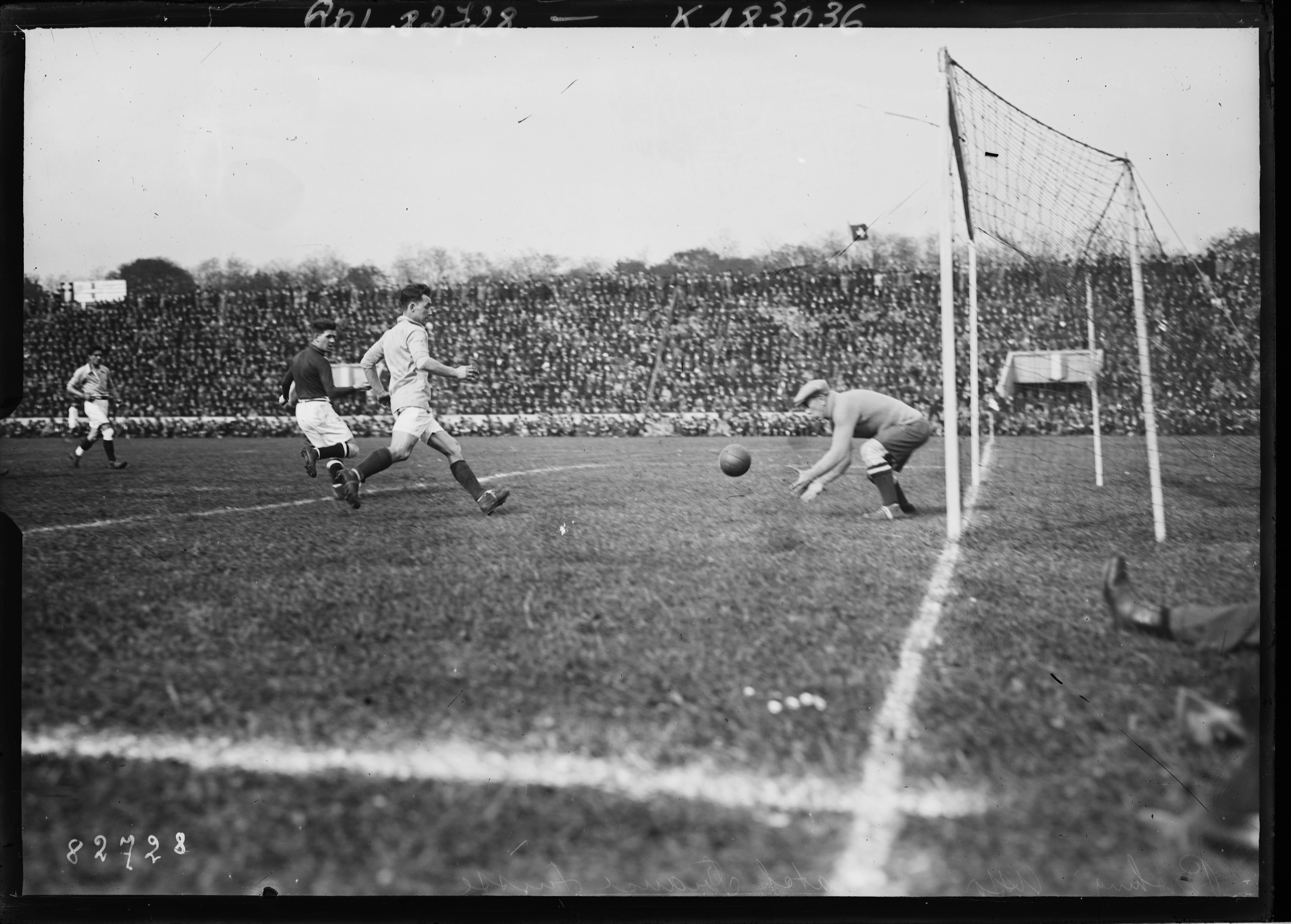
Agence Rol · 1923
France v. Switzerland, April 1923
The neighbours’ international at the Pershing — the fixture that taught France the modern game.
The rivalry that improves you is the one you play every year.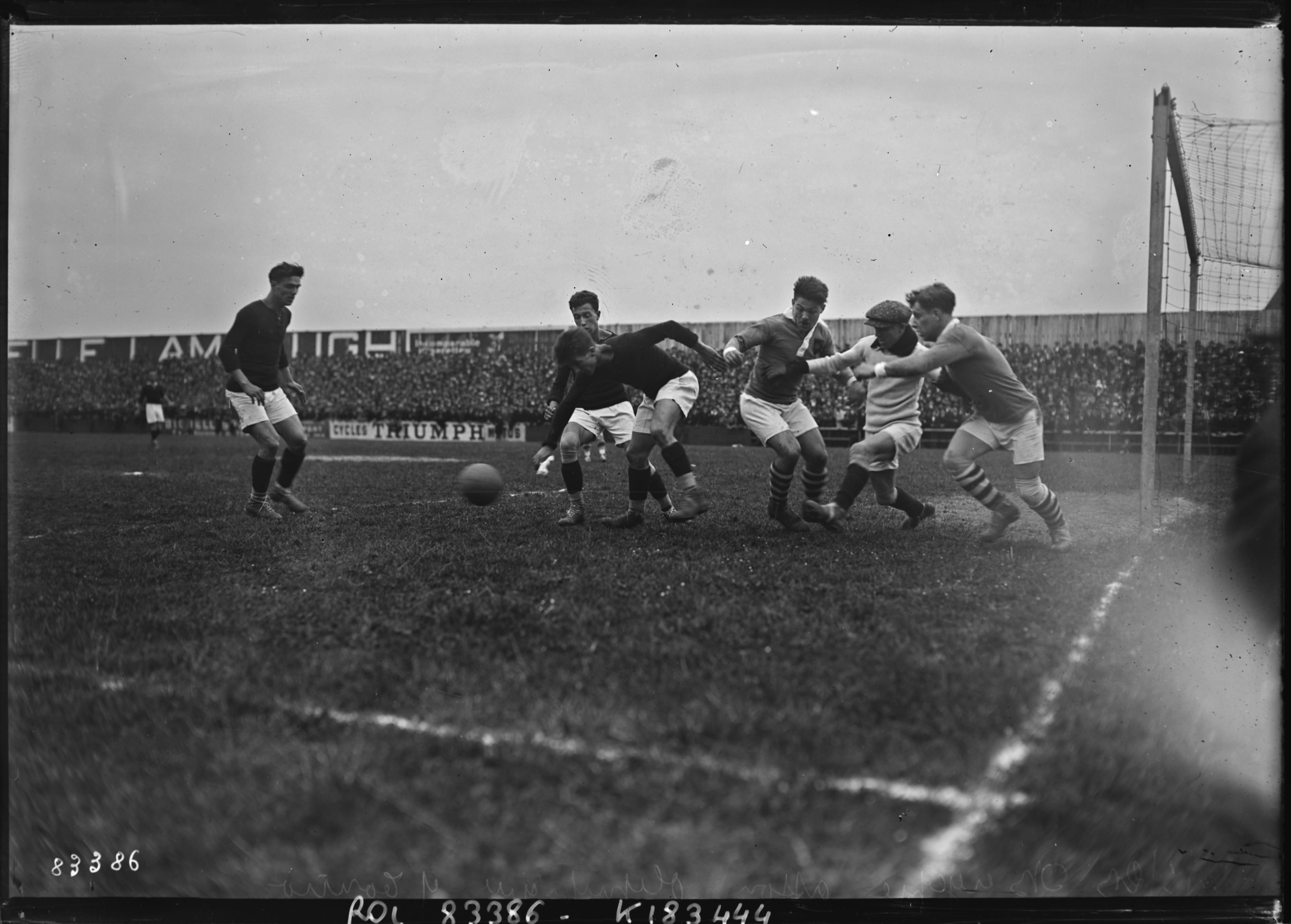
Agence Rol · 1923
Turin at the Bergeyre, May 1923
An Italian club in Paris — calcio arriving as a visiting professional standard.
Nothing improves a league like a visitor who is plainly better.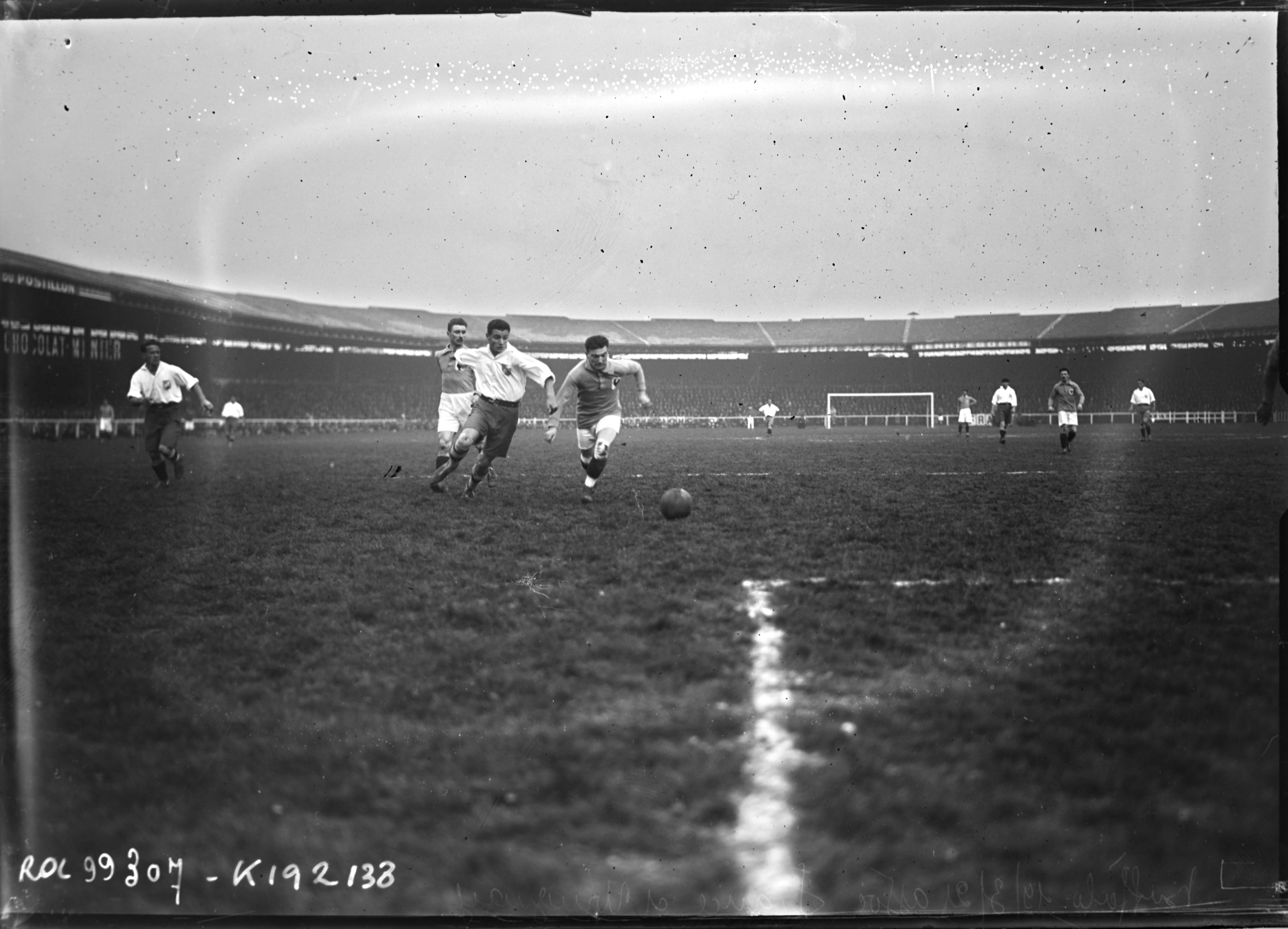
Agence Rol · 1925
France v. Uruguay, March 1925
The Olympic champions come back to Paris — and the crowd came to see how it was done.
Uruguay did not join European football. It corrected it.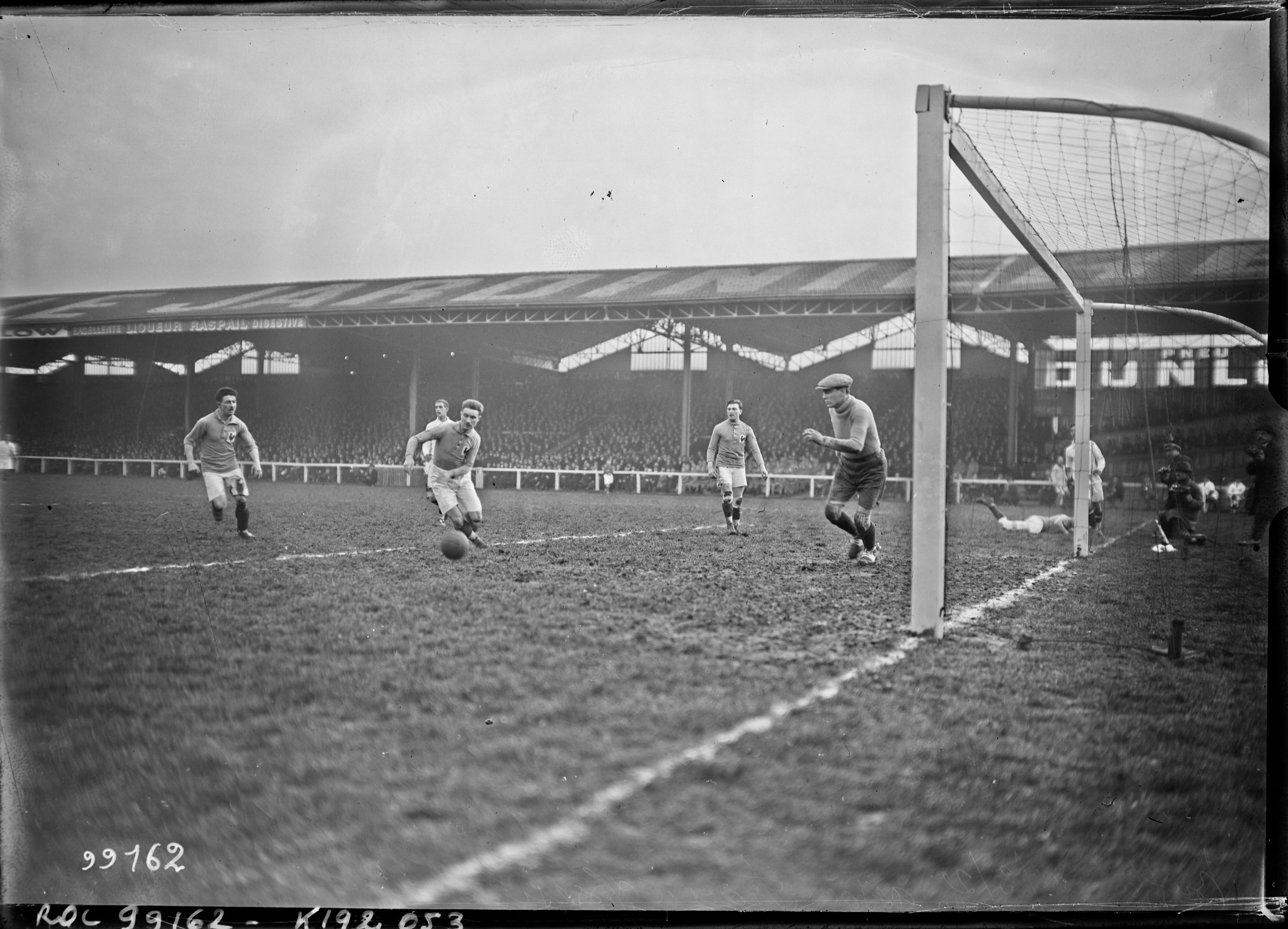
Agence Rol · 1925
France v. Brazil, March 1925
Brazil in Paris, four days before Uruguay — South America arriving twice in one week.
Two Sundays in March, and the centre of gravity moved.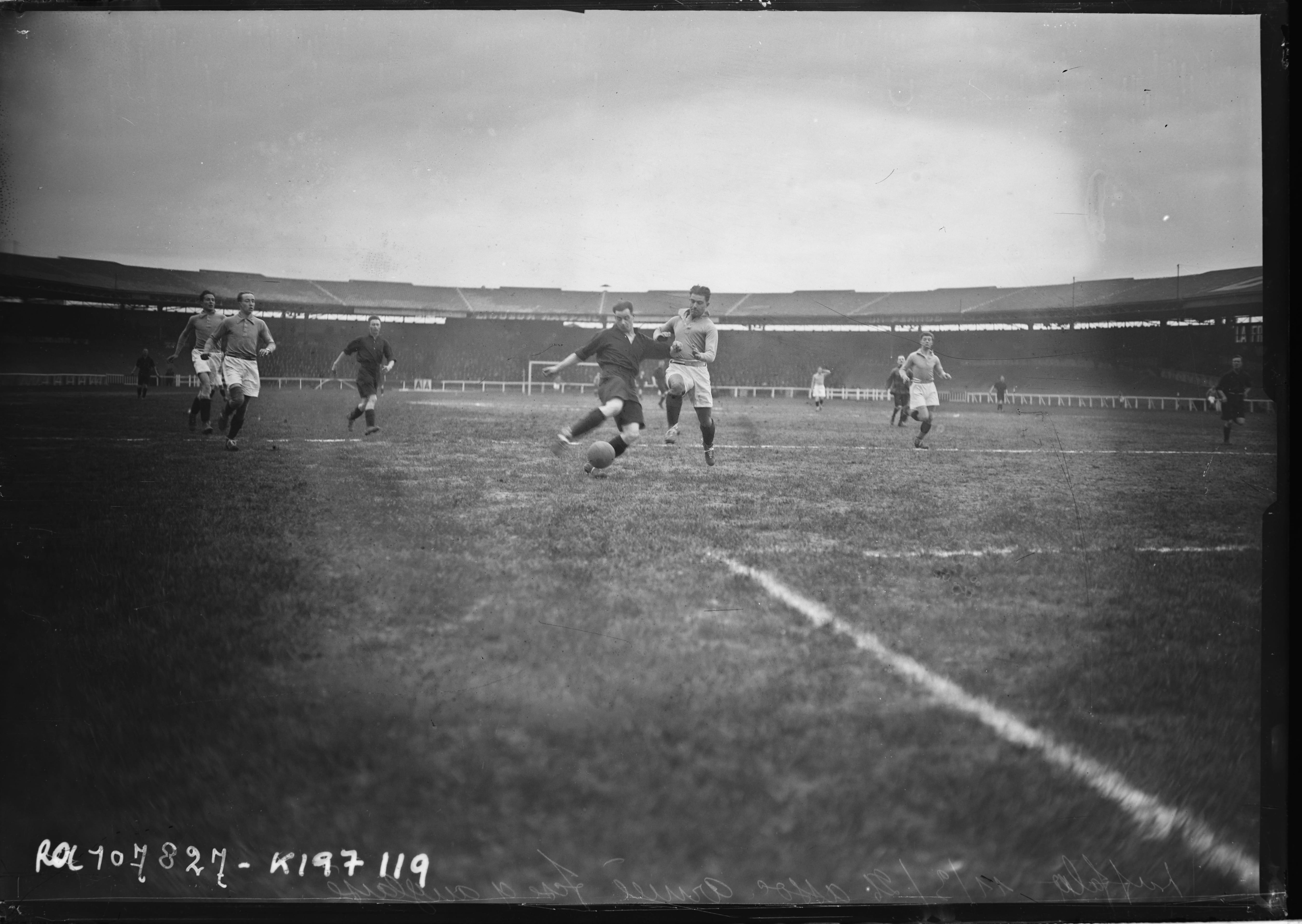
Agence Rol · 1926
The Armies at the Buffalo, March 1926
A French army side against a British one, eight years after the guns — football as the safe rematch.
Some rematches are arranged precisely so that nothing is at stake.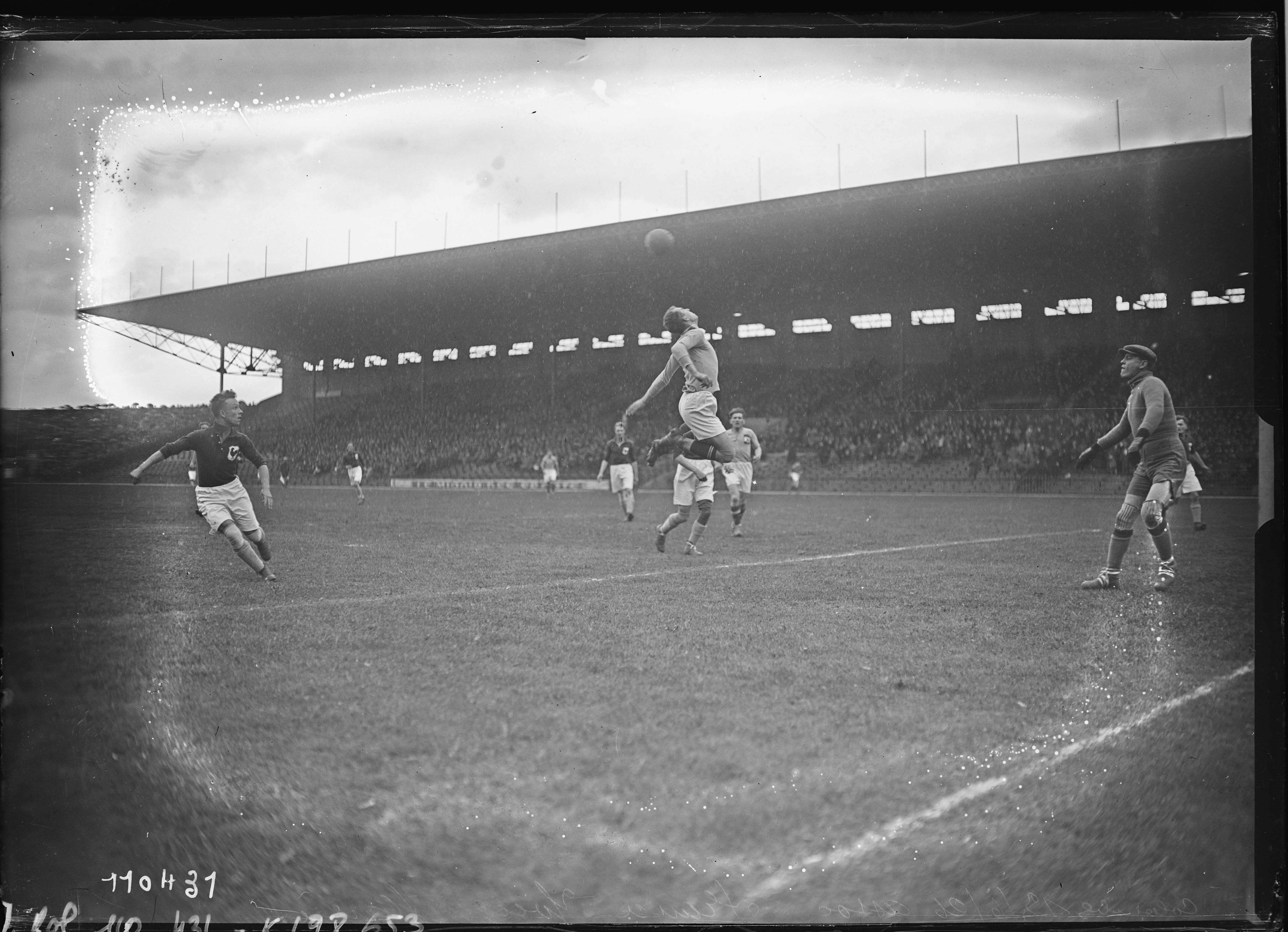
Agence Rol · 1926
France v. Yugoslavia, June 1926
A country seven years old plays an international at Colombes.
The century decided that nations come with an eleven.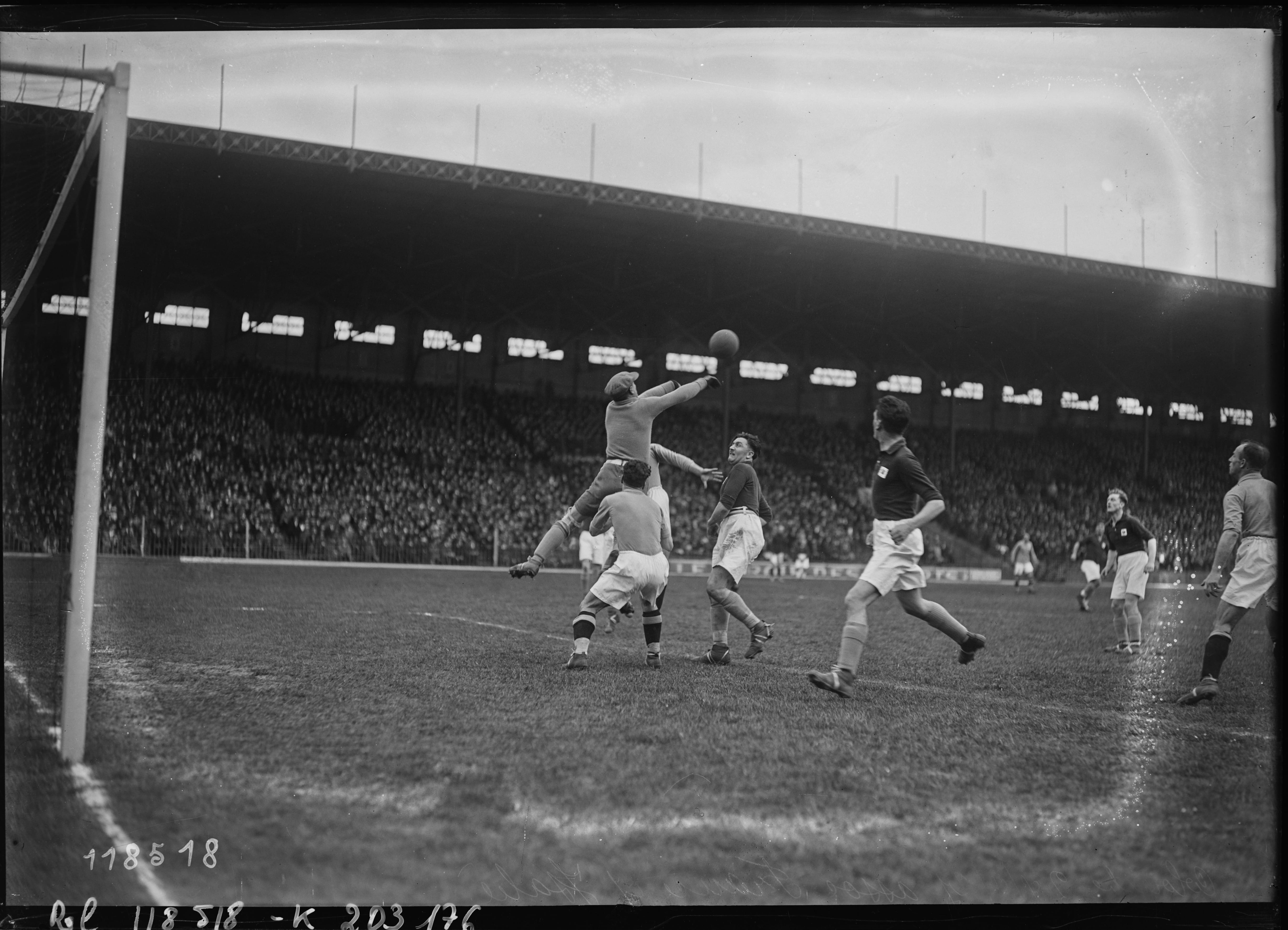
Agence Rol · 1927
France v. Italy, April 1927
The last of the Rol football plates — the neighbours, at Colombes, in the year everything got serious.
The photograph is ordinary. That it survives is not.Back row standing · 1907–1924
The Eleven
The team photograph — the oldest ritual in the game and the one that never changed. Arms folded, back row standing, the ball on the ground in front with the year painted on it. Barnsley to Geneva, 1907 to 1924.
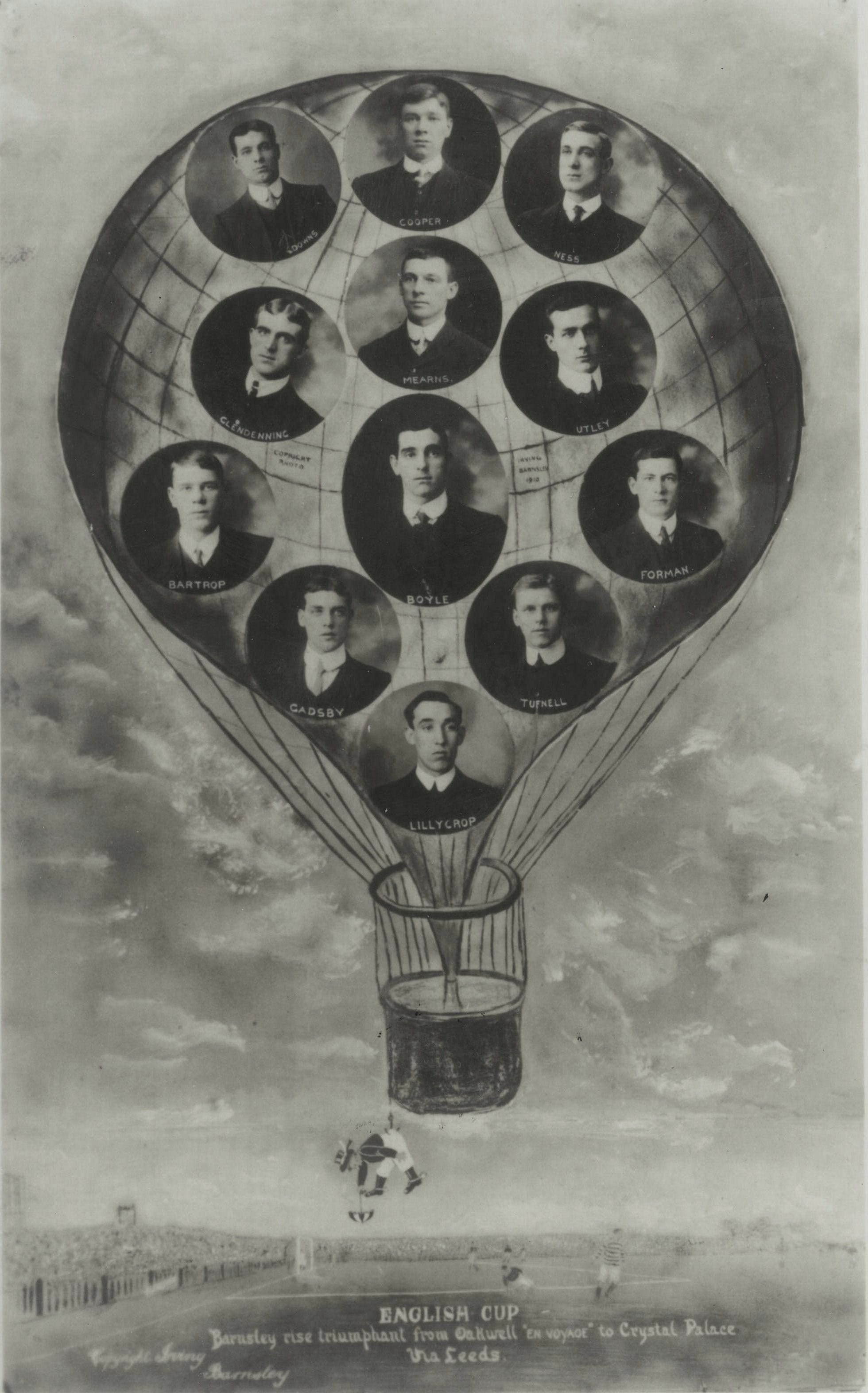
Unknown photographer · 1909
A Yorkshire Eleven, 1909
Back row standing, front row seated, ball on the ground with the season painted on it.
The pose outlasted the moustaches, the boots, and the century.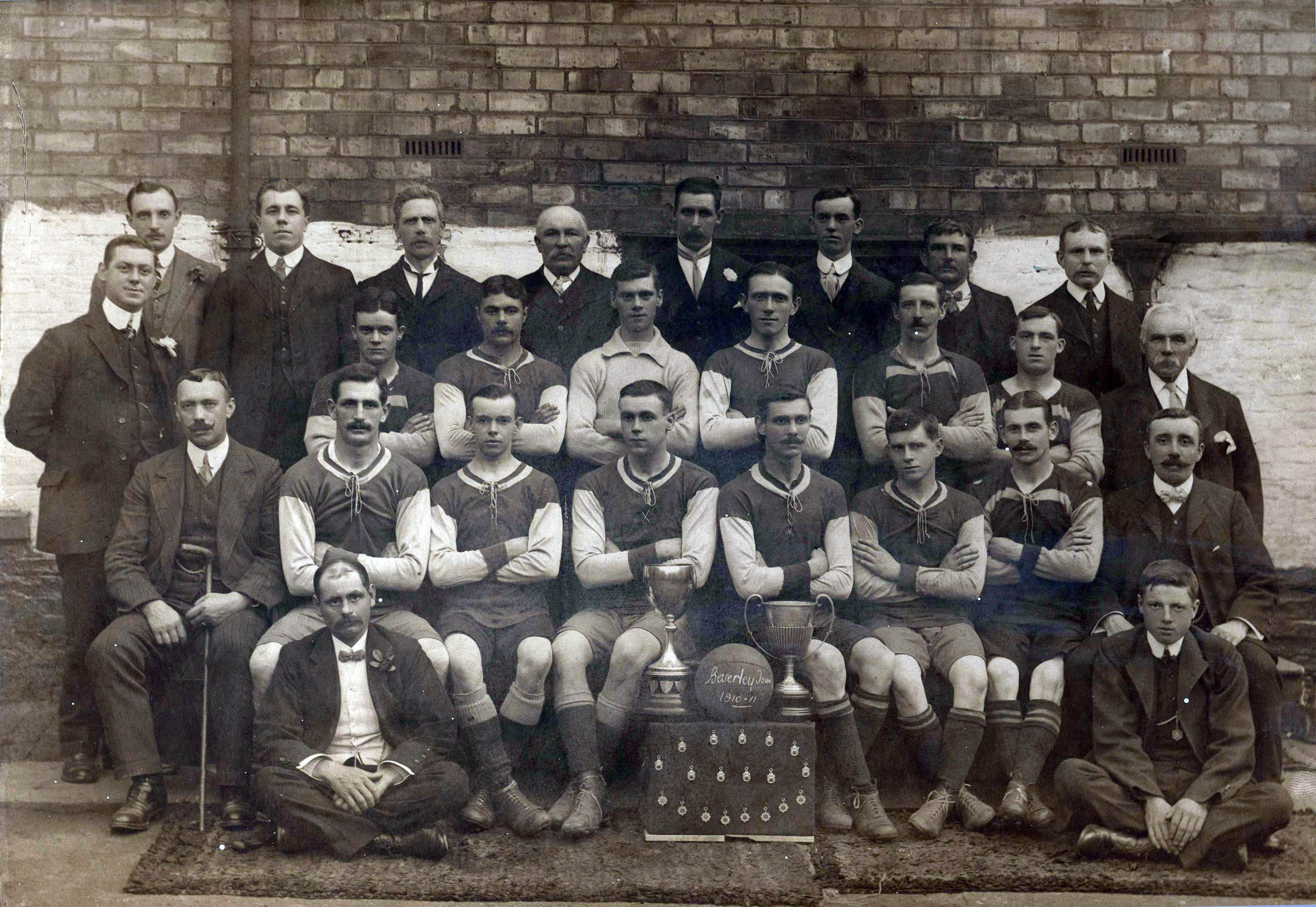
Unknown photographer · 1910
A Market-Town Eleven, 1910–11
The whole pyramid’s foundation — a small-town side, photographed as carefully as any champion.
The game is made of the four hundred clubs that are not famous.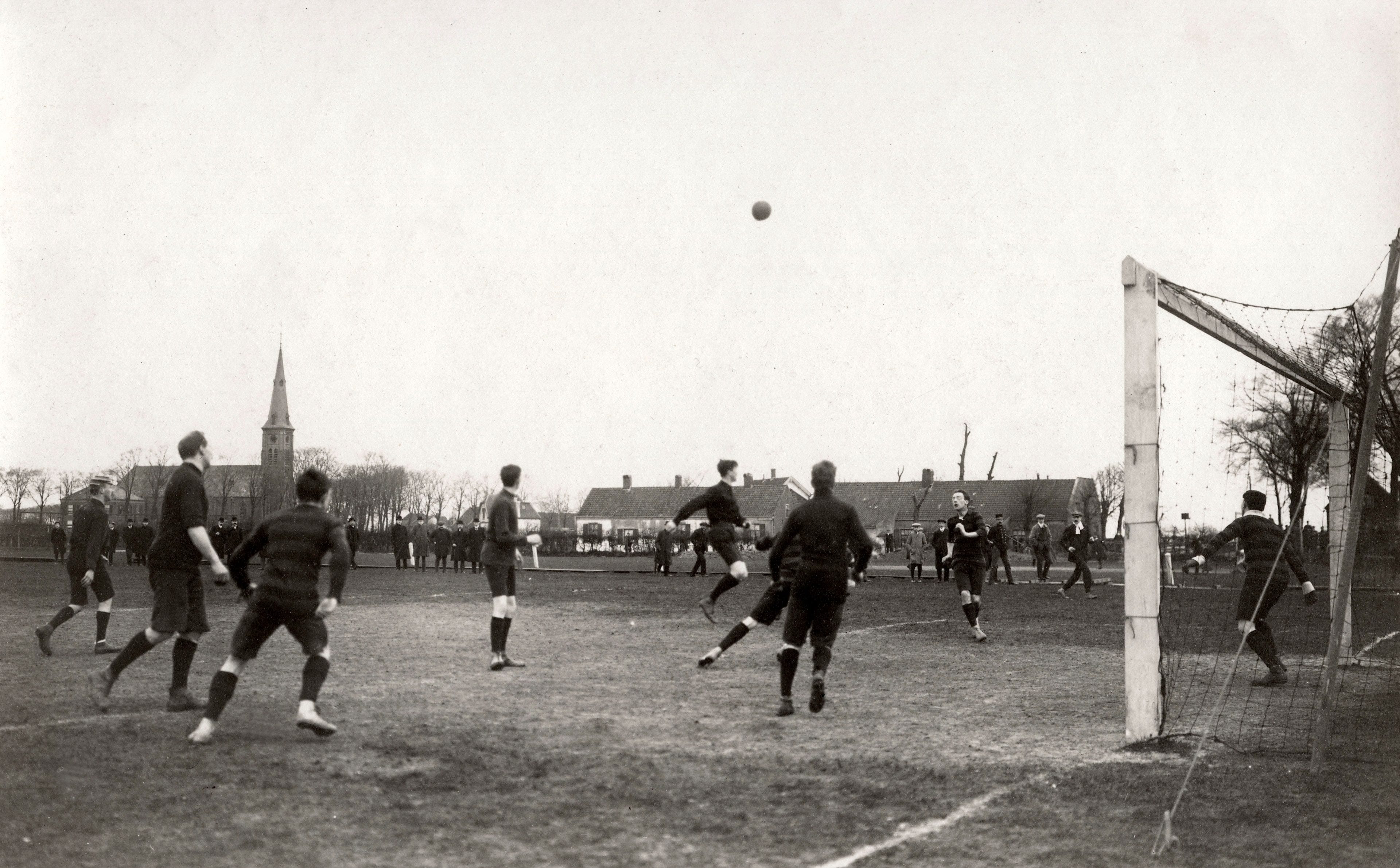
Unknown photographer · 1907
A Haarlem Eleven, 1907
The Dutch game at the water’s edge — the oldest continental club photograph in the house.
A sport travels as a rulebook and a pose.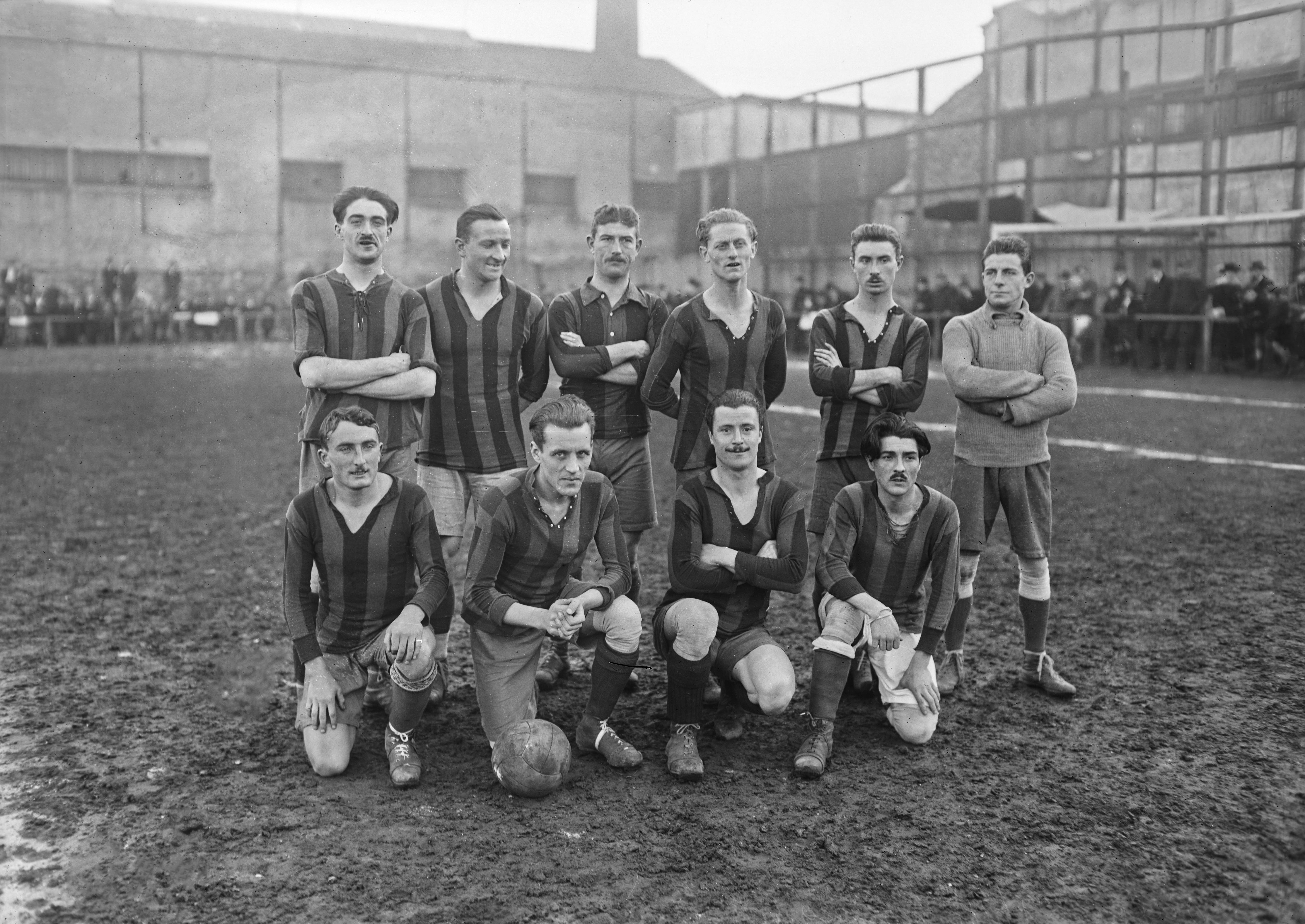
Unknown photographer · 1920
A Saint-Ouen Eleven, 1920
The working-class club of the Paris north, in the first season after the war.
French football’s heartland was the ring of workshops.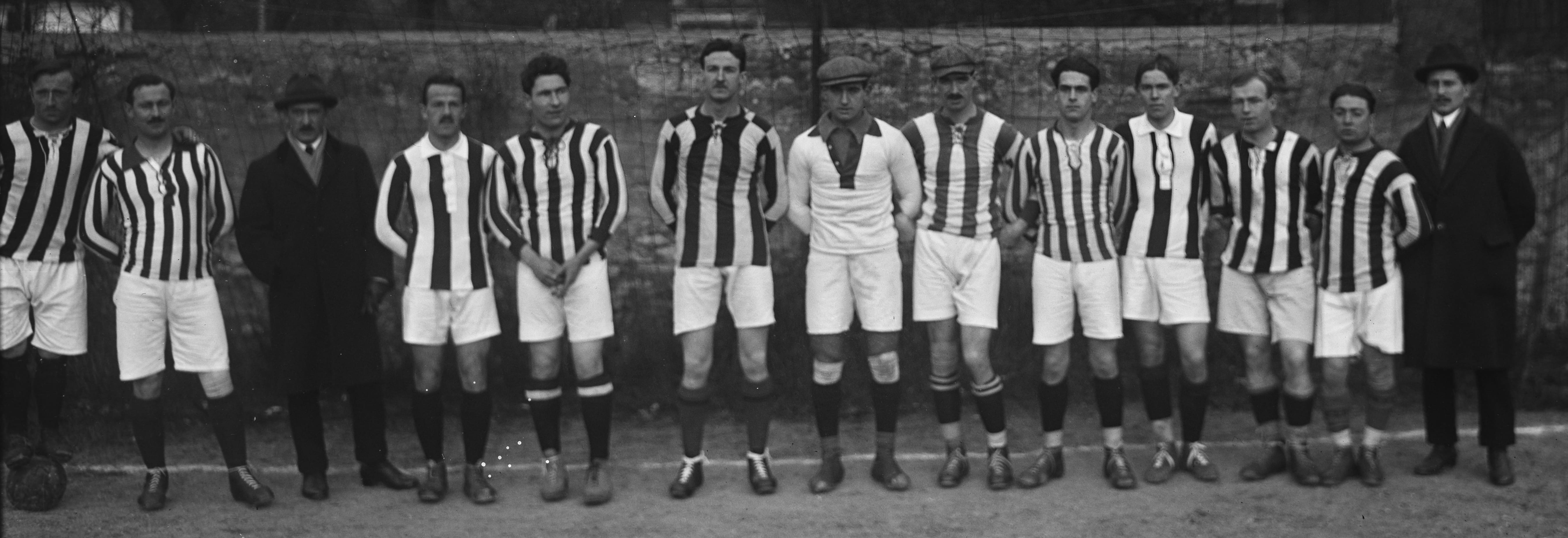
Unknown photographer · 1920
A Geneva Eleven, 1920
A panoramic team plate nearly three times as wide as it is tall — the whole club, ground included.
A portrait not of people but of a Sunday.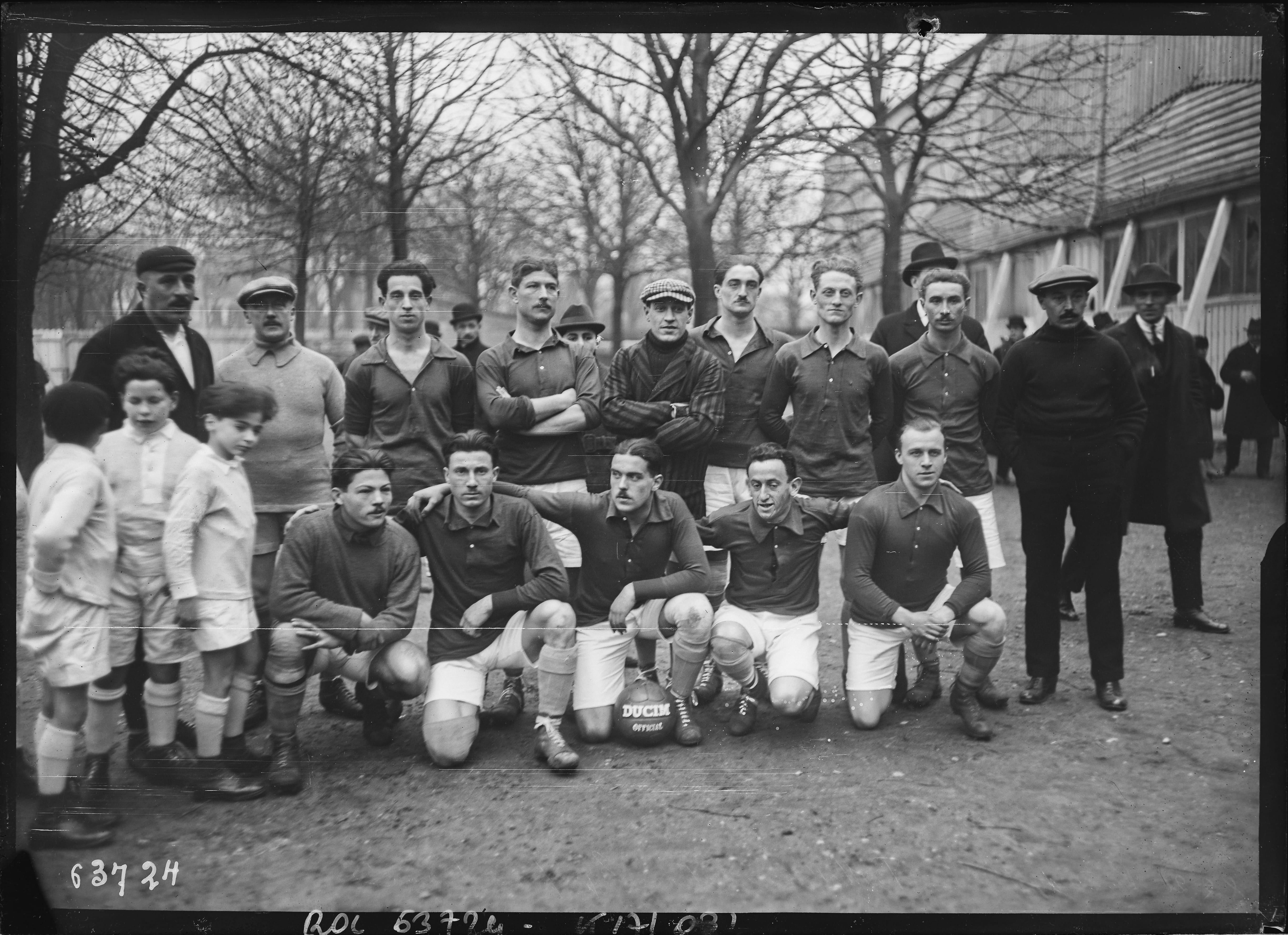
Agence Rol · 1921
The France Eleven, Parc des Princes, 1921
A national side at the Parc — the eleven that had to be assembled from a country still learning.
Every football country has this photograph in its past.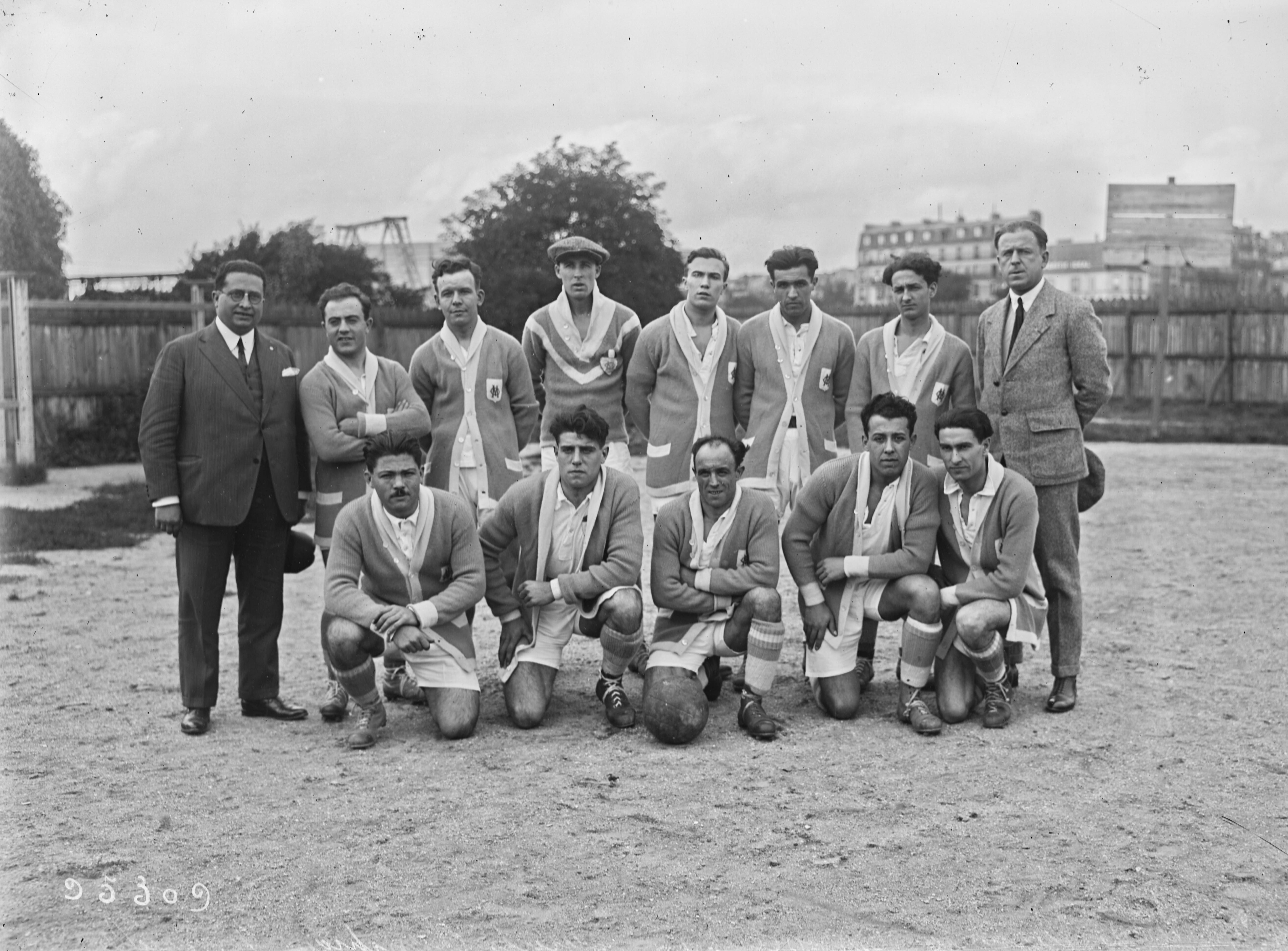
Unknown photographer · 1924
A Marseille Eleven, 1924
The south of France at the Stade Élisabeth — a port city’s club, up in Paris.
Football came ashore in the ports, and they never gave it back.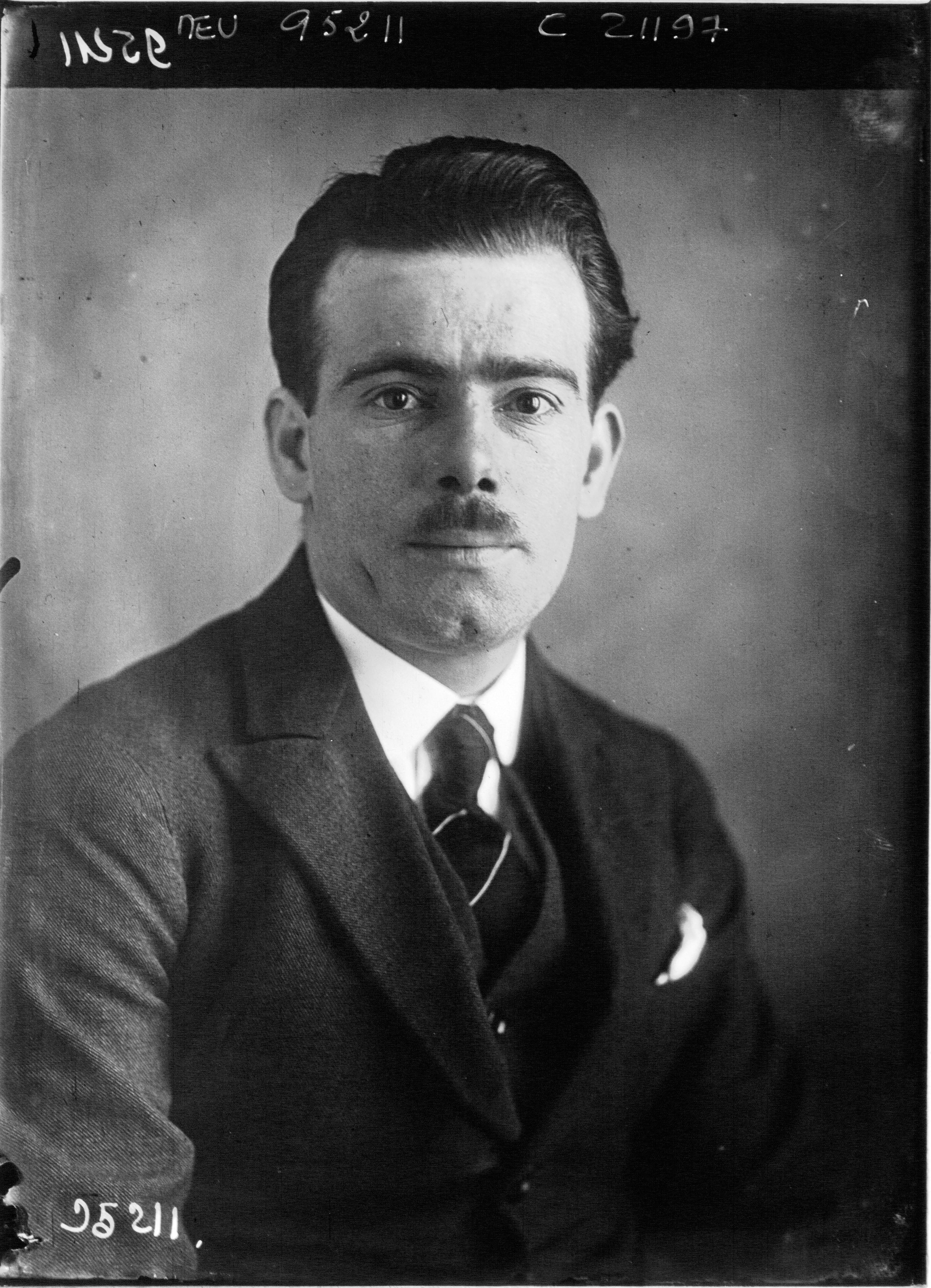
Agence Rol · 1922
A Player, 1922
The single-figure studio portrait — a footballer photographed the way an actor was.
Someone decided a player was worth a portrait.