A house of Provenance · Match Day, 1923
The Terraces
Before television, the game was ink.
Football in art and print · 1870–1930
Engravings, paintings, photographs, cards, and match bills — the game before television, printed museum-grade.
The house
For sixty years the game was carried by engravers, painters, card lithographers, and jobbing printers.
Before the cameras could keep up, the illustrated papers cut the new game in wood. Hemy painted it in oil while it was still in its boyhood. The card printers of Bradford made supporters out of schoolboys, the press photographers discovered that the crowd was the story, and a jobbing printer somewhere set every Saturday in wood type. We reproduce that first sixty years faithful to the source — halftone grain honored as history, not damage.
Every piece here was published before 1931 and is public-domain verified, drawn from open archives and house-acquired originals, with the ground, the date, and the crowd named wherever the record holds them — attendance figures are this house’s provenance poetry. No modern club or federation marks, ever: the museum’s library, never the merchandise stall.
Chapter I
The street fills
Out of the terraced houses and into the road — the game as the papers first drew it, and as Hemy first painted it.
The Illustrated Papers · 1870s–1880s
The First Game
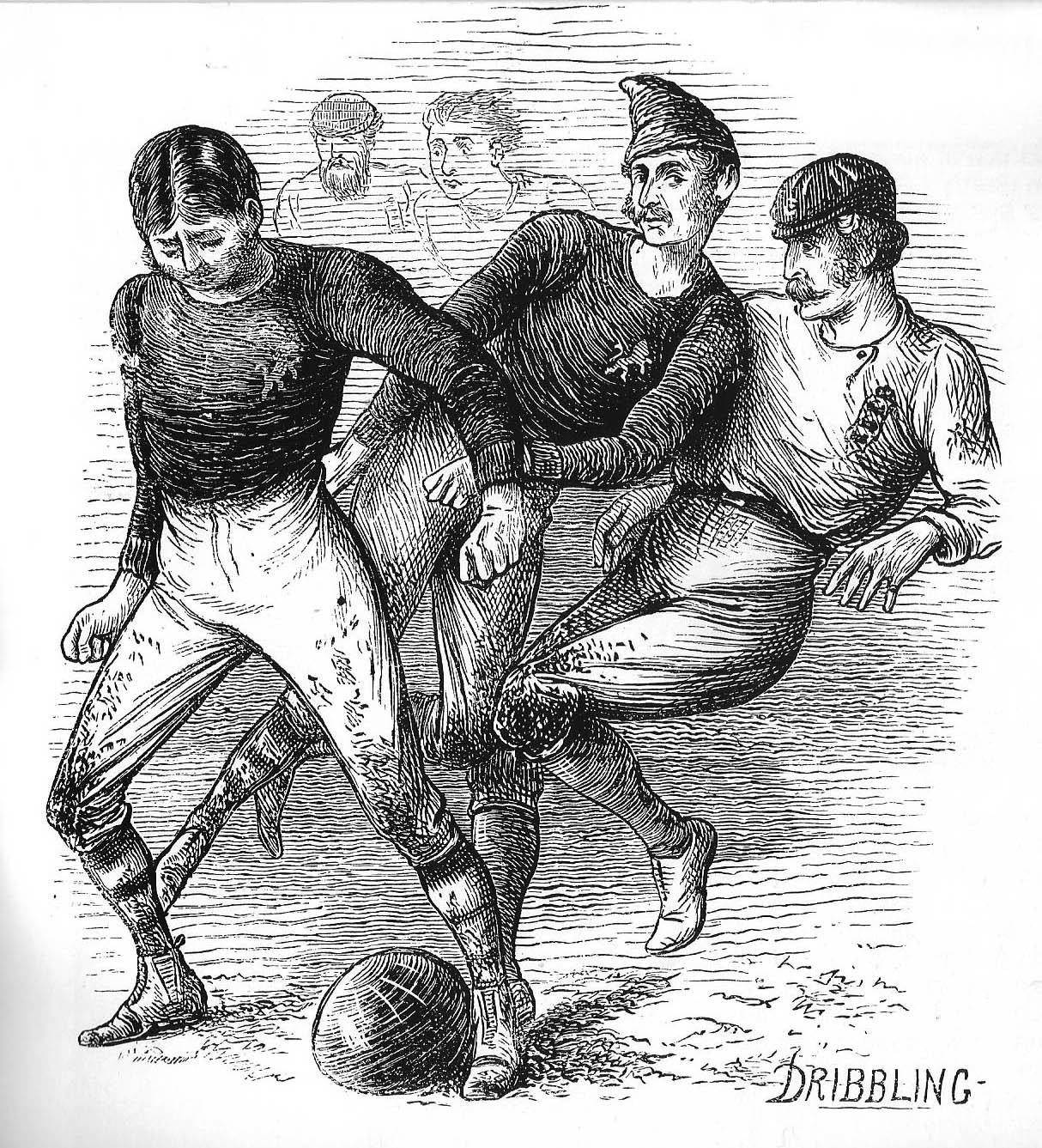
the illustrated papers · 1870s
An International Football Match
The new game as Victorian news — top hats on the touchline, the scrimmage in wood engraving.
Every institution was once a novelty item.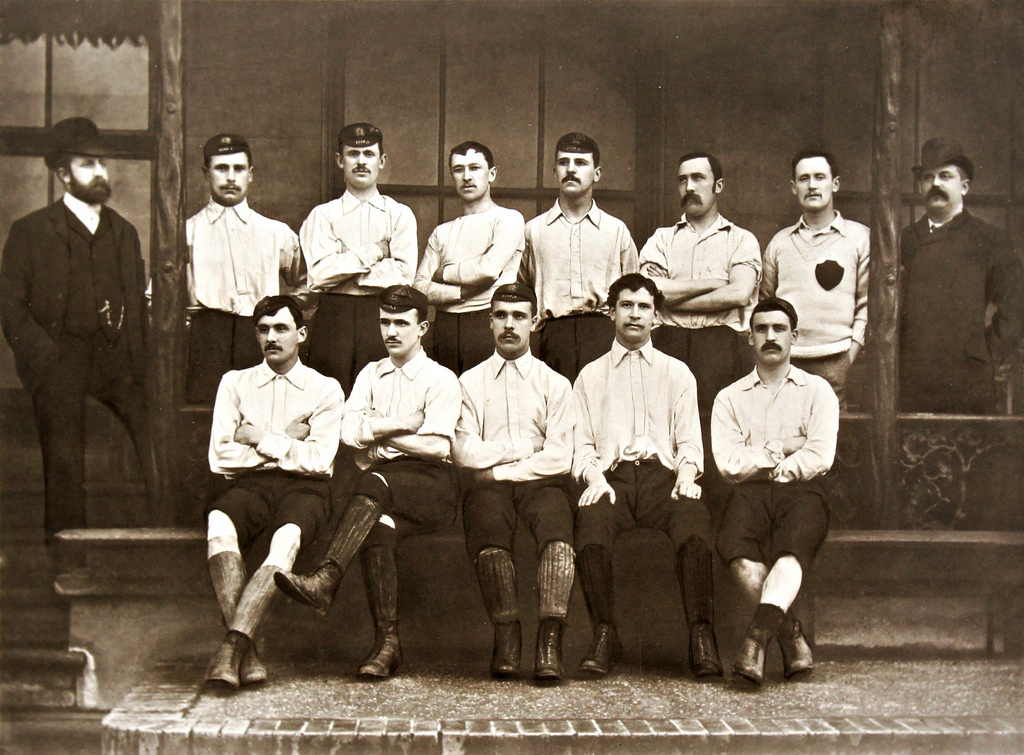
period photograph · 1888–89
The Invincibles, 1888–89
Preston North End, the first champions of the first league season — unbeaten, and photographed like it.
Some seasons never need replacing.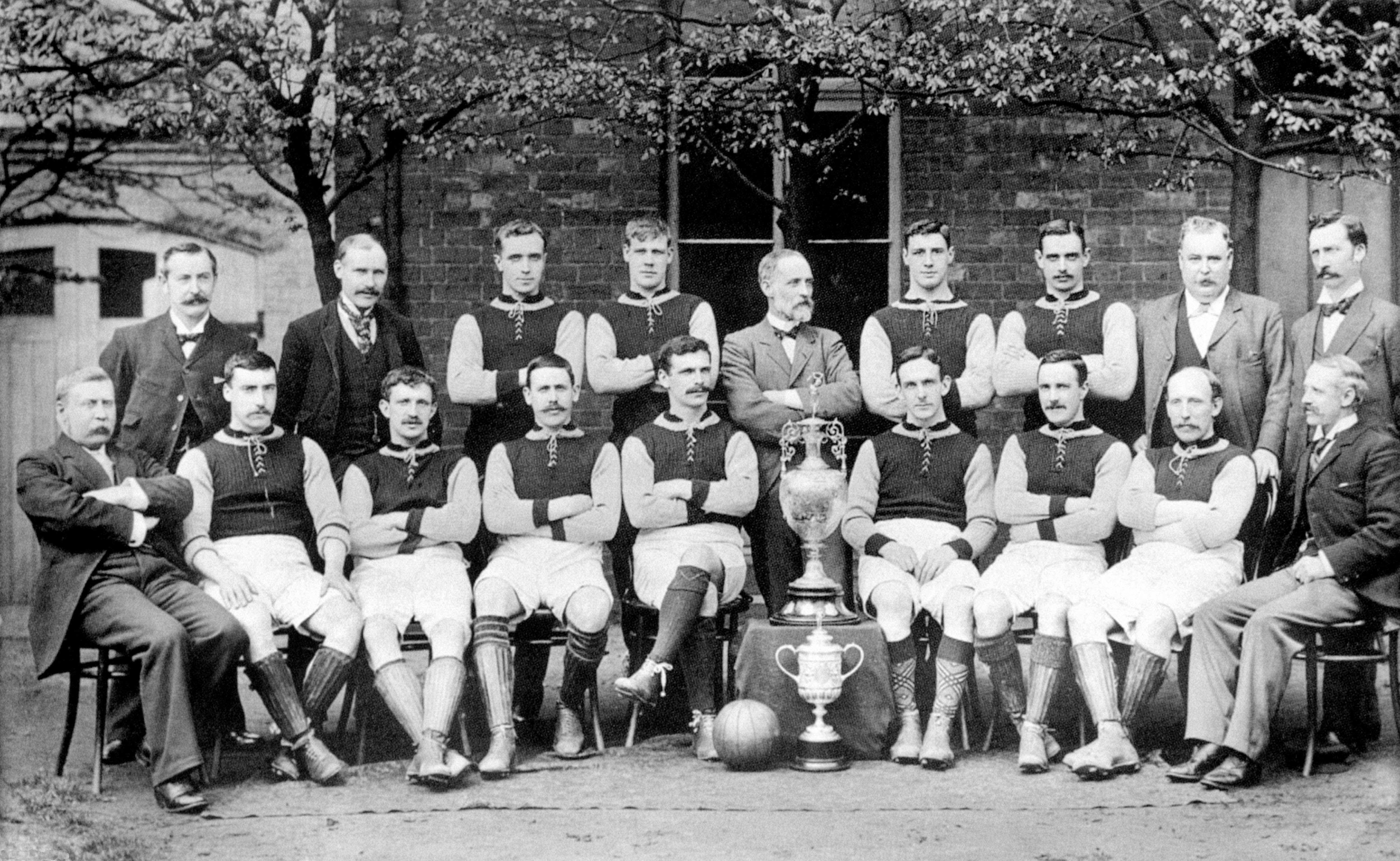
period photograph · 1896–97
The Double Winners, 1896–97
League and Cup in one season — the Victorian double, photographed at full plumage.
Sixty-four years passed before it was done again.Newcastle Road, Sunderland · 1895
The Painted Match
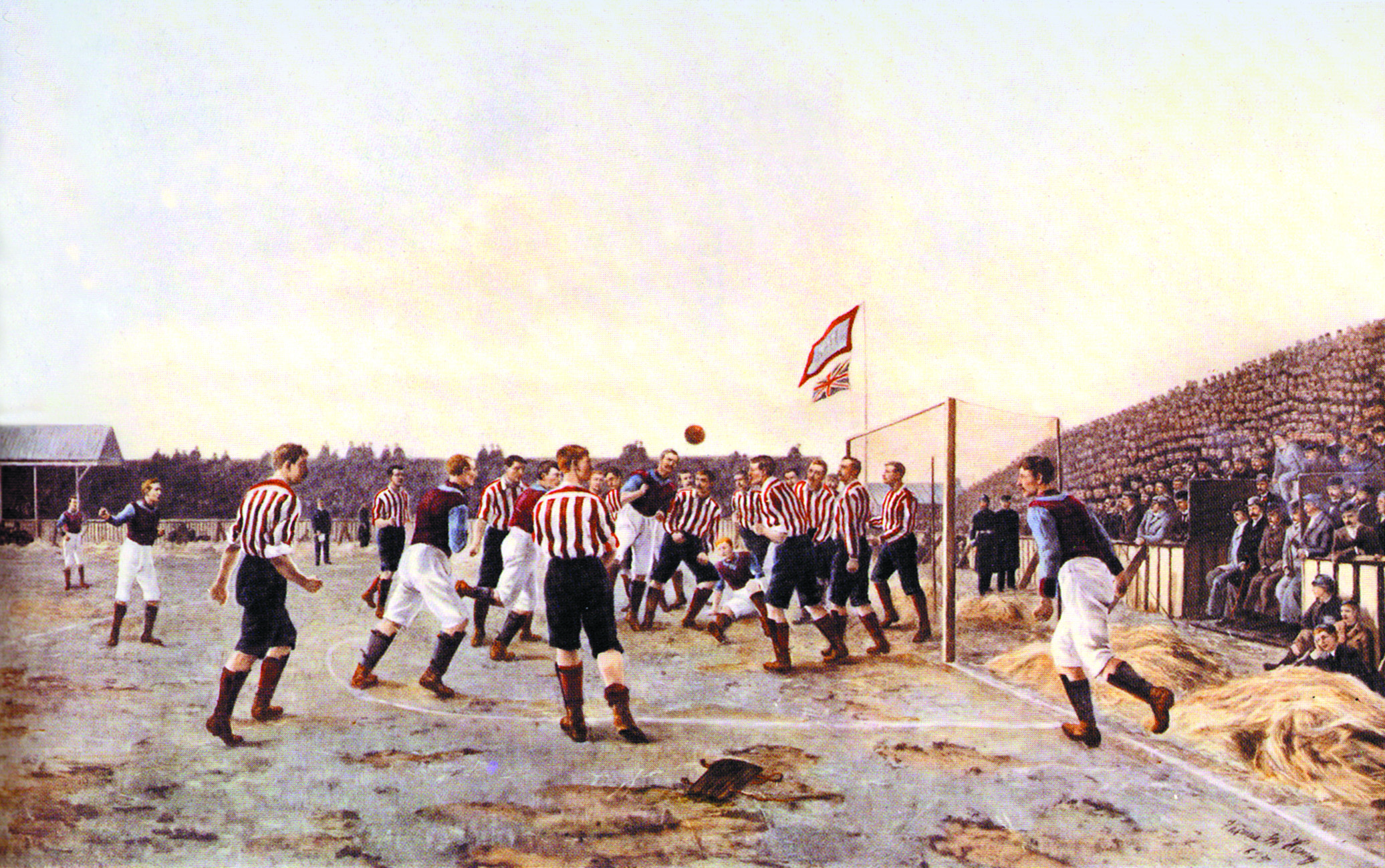
Thomas M. M. Hemy · 1895
Sunderland v. Aston Villa
The great Victorian football canvas — the match in oil, mid-attack, the crowd packed to the touchline.
Somebody always sees the future first and paints it.Chapter II
The turnstile clicks
Threepence at the gate, a card in the tobacco packet, the match bill pasted on the wall — the printed pocket-history of Saturday.
J. Baines Ltd., Bradford · 1880s–1900s
The Card Collection
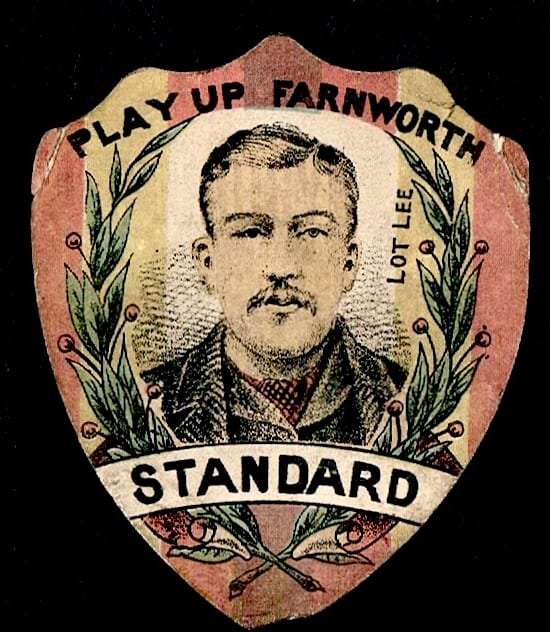
J. Baines Ltd., Bradford · 1880s–1900s
Baines Shield Cards (framed flight)
The playground currency of the first football generation — shield-shaped chromolith cards, bold as banners.
Collecting is the first form of supporting.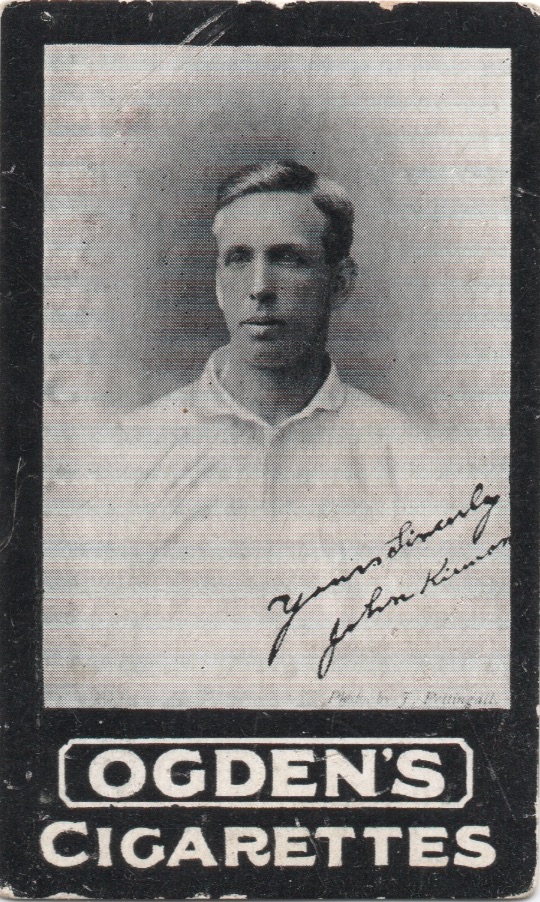
tobacco card lithographers · c. 1908
Footballers of the Edwardian Series (framed flight)
The Edwardian professionals in chromolith miniature — arms folded, hair parted, immortal at two inches tall.
Fame used to fit in a waistcoat pocket.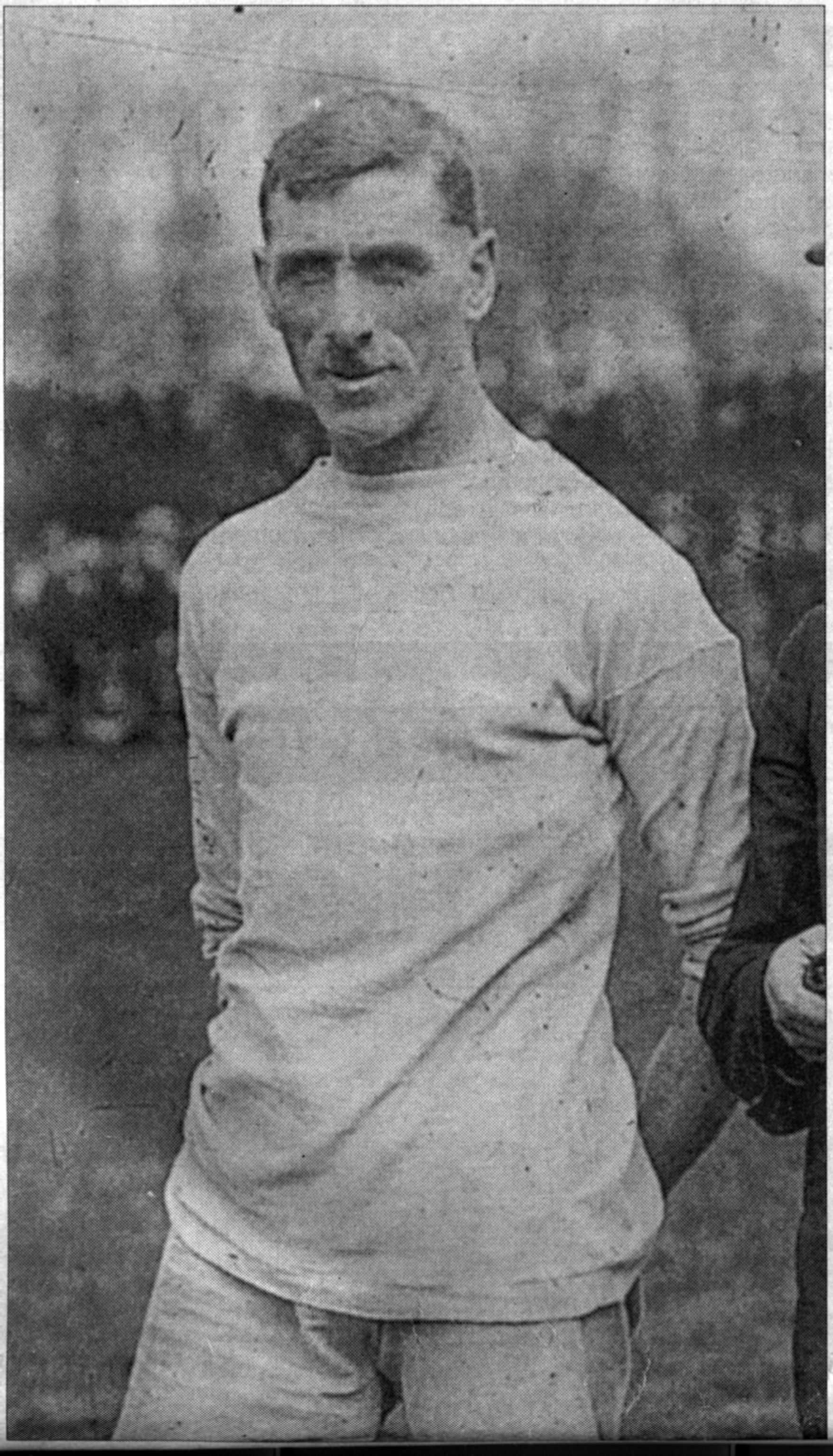
period photograph · c. 1905
Billy Meredith
The Welsh wizard at the wing, toothpick in place — the game’s first superstar, thirty seasons long.
Longevity is the rarest trophy.Jobbing printers · c. 1910
The Match Bill
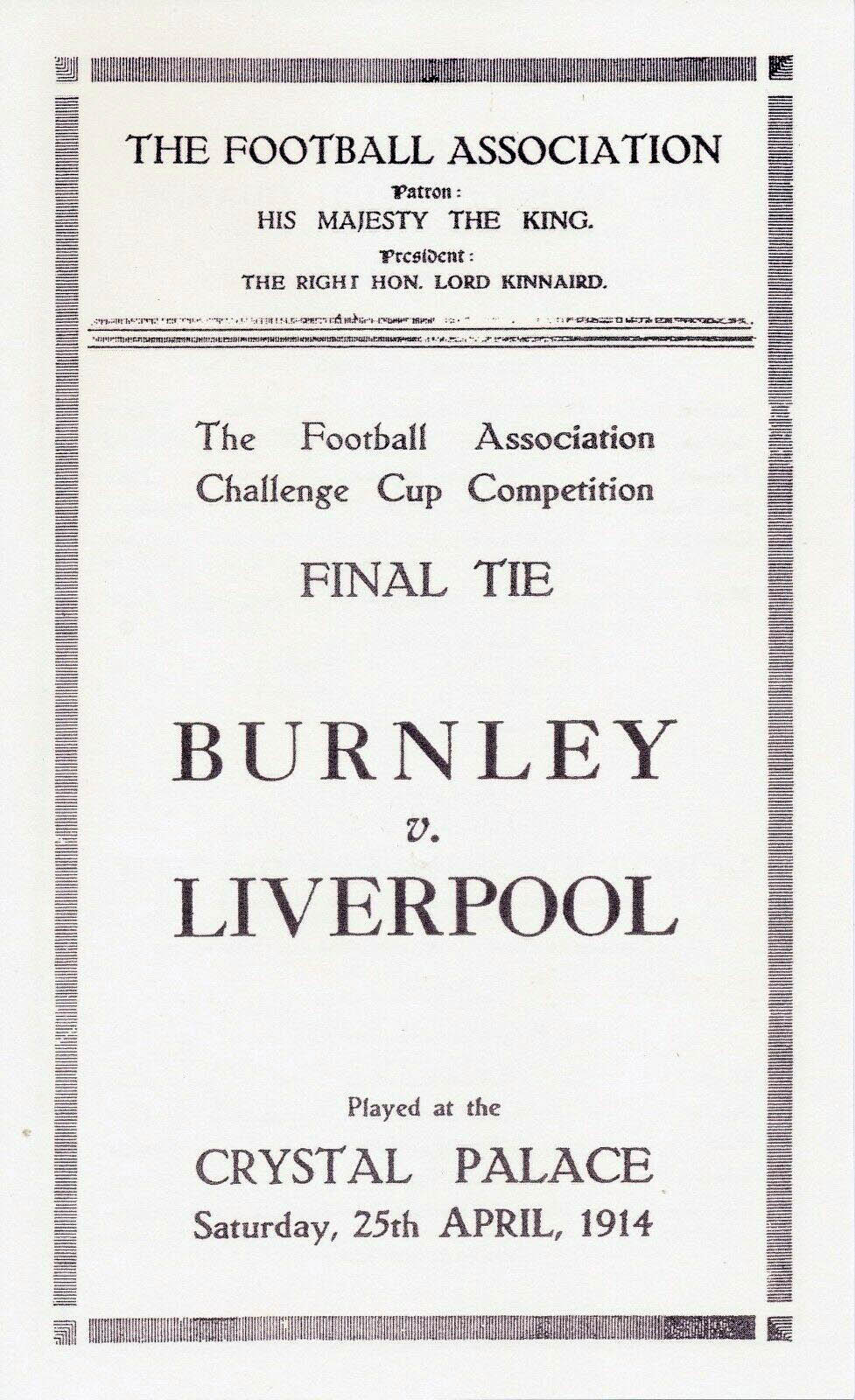
jobbing printers · c. 1910
A Letterpress Fixture Bill
Saturday, set in wood type: the kick-off hour, the admission price, the exclamation points earned.
Kick-off is the oldest deadline that makes people happy.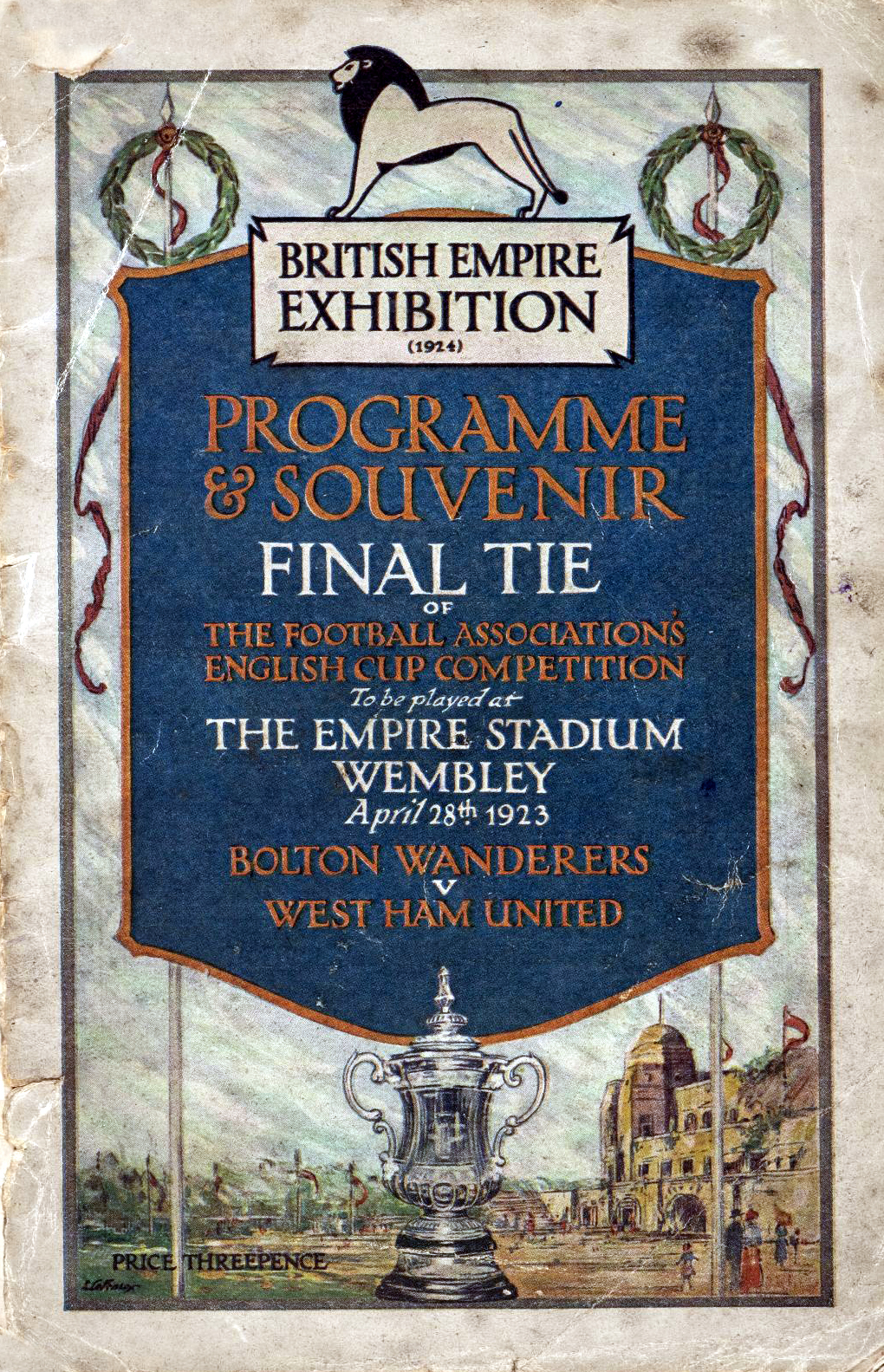
programme printers for the Empire Stadium · 1923
The First Wembley Programme, 1923
The programme of the White Horse Final — sold to a crowd that could not open its arms to read it.
The ephemera outlived the emergency.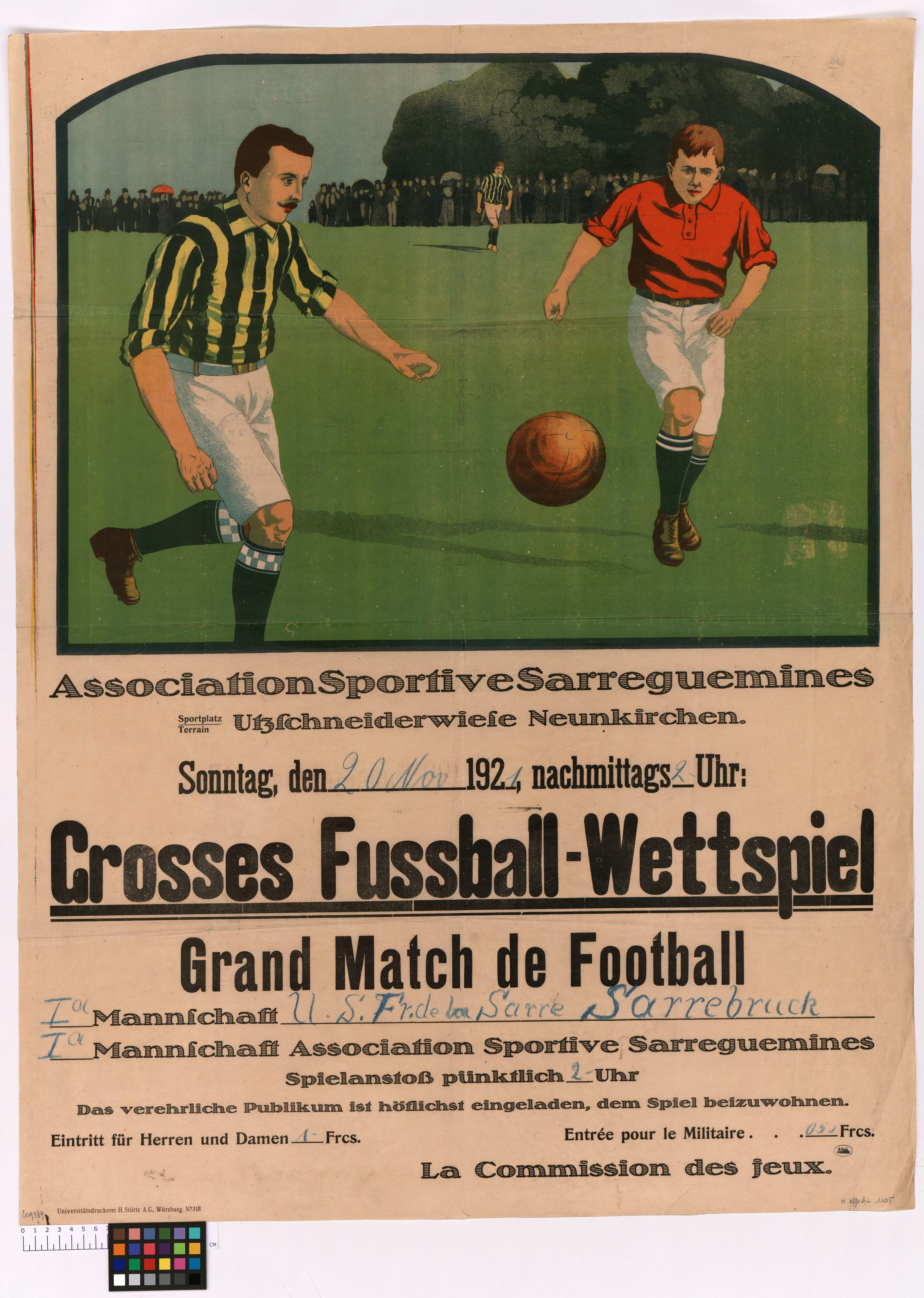
Jobbing printer, Sarreguemines · 1921
Grand Match de Football, 21 November 1921
A jobbing-printer match bill from the Moselle, at nearly thirteen thousand pixels.
A poster is a hierarchy of shouts, well arranged.Chapter III
The terrace rises
The crowd becomes the subject — Crystal Palace, Goodison, and the fifty-three thousand who came to watch the munition works' team.
Crystal Palace 110,000 · Wembley 126,047
The Crowd
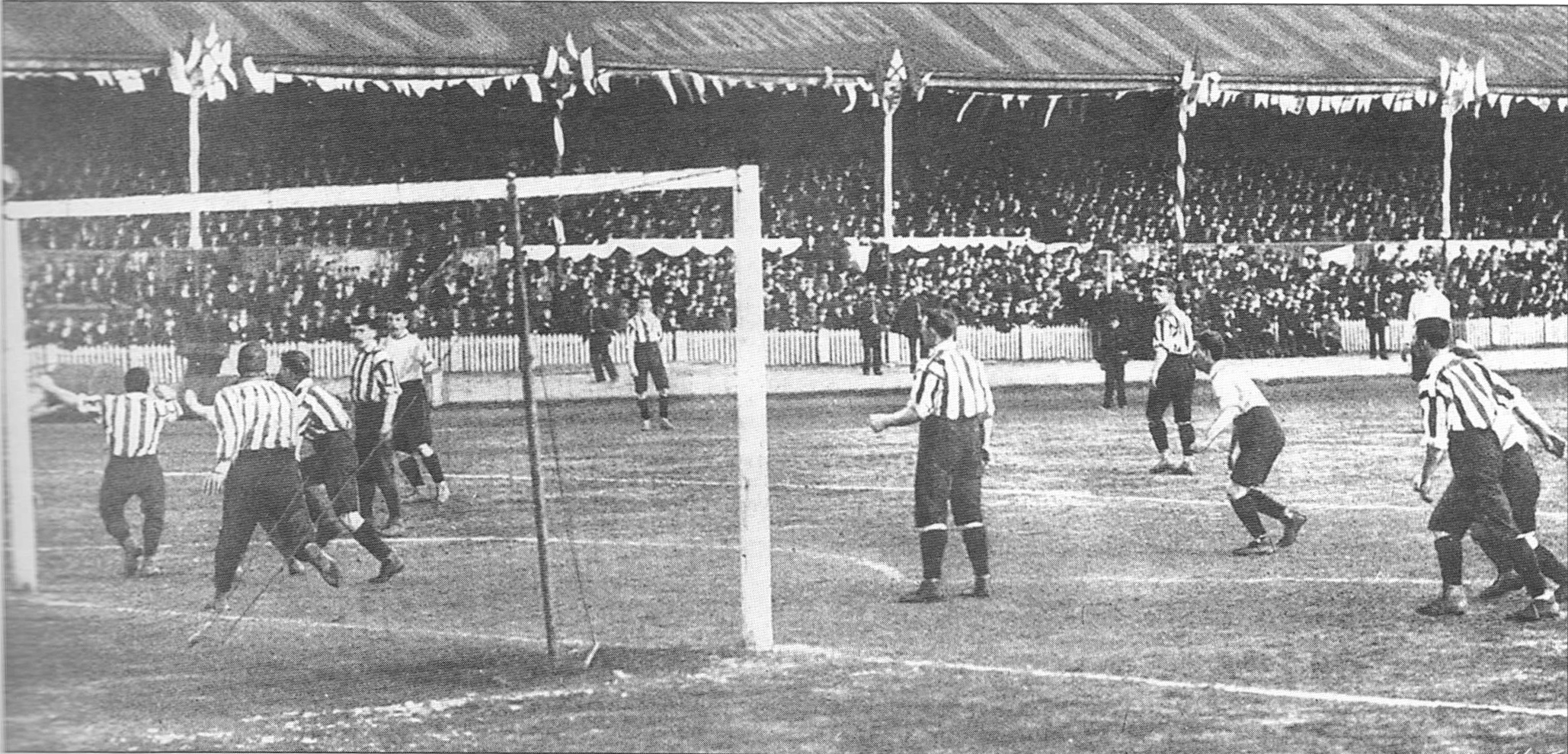
press photograph · 1901
The Cup Final at the Crystal Palace
A hundred and ten thousand on the slopes of the Palace grounds, the pitch a distant rumor.
A crowd this size is a kind of weather.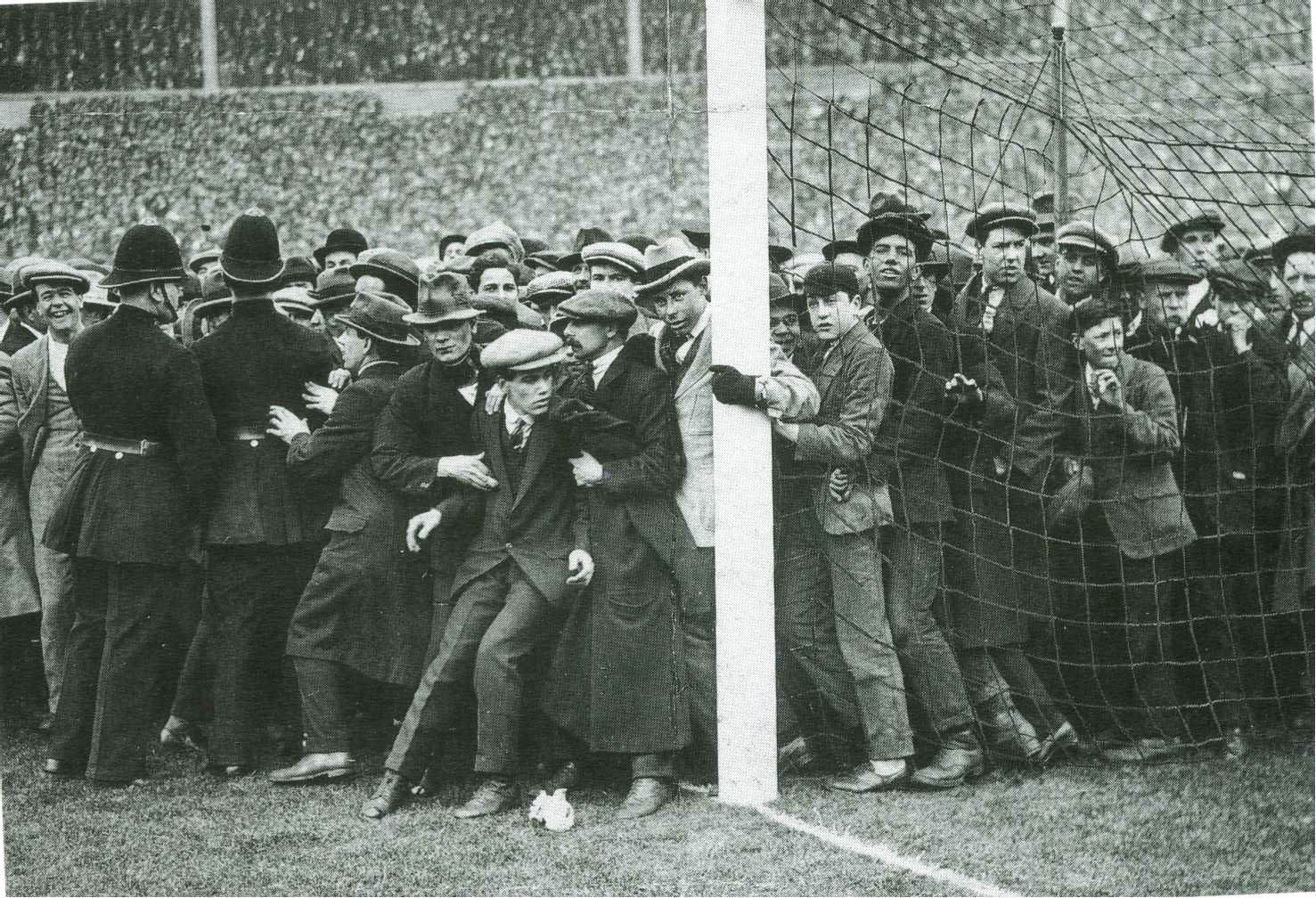
press photograph · 1923
The White Horse Final
Billie the grey police horse, alone in a sea that swallowed the pitch — Wembley’s first final.
The game belongs to whoever shows up.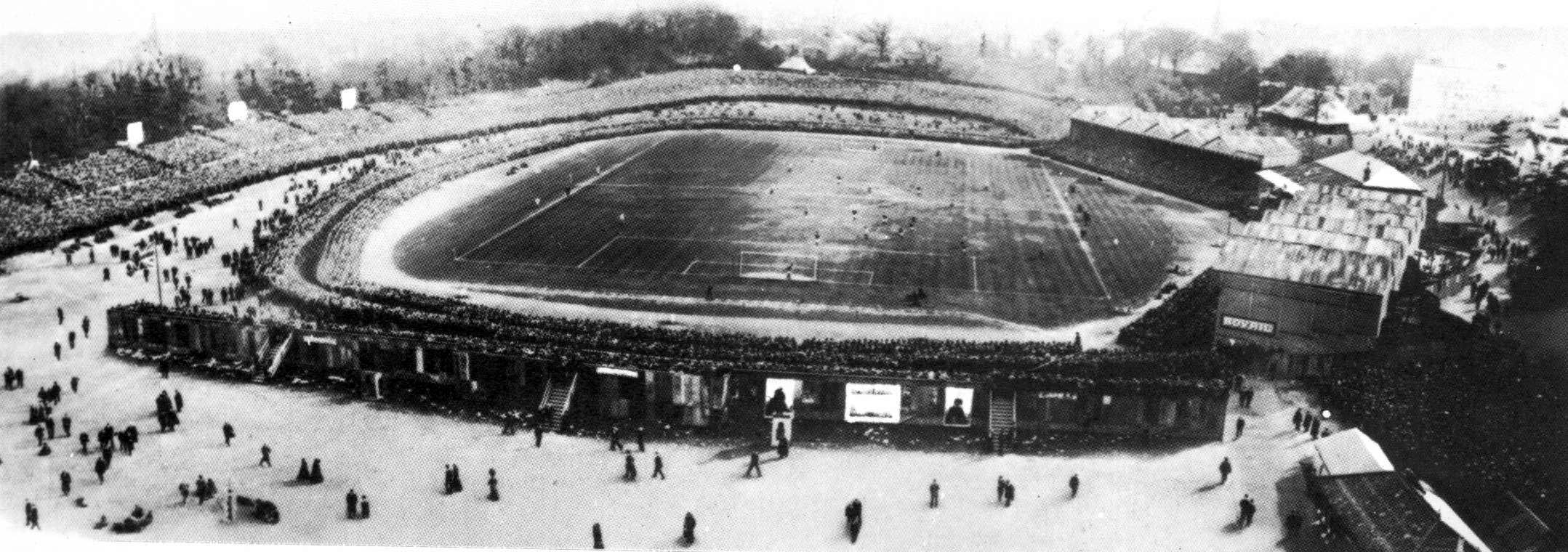
press photograph · 1905
The Cup Final Crowd, 1905
The Palace slopes at their Edwardian height — the hillside as grandstand, the hats as weather.
The gathering was the story.Goodison Park, Boxing Day 1920 · 53,000
The Dick, Kerr Ladies
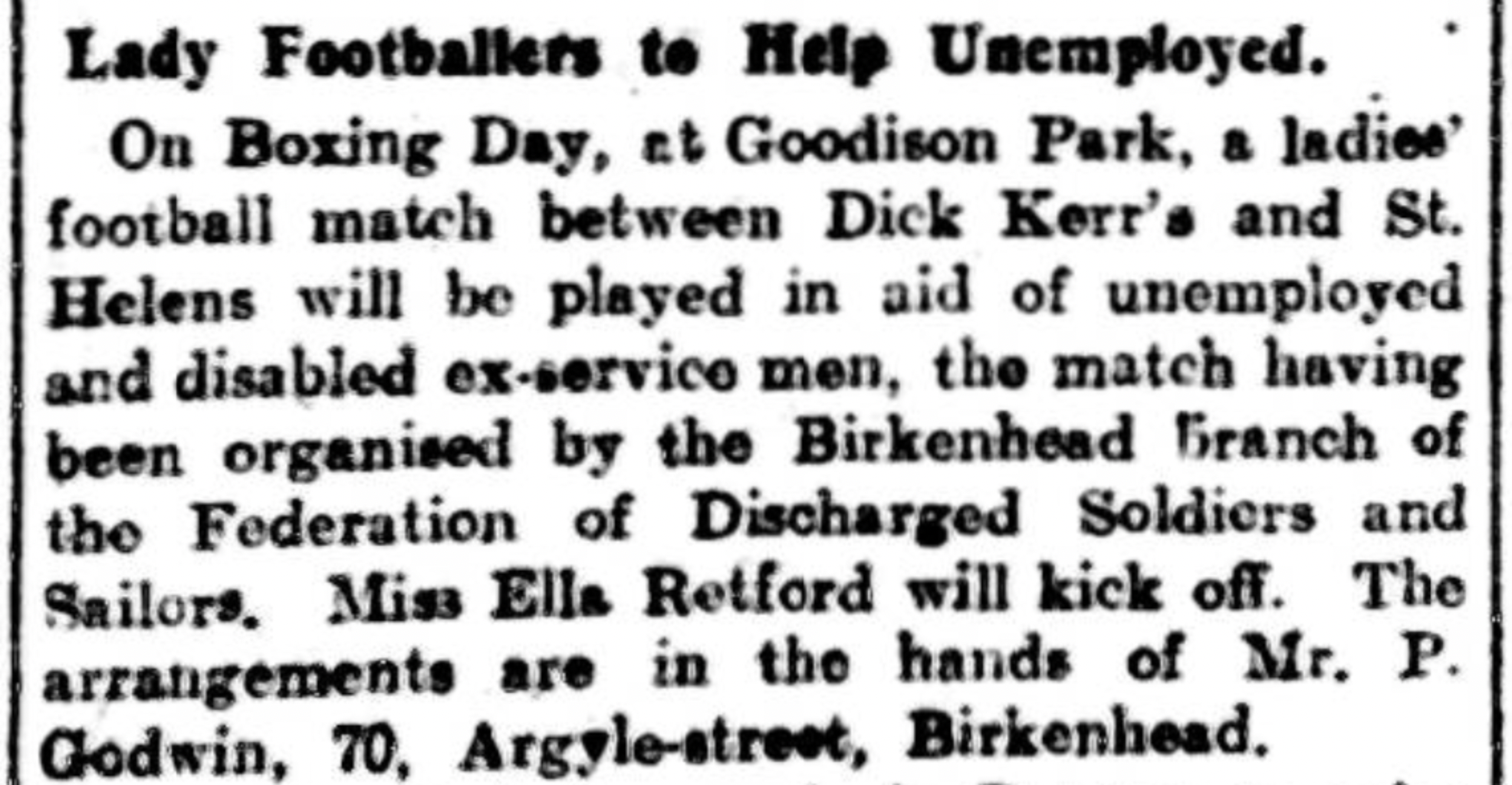
press photograph · 1920
The Dick, Kerr Ladies at Goodison Park
Boxing Day 1920: fifty-three thousand paid to watch the munition works’ team.
The gate receipts knew the truth first.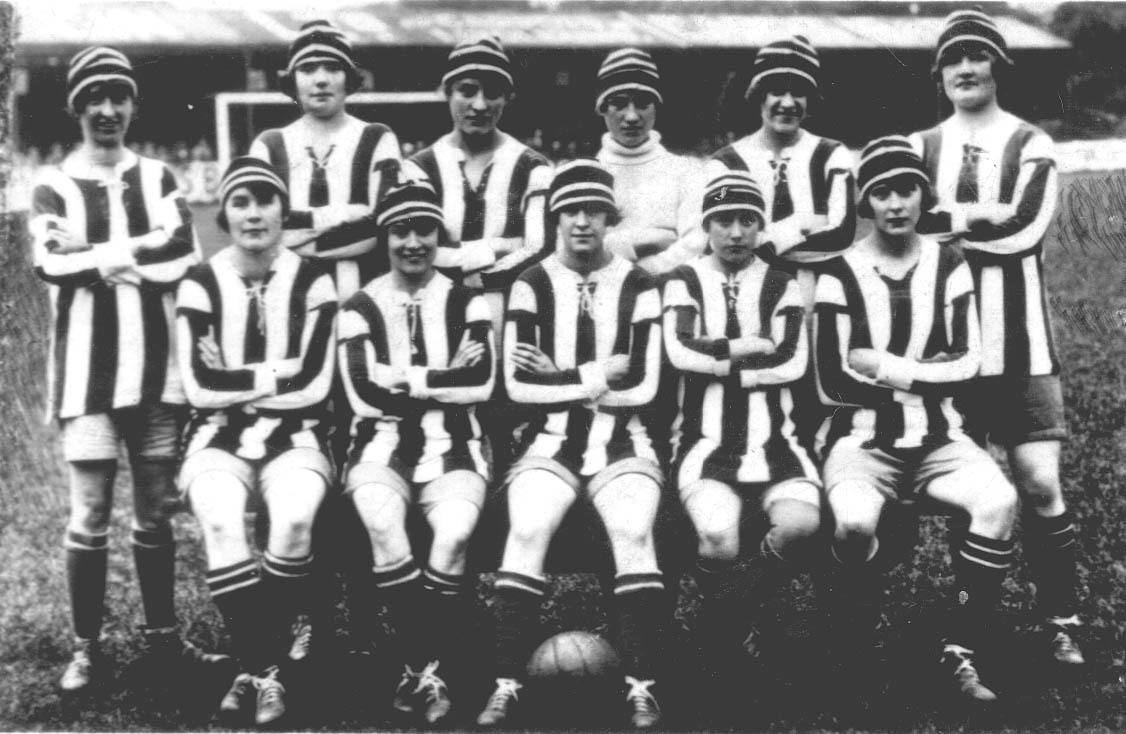
period photograph · c. 1921
The Dick, Kerr Ladies (team photograph)
The team in stripes and bobbed hair — factory workers who became the best-drawing side in Britain.
History keeps the team sheet.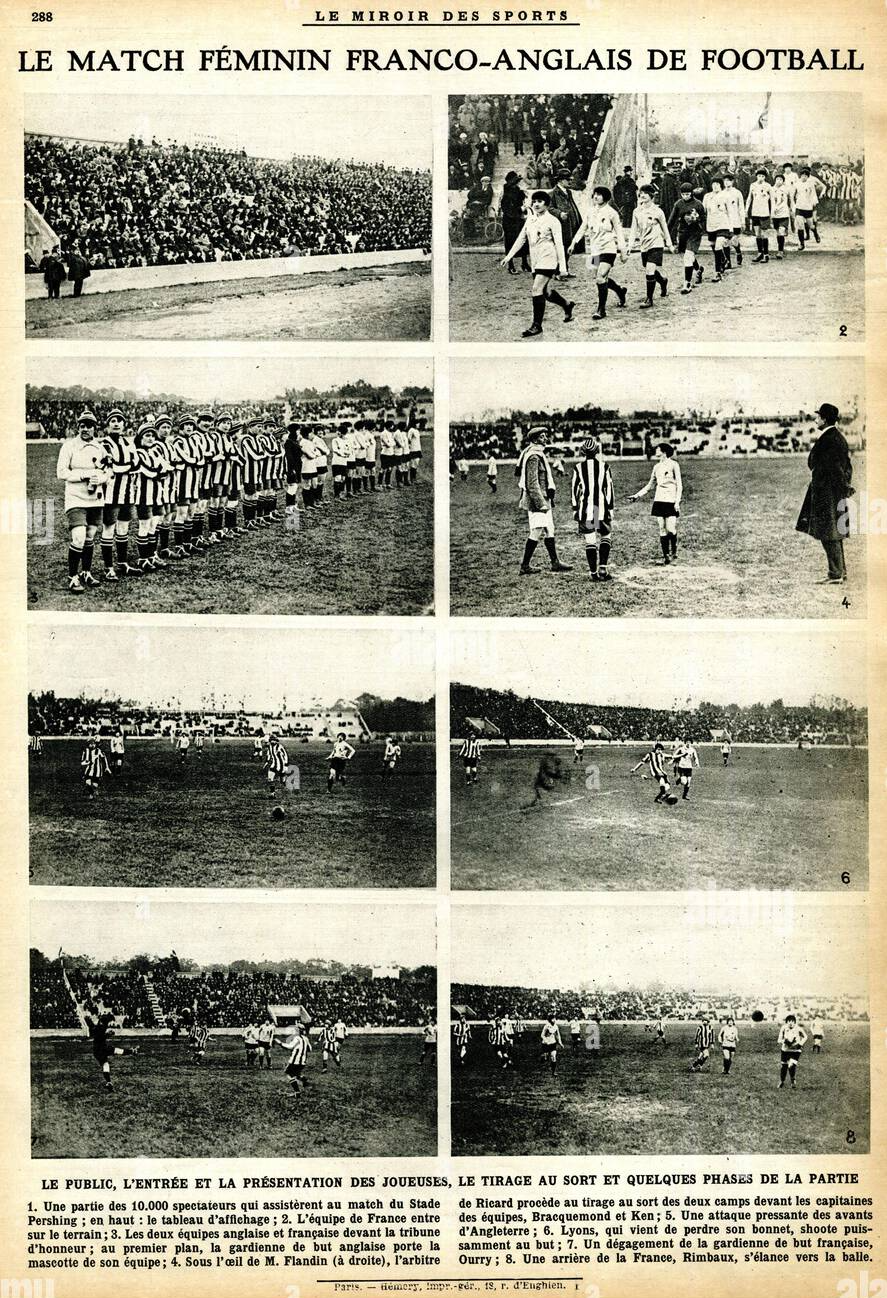
the French sporting press · 1920
France v. England, November 1920
The women’s international as a magazine cover — the game’s first golden age, printed in Paris.
The magazines had already printed the truth.Chapter IV
The whistle
And then the game goes global: Montevideo, 1930 — the first World Cup, newly public domain, the just-opened wing of the house.
Montevideo · July 1930
El Primer Mundial
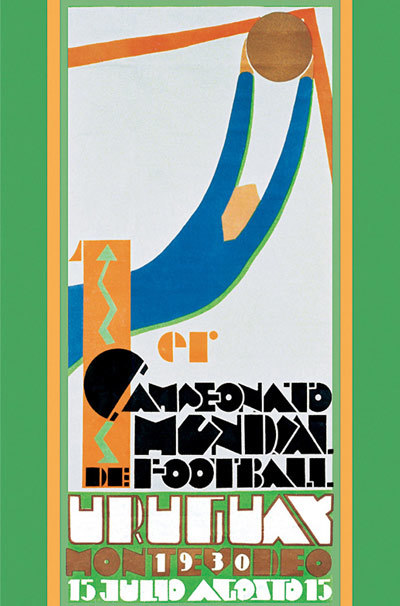
Guillermo Laborde · Montevideo, 1930
El Primer Campeonato Mundial de Football
The deco goalkeeper reaching across the sky — the poster of the first World Cup.
Every century’s game has a first morning.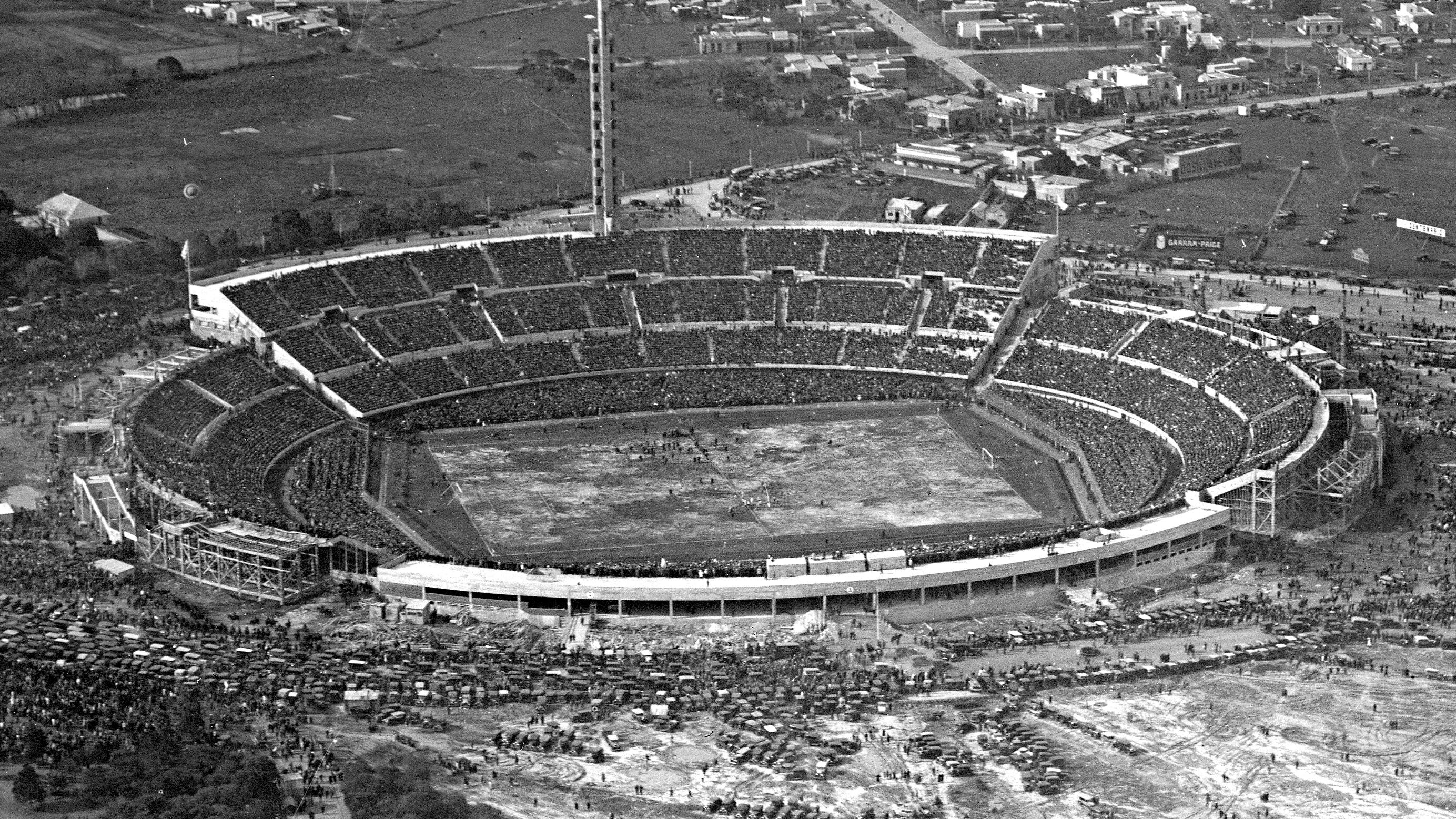
period photograph · Montevideo, 1930
The Estadio Centenario, Opening Year
The stadium Uruguay raised for its centenary and the world’s first cup — concrete still curing as the teams arrived.
Build it before the legend, and the legend moves in.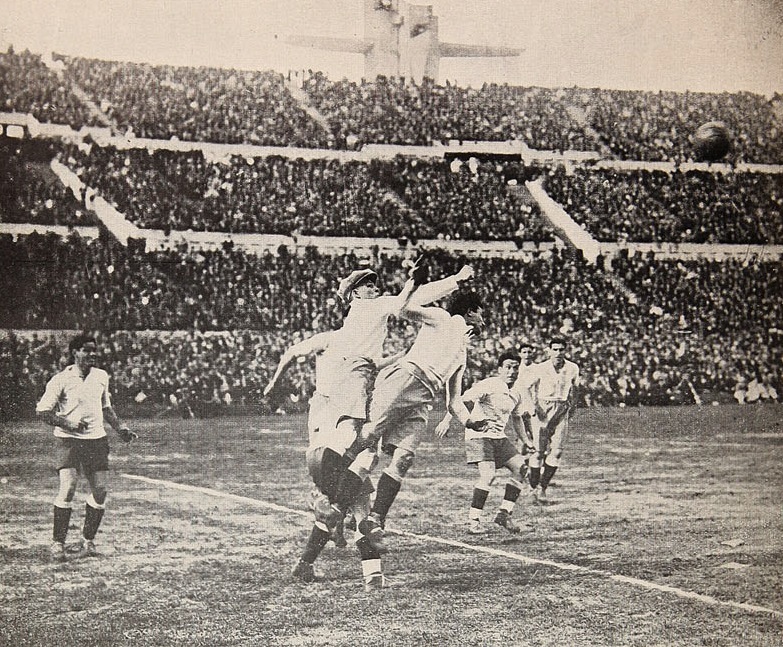
Los Sports magazine · 1930
The First Final: Uruguay v. Argentina
The 30th of July, 1930 — the world’s first final, from the pages of Los Sports.
The century’s tournament began as a magazine spread.The commissions
Your fixture, set in period type.
Two text-only commissions, free watermarked preview in seconds: The [Surname] F.C. — your family founded as a club, with an original crest — and The Fixture Bill — a wedding, a reunion, a retirement, set as a letterpress match bill.
On your wall
Printed to become the piece a room is built around — the den, the club bar, the supporters’ bar.
The White Horse Final — Wembley, 28 April 1923, attendance 126,047 — hung in four very different rooms.