The complete catalog
The Gallery
Football in art and print, seven collections deep — from the engravers of the first internationals to the first morning of the World Cup. Each piece printed faithful to its source scan.
On walls around the world
Not a poster — the centrepiece of a room
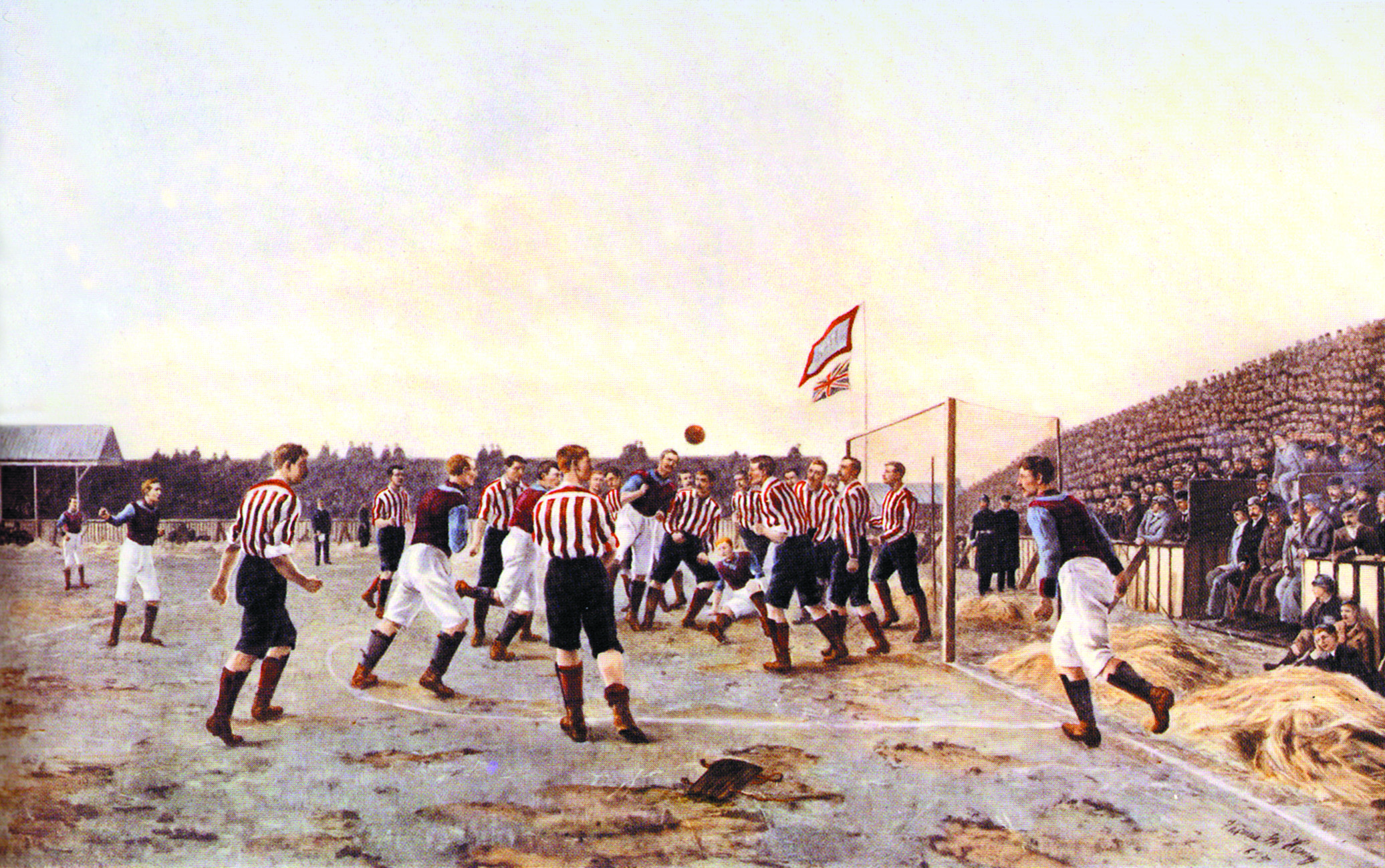
Printed large on archival paper, gallery canvas, or framed — den, club bar, and supporters’-bar sizes first-class. Here, Thomas M. M. Hemy’s canvas of 1895 hung in four very different rooms.



The curated sets
The curated sets
The Illustrated Papers · 1870s–1880s
The First Game
The illustrated papers’ engravings of the 1870s and 80s — the early internationals and cup ties rendered as Victorian news. Before the photograph could catch a match, the engravers did.
Vanity Fair · 1912
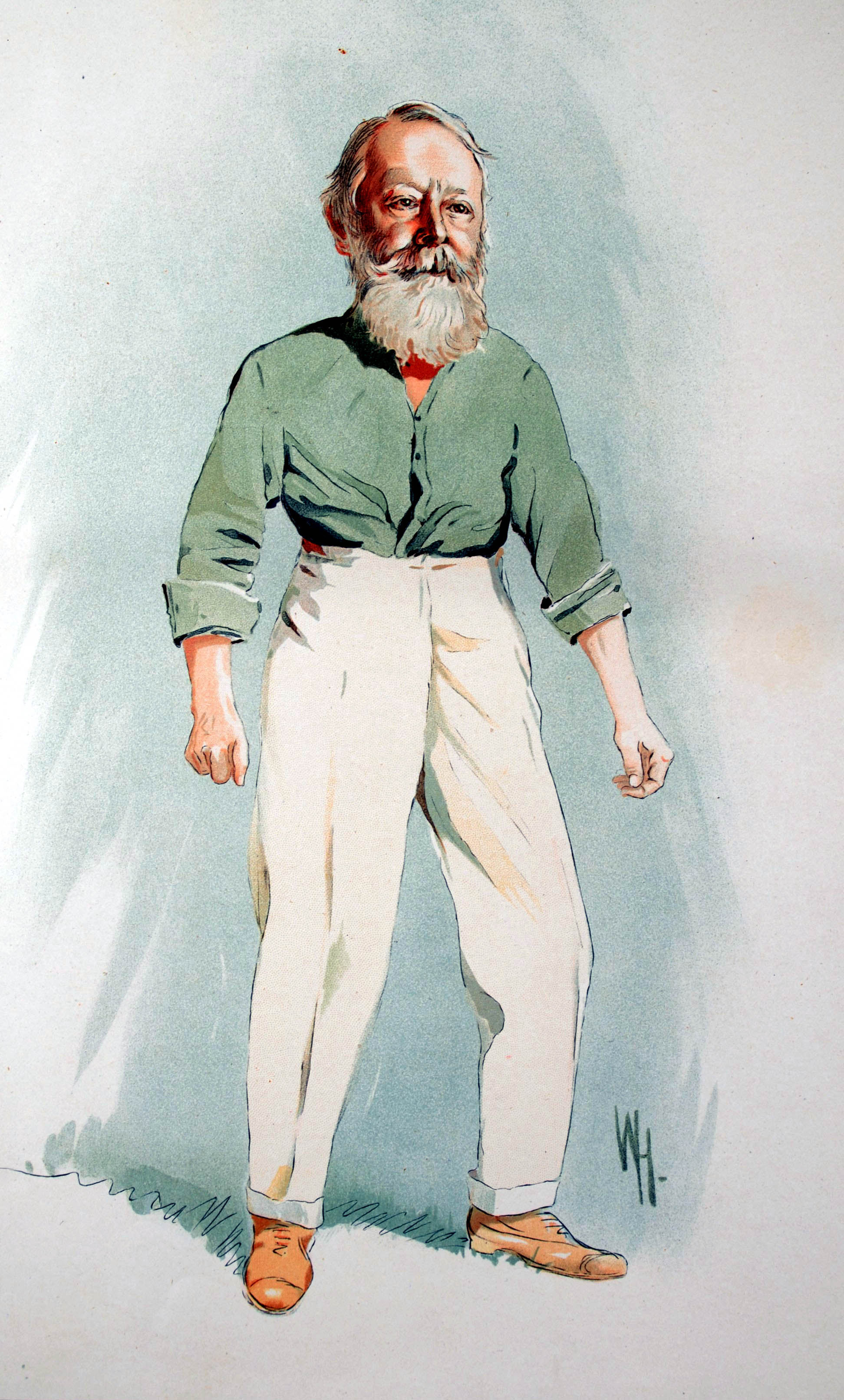
Lord Kinnaird, by Vanity Fair
Nine Cup finals, five winner’s medals, one red beard — the great amateur, in chromolithograph.
The first celebrity of the game tackled like a landslide.Crystal Palace 110,000 · Wembley 126,047
The Crowd
The Crystal Palace cup-final panoramas and the 1923 White Horse Final at Wembley — the terraces as the subject. A crowd this size is a kind of weather.
press photograph · 1901
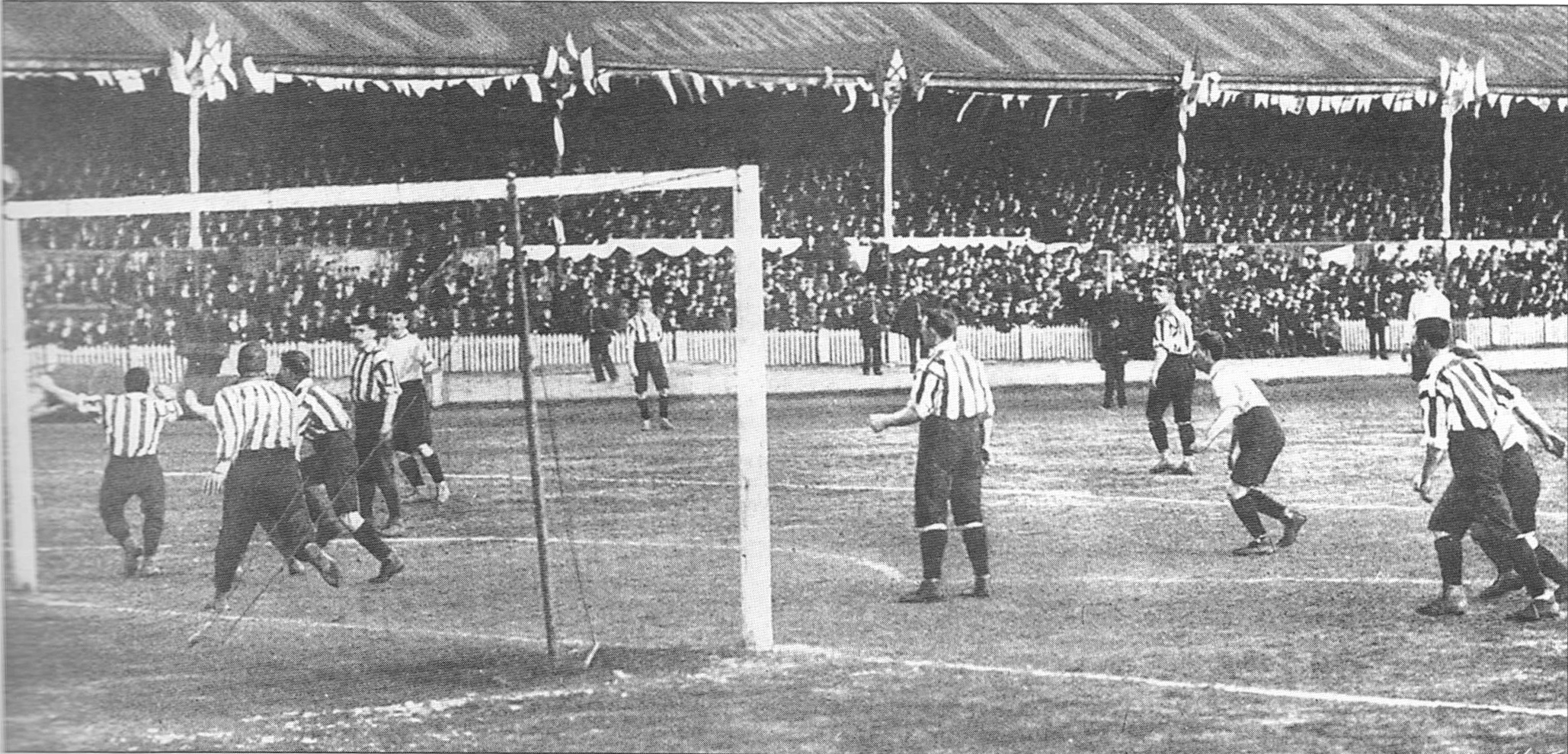
The Cup Final at the Crystal Palace
A hundred and ten thousand on the slopes of the Palace grounds, the pitch a distant rumor.
A crowd this size is a kind of weather.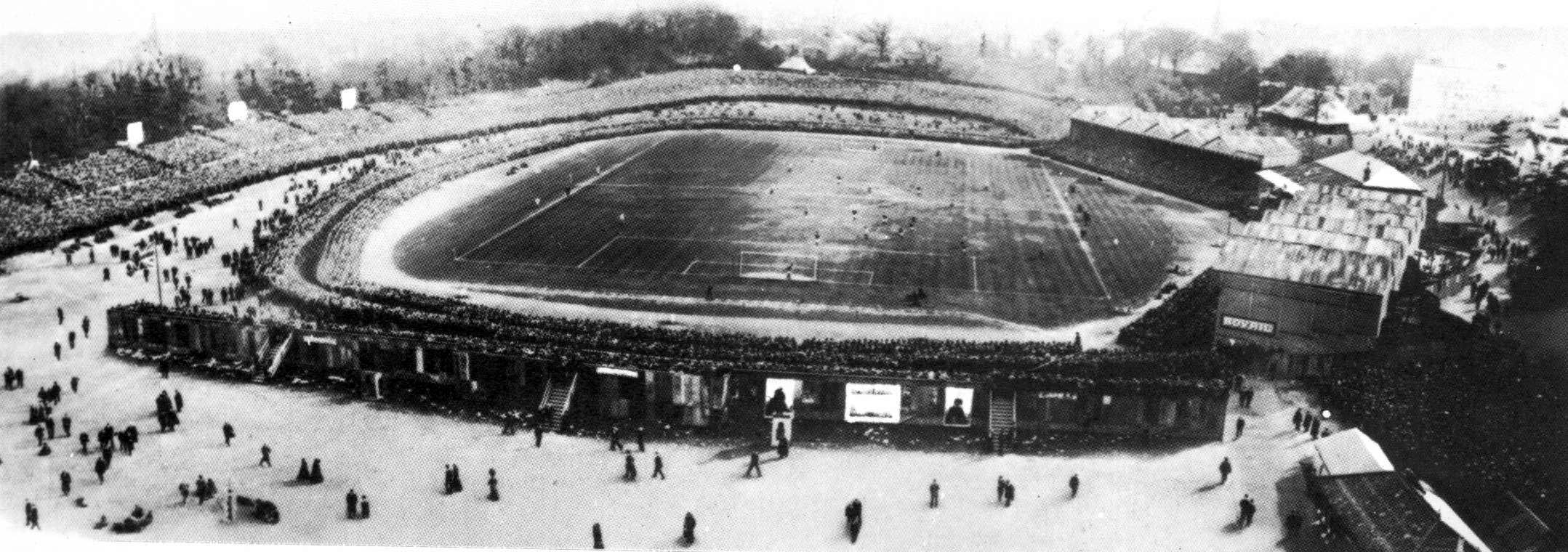
press photograph · 1905
The Cup Final Crowd, 1905
The Palace slopes at their Edwardian height — the hillside as grandstand, the hats as weather.
The gathering was the story.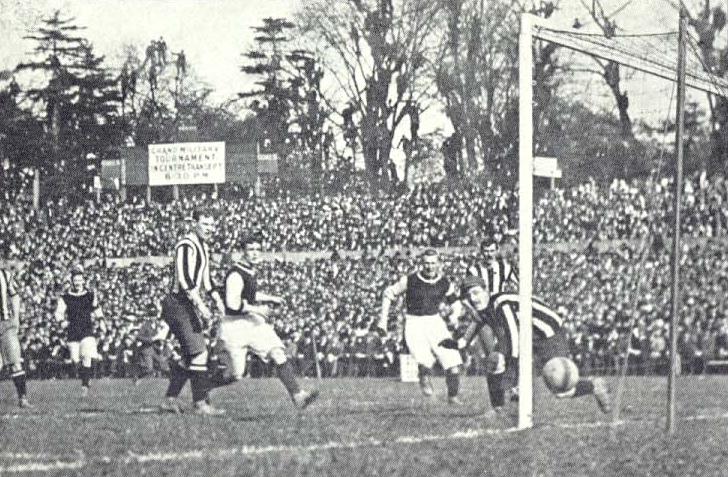
press photograph · 1905
The Final in Play, 1905
Aston Villa and Newcastle United at the Palace — the Edwardian final caught mid-motion.
The shutter gave the game its first evidence.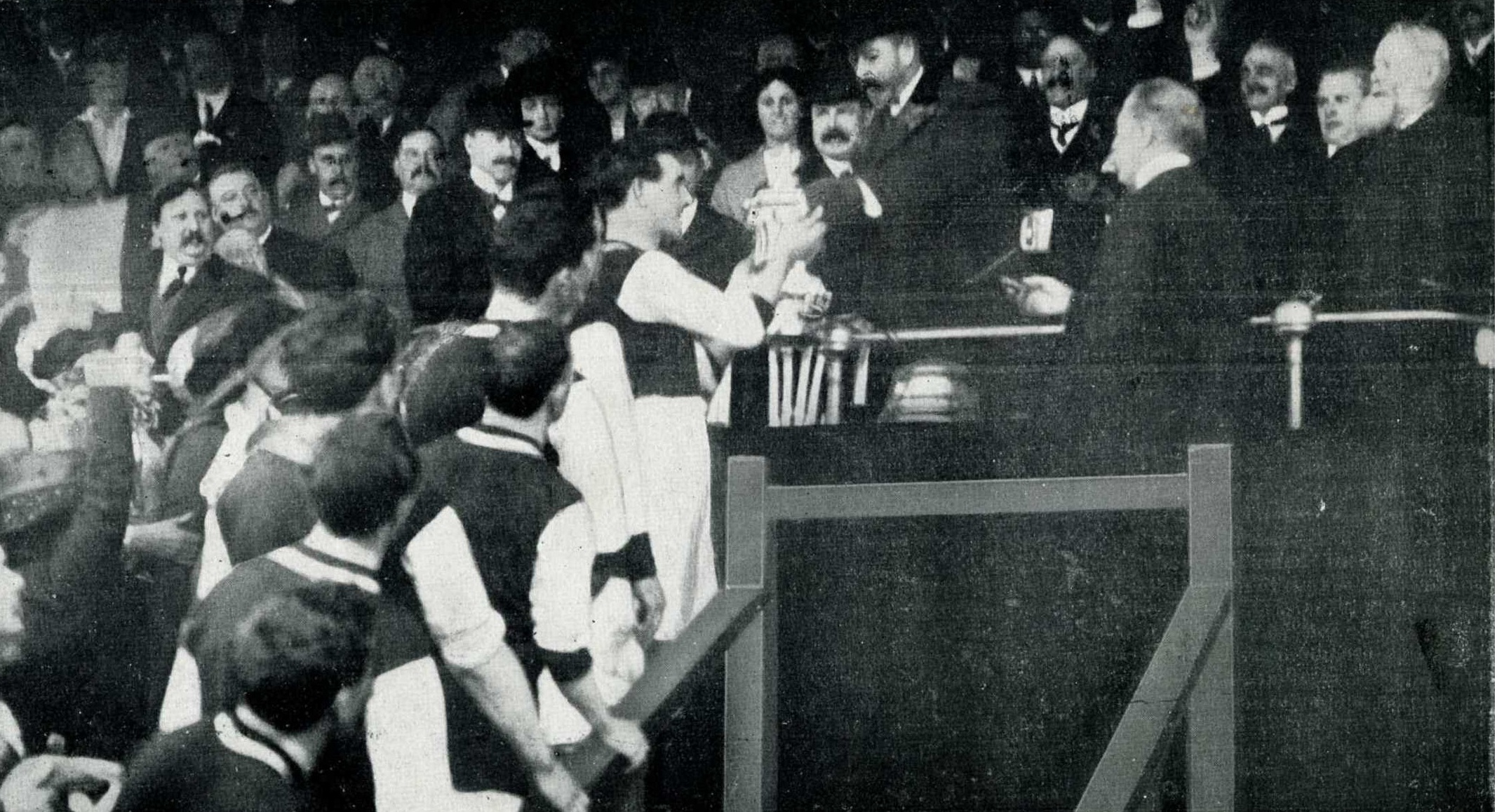
press photograph · 1914
The King at the Final, 1914
George V presents the Cup at the Palace — the first monarch ever to attend a final.
The game joined the national furniture.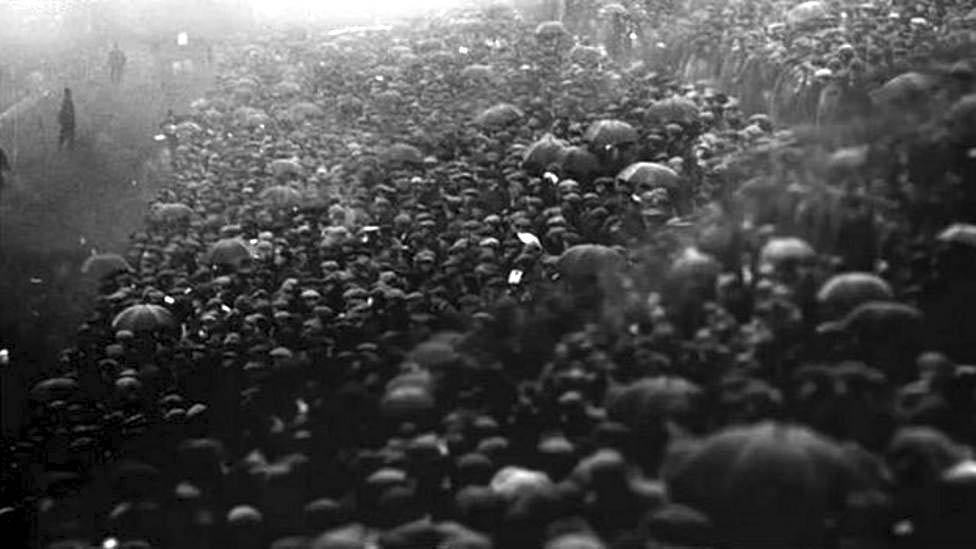
press photograph · 1915
The Khaki Final, 1915
The last final before the guns — the terraces half in uniform, the game about to stop.
The fixture list is a kind of peace treaty.J. Baines Ltd., Bradford · 1880s–1900s
The Card Collection
Pre-1931 footballer cards: the Baines shield cards of Bradford and the cigarette-card era. The playground currency of the first football generation — sold singly and as framed flights, because the set is the product.
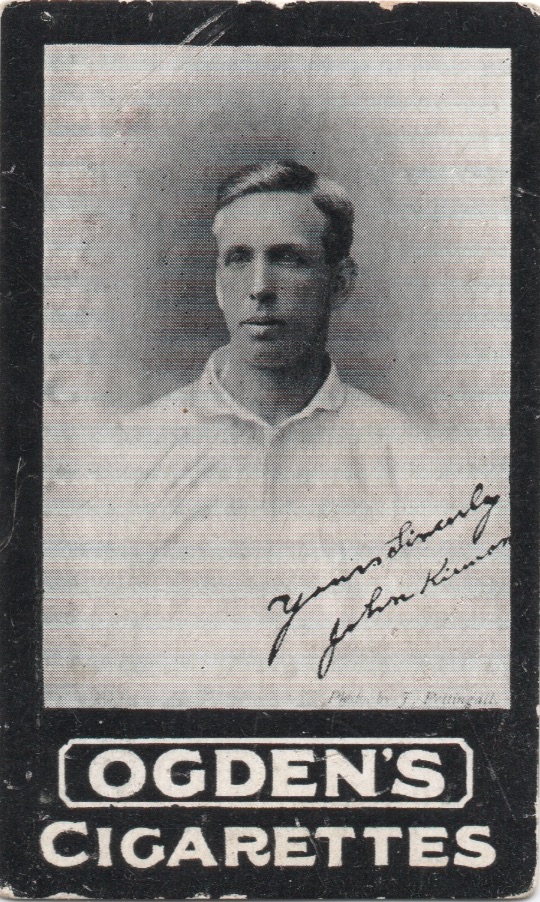
tobacco card lithographers · c. 1908
Footballers of the Edwardian Series (framed flight)
The Edwardian professionals in chromolith miniature — arms folded, hair parted, immortal at two inches tall.
Fame used to fit in a waistcoat pocket.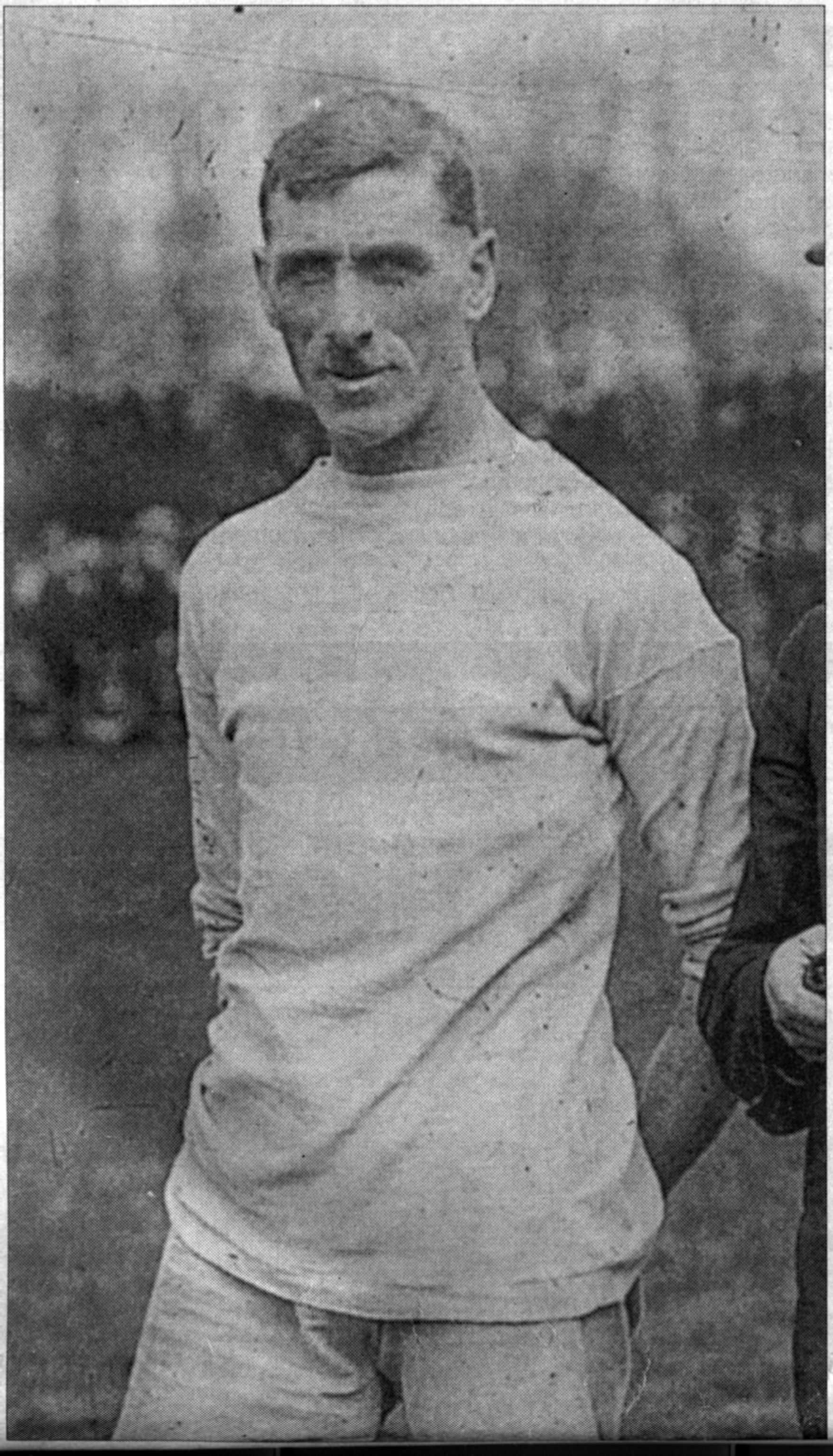
period photograph · c. 1905
Billy Meredith
The Welsh wizard at the wing, toothpick in place — the game’s first superstar, thirty seasons long.
Longevity is the rarest trophy.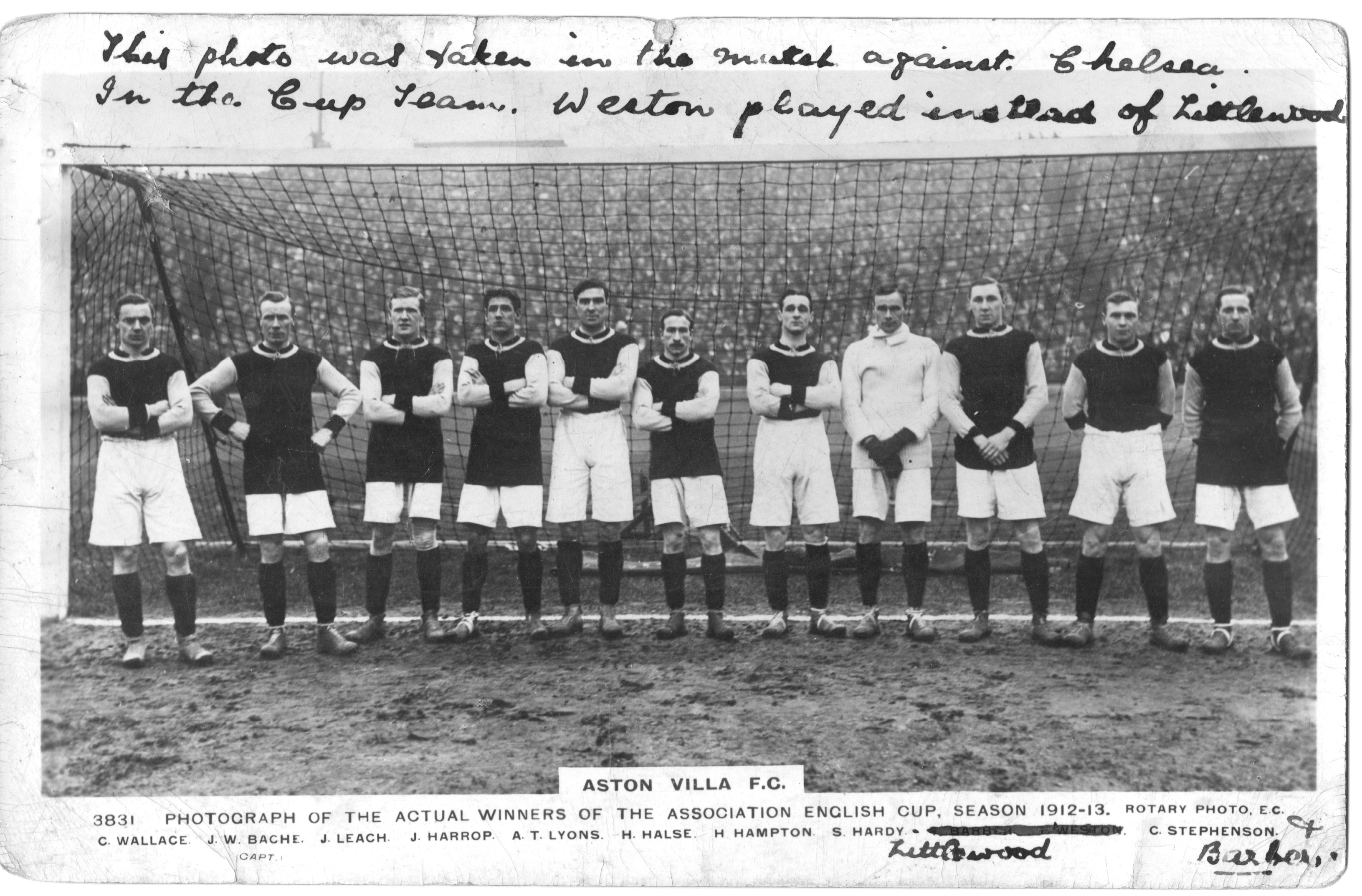
postcard publishers · 1913
The Cup Winners’ Postcard, 1913
The team as a picture postcard — Edwardian football’s answer to the broadcast.
The postman was the first football broadcaster.Jobbing printers · c. 1910
The Match Bill
Period letterpress fixture bills and programmes — the typography of Saturday. The kick-off hour, the admission price, the exclamation points earned.
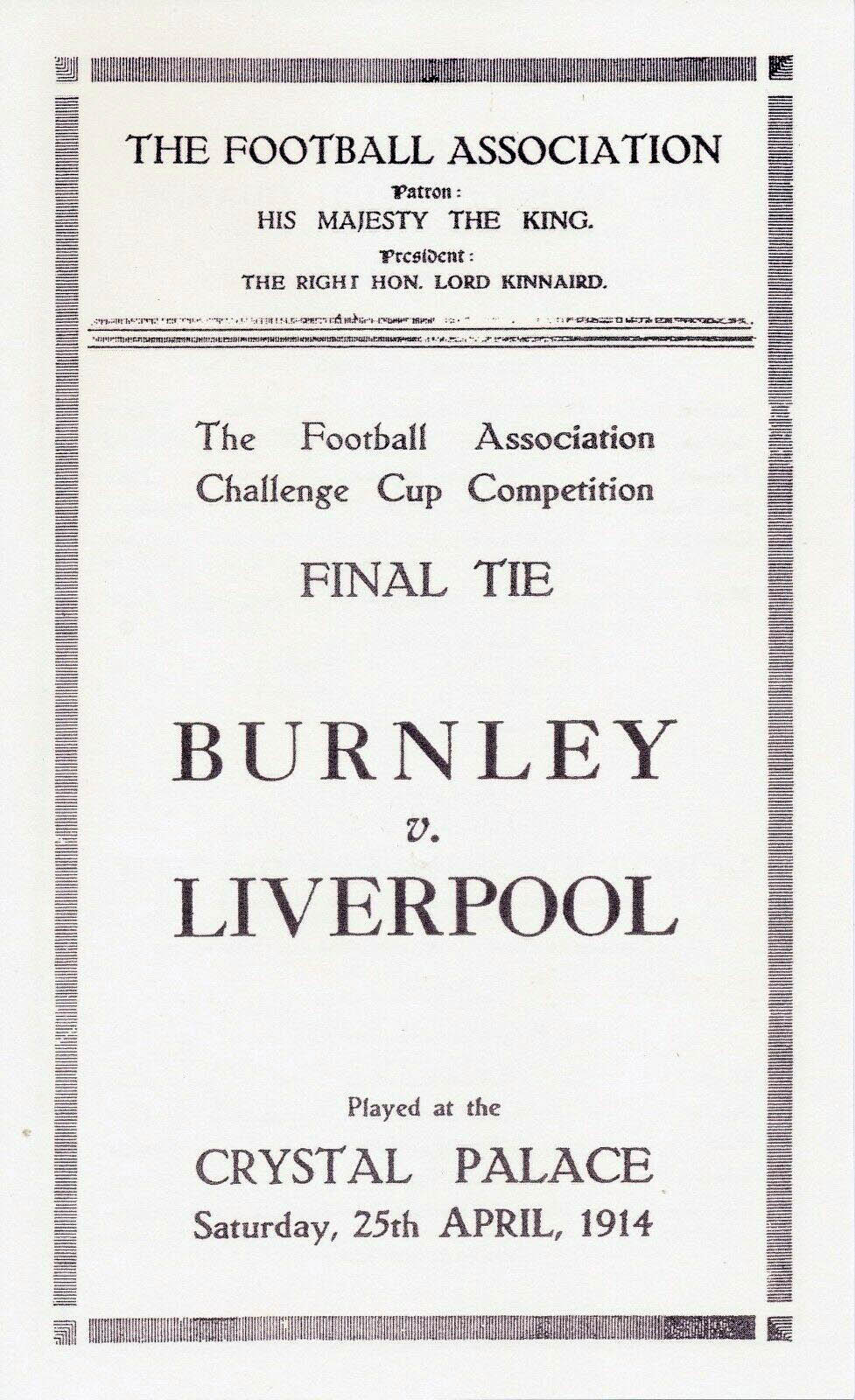
jobbing printers · c. 1910
A Letterpress Fixture Bill
Saturday, set in wood type: the kick-off hour, the admission price, the exclamation points earned.
Kick-off is the oldest deadline that makes people happy.Agence Rol · Paris · 1920–1927
The Continent
Paris between the wars, on glass. The Agence Rol photographers worked the Bergeyre, the Pershing, Colombes and the Buffalo every Sunday for a decade, and the plates survive at a resolution nothing else from this period comes close to. The game had left Britain; here is where it went.
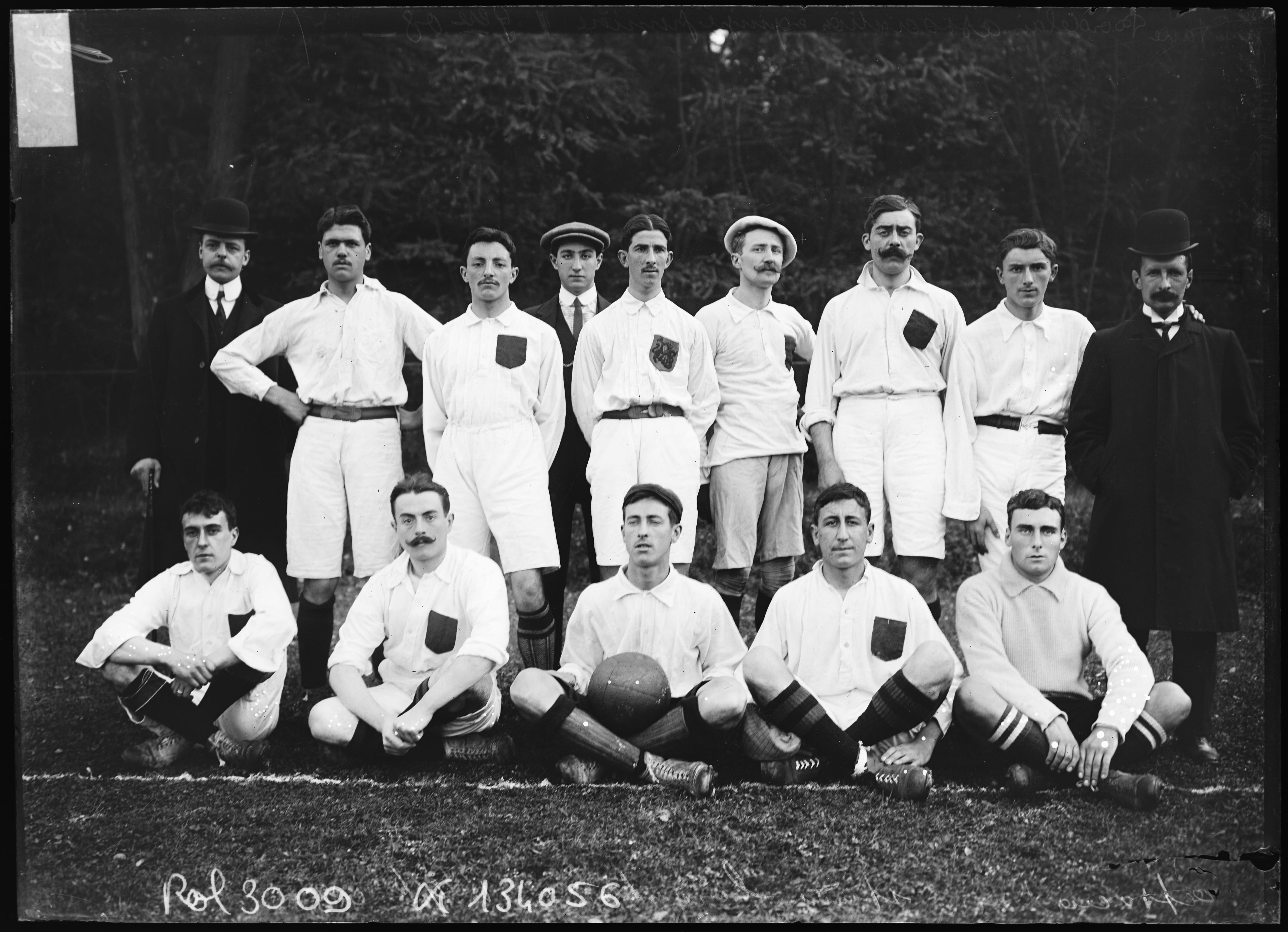
Agence Rol · 1908
The Bordeaux Ground, 1908
The earliest surviving Rol plate of the French game — a provincial ground before the crowds arrived.
Everything starts on a field with a rope round it.Back row standing · 1907–1924
The Eleven
The team photograph — the oldest ritual in the game and the one that never changed. Arms folded, back row standing, the ball on the ground in front with the year painted on it. Barnsley to Geneva, 1907 to 1924.
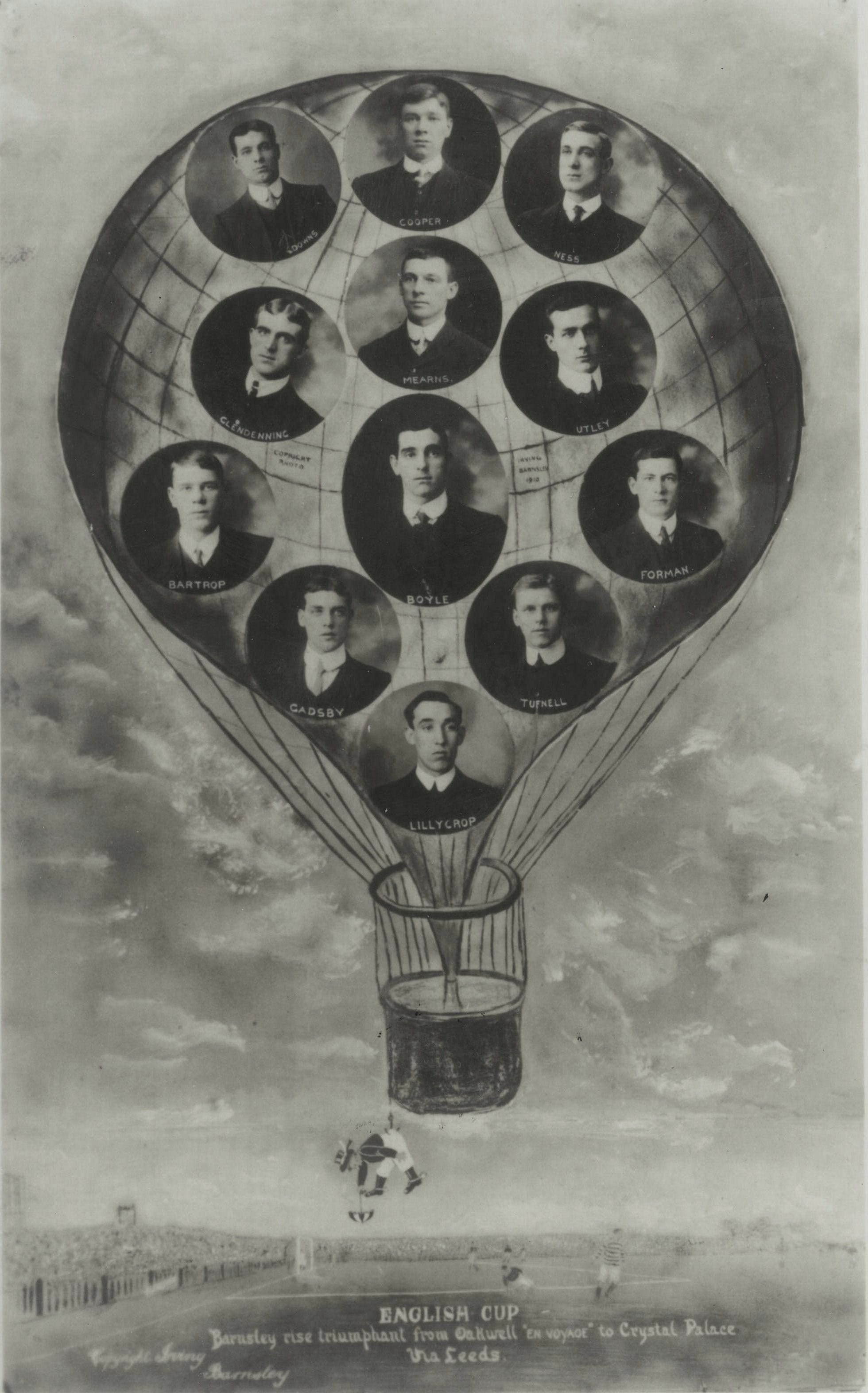
Unknown photographer · 1909
A Yorkshire Eleven, 1909
Back row standing, front row seated, ball on the ground with the season painted on it.
The pose outlasted the moustaches, the boots, and the century.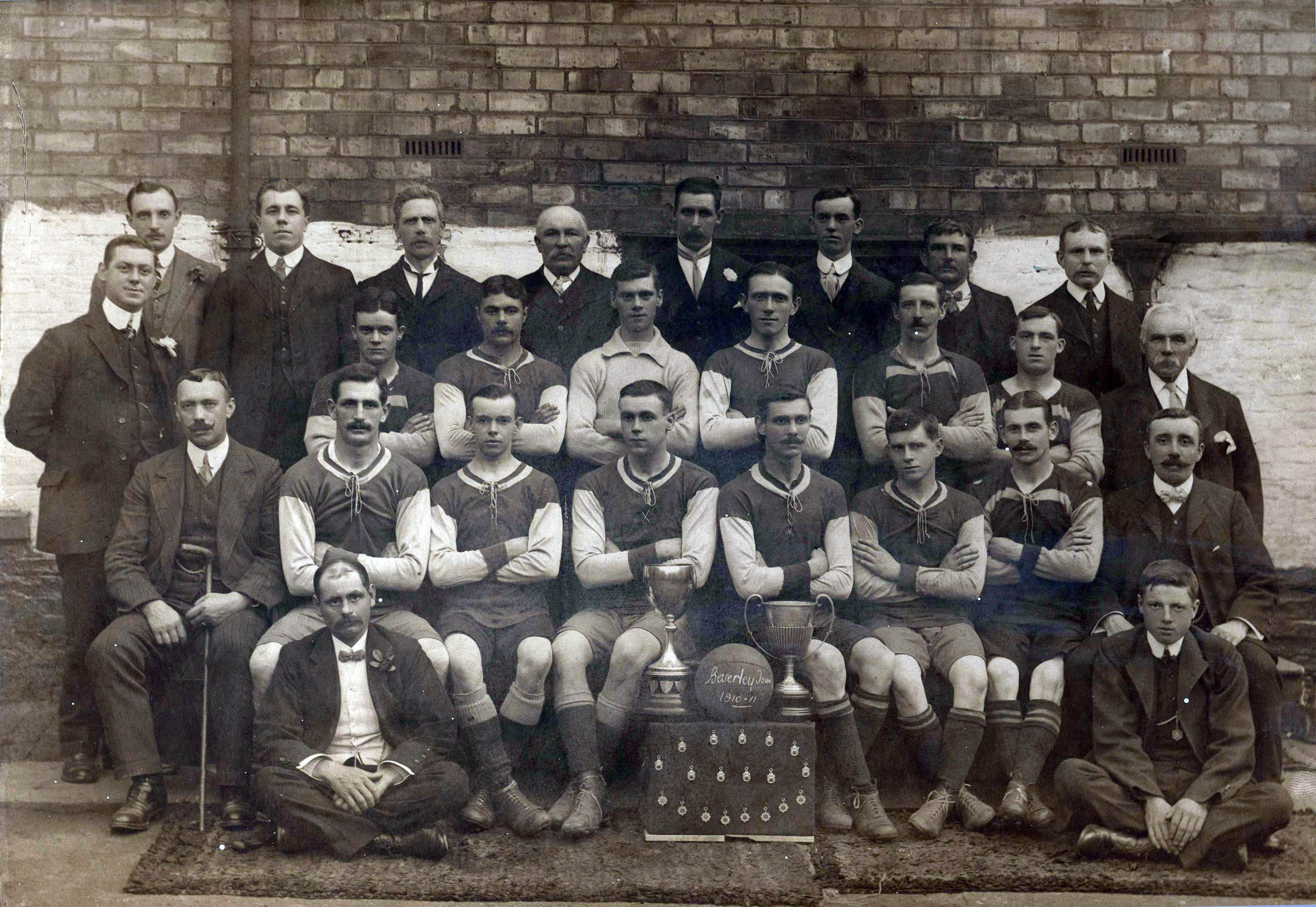
Unknown photographer · 1910
A Market-Town Eleven, 1910–11
The whole pyramid’s foundation — a small-town side, photographed as carefully as any champion.
The game is made of the four hundred clubs that are not famous.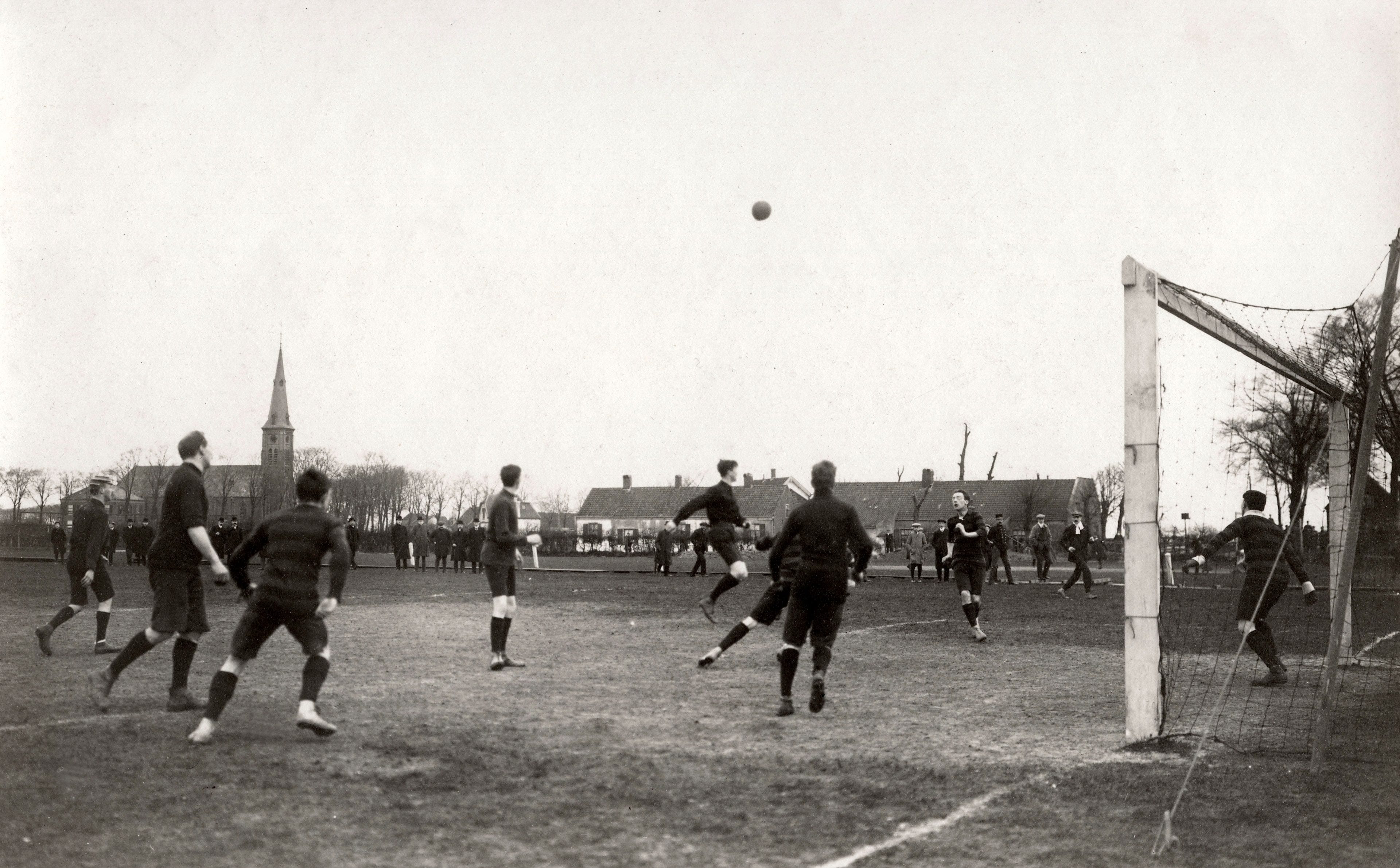
Unknown photographer · 1907
A Haarlem Eleven, 1907
The Dutch game at the water’s edge — the oldest continental club photograph in the house.
A sport travels as a rulebook and a pose.