An Era Match
The Interwar Game · 1919–1930
An era match — the pieces that speak from this stretch of the game.
These are the works in the house that answer to this era of the game — the grounds, the dates, and the crowds as the ink of the day recorded them. A piece chosen this way is not a decoration but a portrait of a loyalty’s beginnings: the game as it looked when a club, or a family’s allegiance to it, was made. Offered, as everything here is, faithful to the source scan.
The pieces
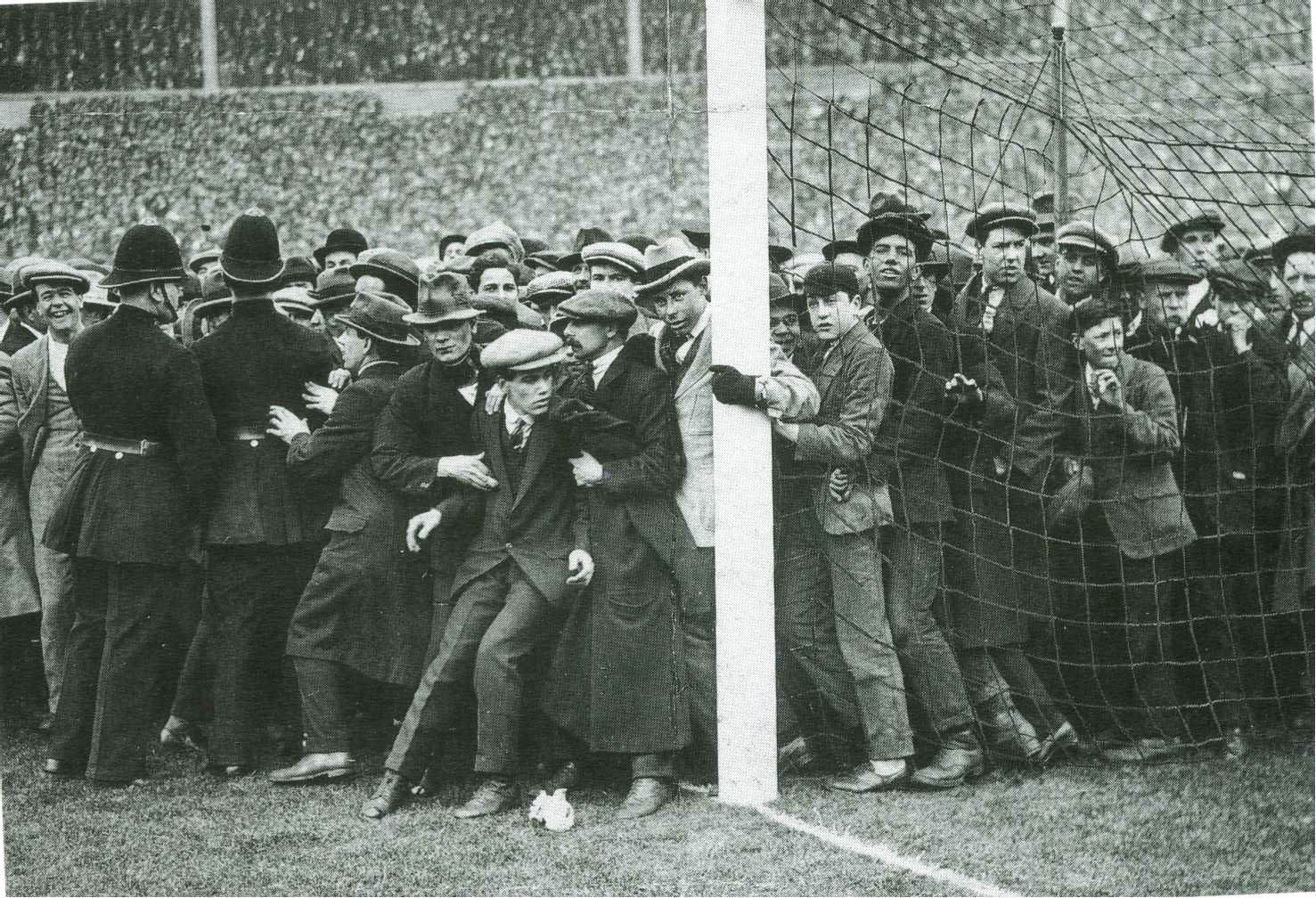
press photograph · 1923
The White Horse Final
Billie the grey police horse, alone in a sea that swallowed the pitch — Wembley’s first final.
The game belongs to whoever shows up.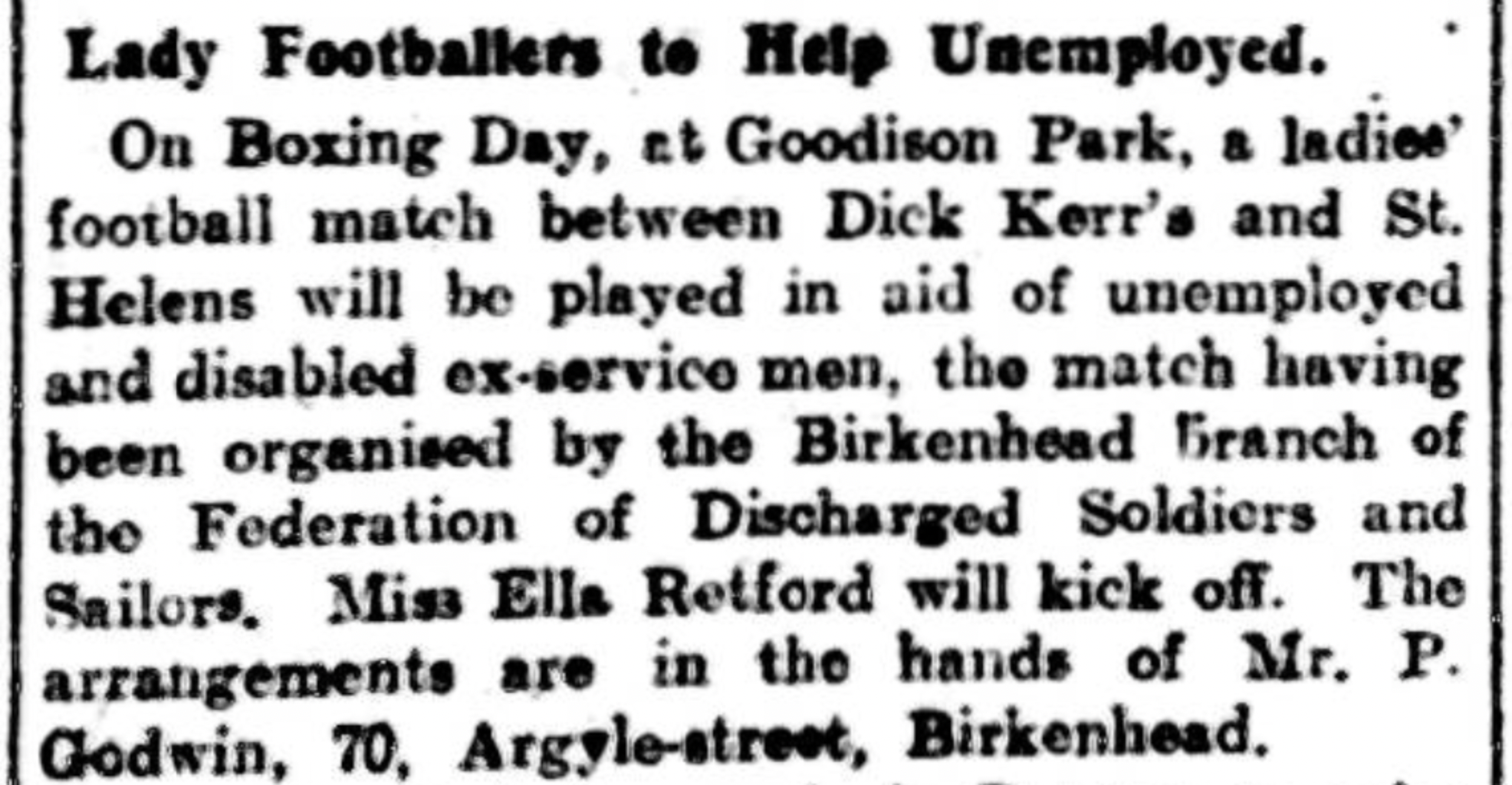
press photograph · 1920
The Dick, Kerr Ladies at Goodison Park
Boxing Day 1920: fifty-three thousand paid to watch the munition works’ team.
The gate receipts knew the truth first.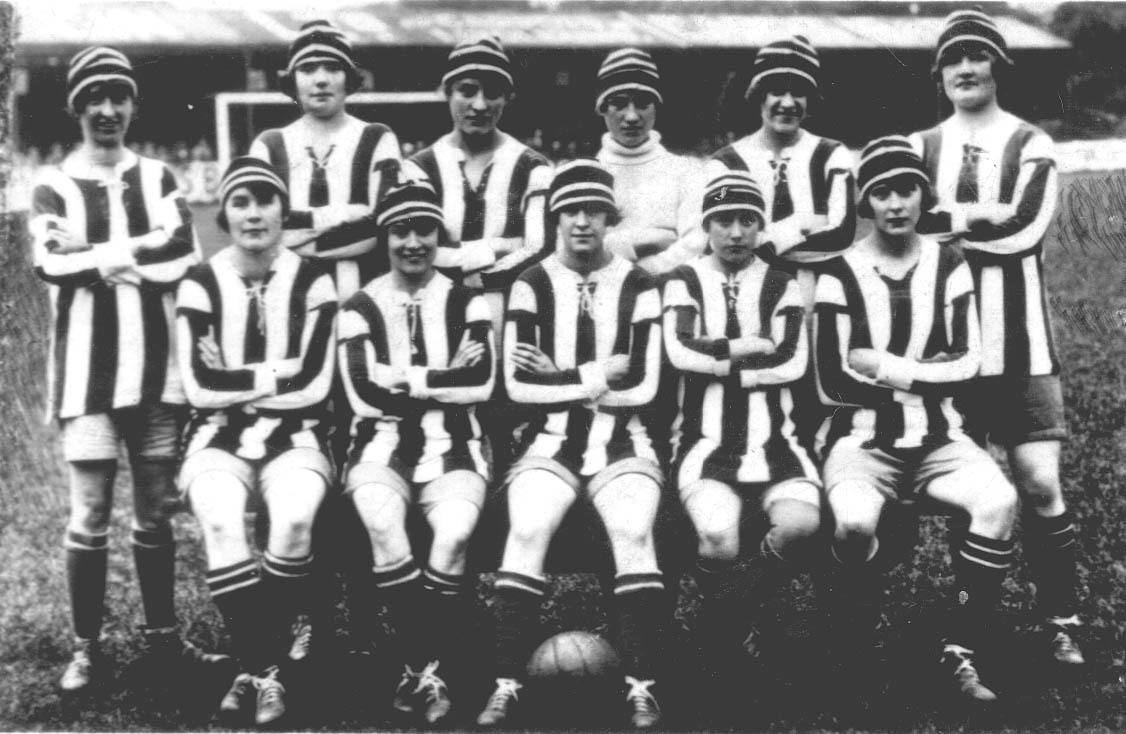
period photograph · c. 1921
The Dick, Kerr Ladies (team photograph)
The team in stripes and bobbed hair — factory workers who became the best-drawing side in Britain.
History keeps the team sheet.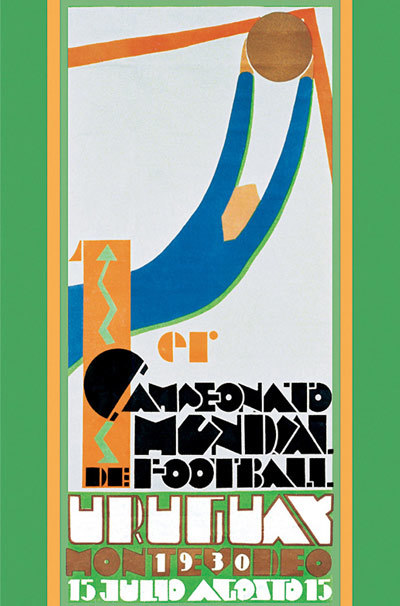
Guillermo Laborde · Montevideo, 1930
El Primer Campeonato Mundial de Football
The deco goalkeeper reaching across the sky — the poster of the first World Cup.
Every century’s game has a first morning.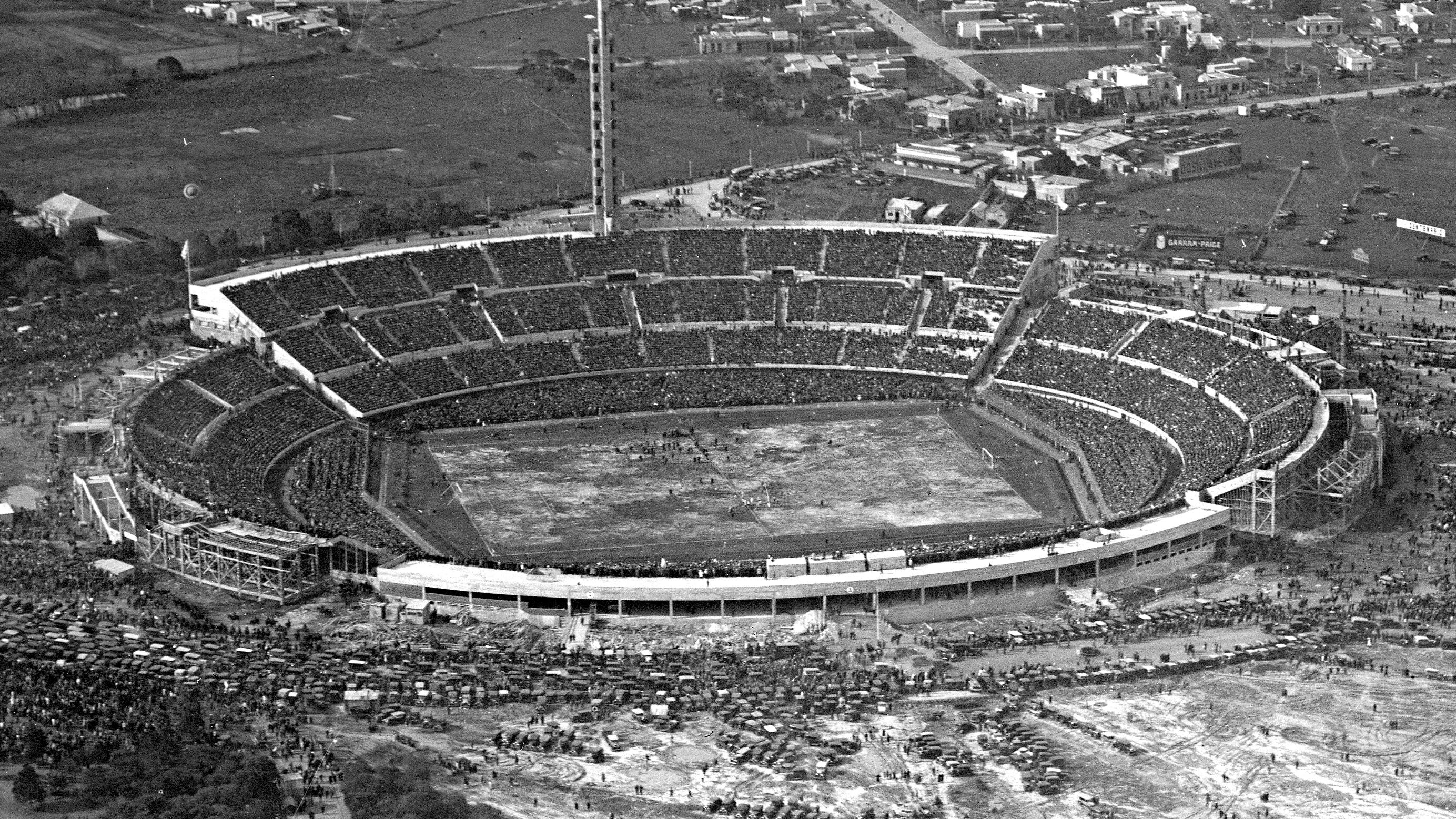
period photograph · Montevideo, 1930
The Estadio Centenario, Opening Year
The stadium Uruguay raised for its centenary and the world’s first cup — concrete still curing as the teams arrived.
Build it before the legend, and the legend moves in.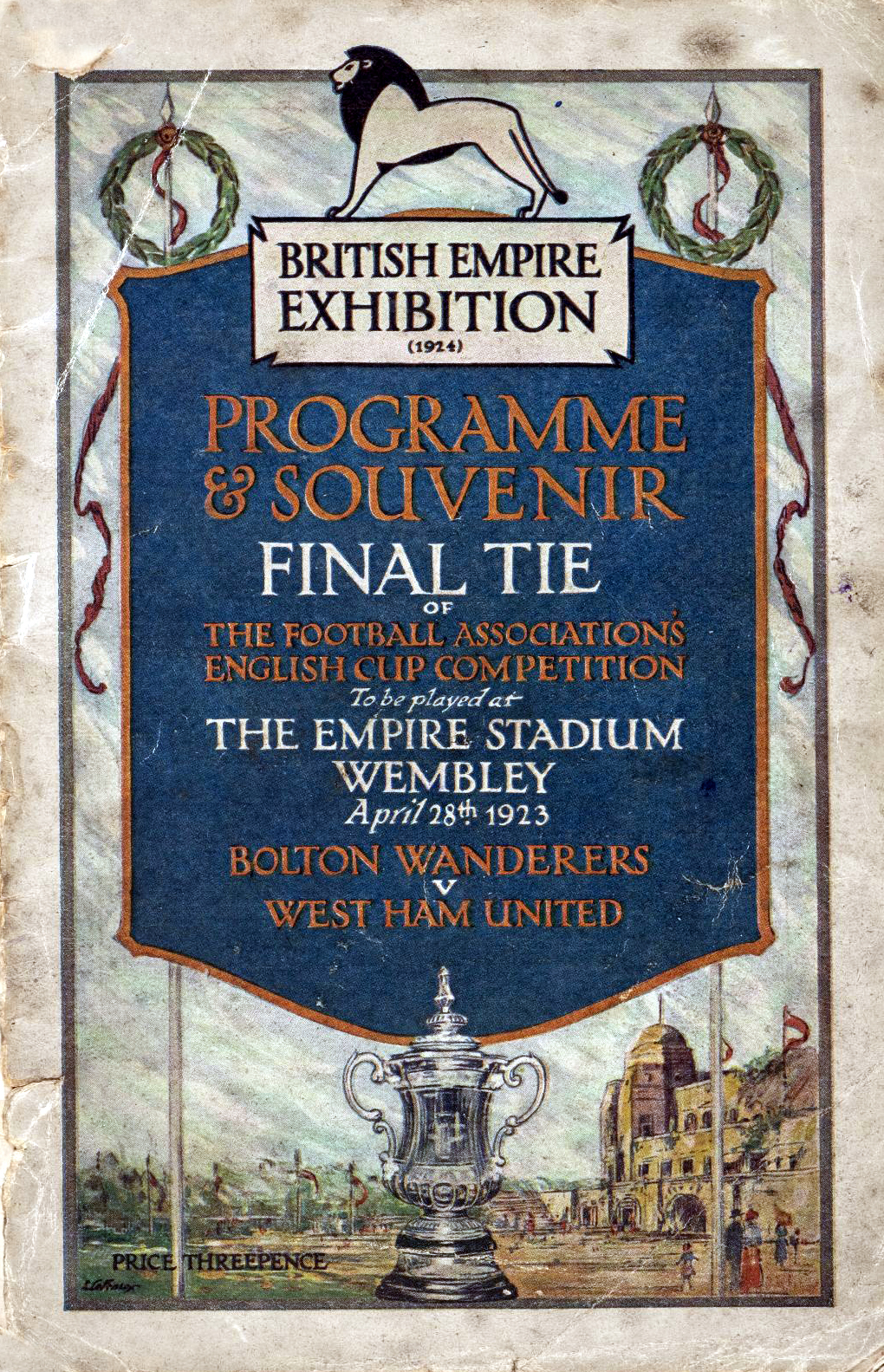
programme printers for the Empire Stadium · 1923
The First Wembley Programme, 1923
The programme of the White Horse Final — sold to a crowd that could not open its arms to read it.
The ephemera outlived the emergency.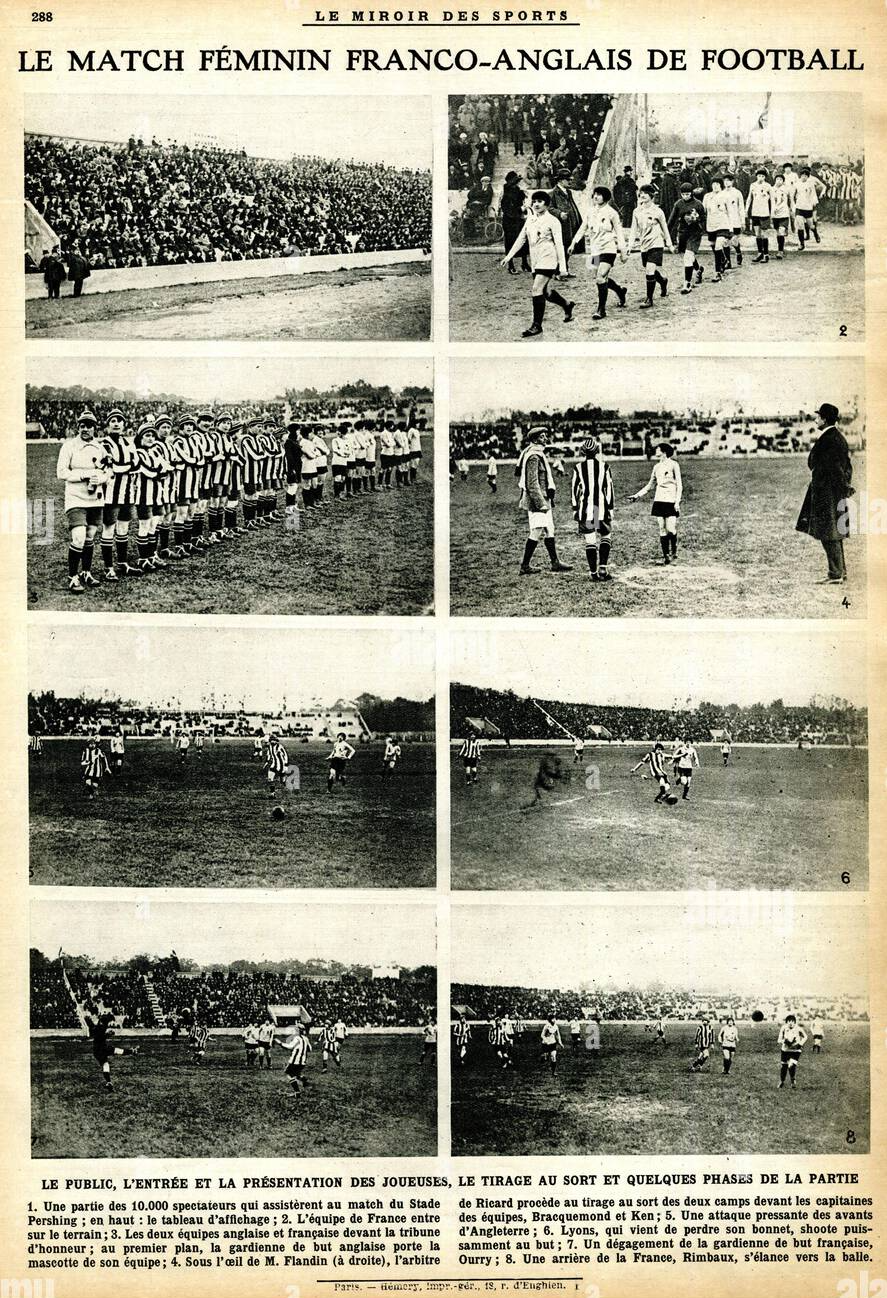
the French sporting press · 1920
France v. England, November 1920
The women’s international as a magazine cover — the game’s first golden age, printed in Paris.
The magazines had already printed the truth.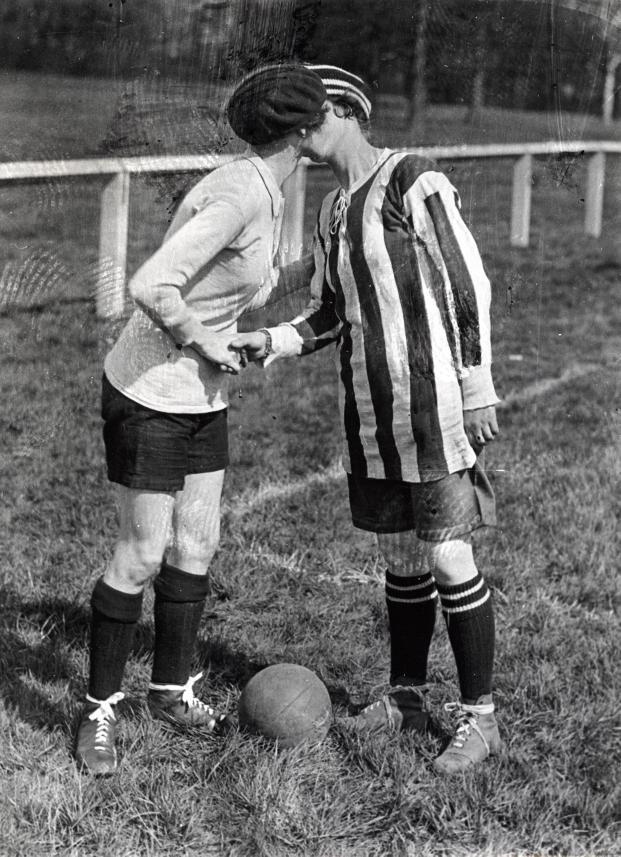
press photograph · c. 1921
The Pre-Match Kiss
Dick, Kerr’s captain and her opposite number — the handshake the women’s game improved on.
The fixture ran on its own manners.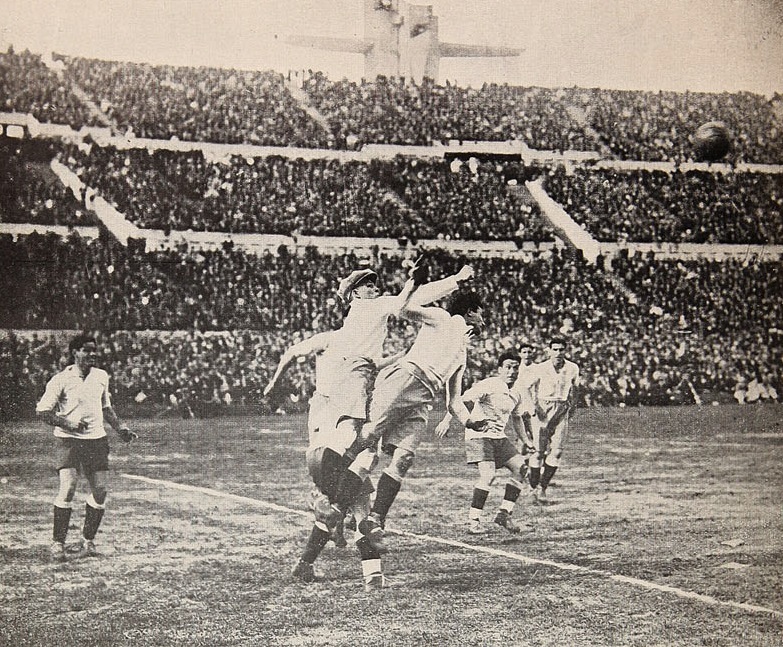
Los Sports magazine · 1930
The First Final: Uruguay v. Argentina
The 30th of July, 1930 — the world’s first final, from the pages of Los Sports.
The century’s tournament began as a magazine spread.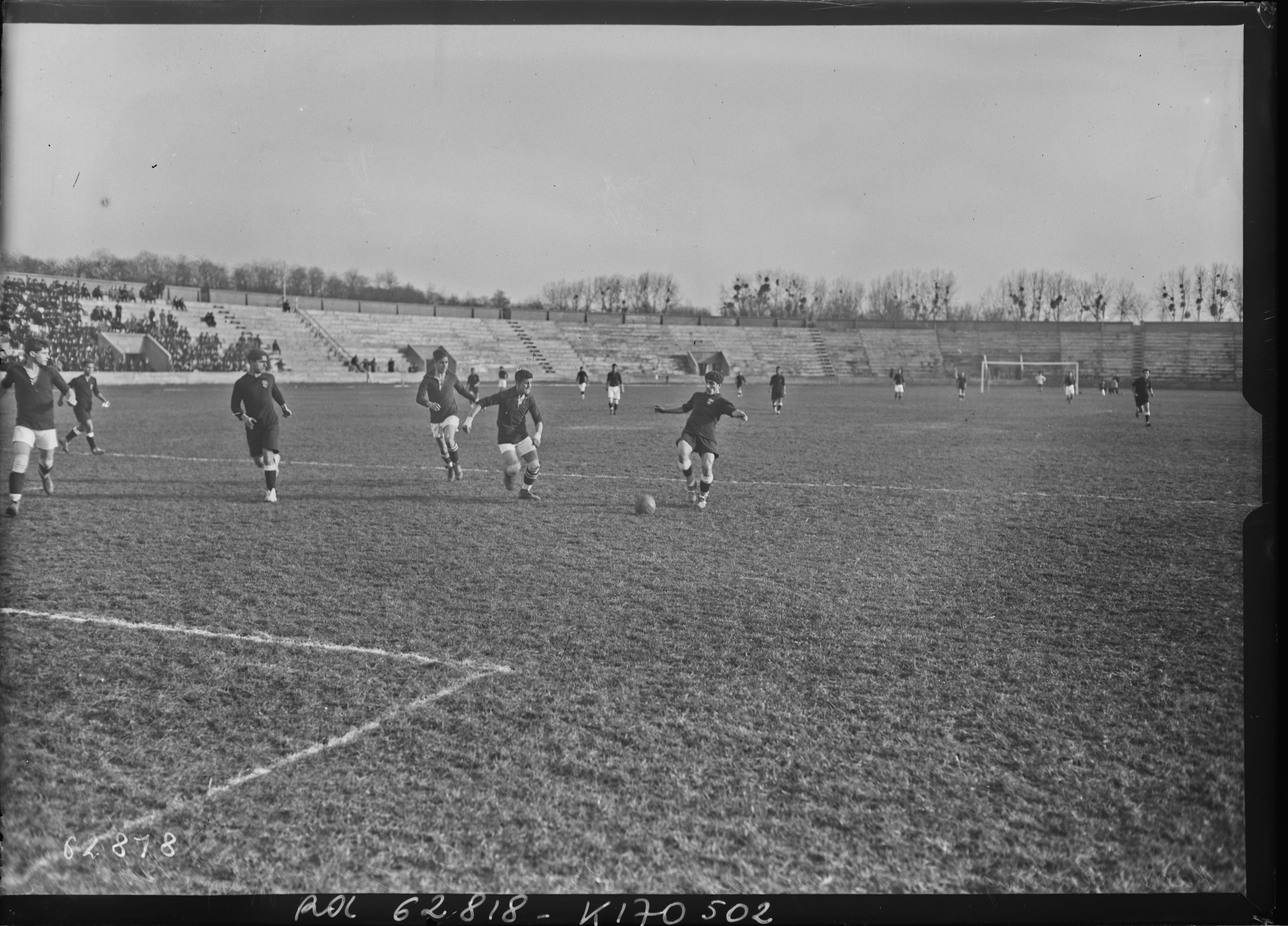
Agence Rol · 1920
Lisbon and Barcelona in Paris, Boxing Day 1920
A Portuguese club against a Catalan one, in France, two days after Christmas — the game already stateless.
The rules travelled faster than anything else Britain exported.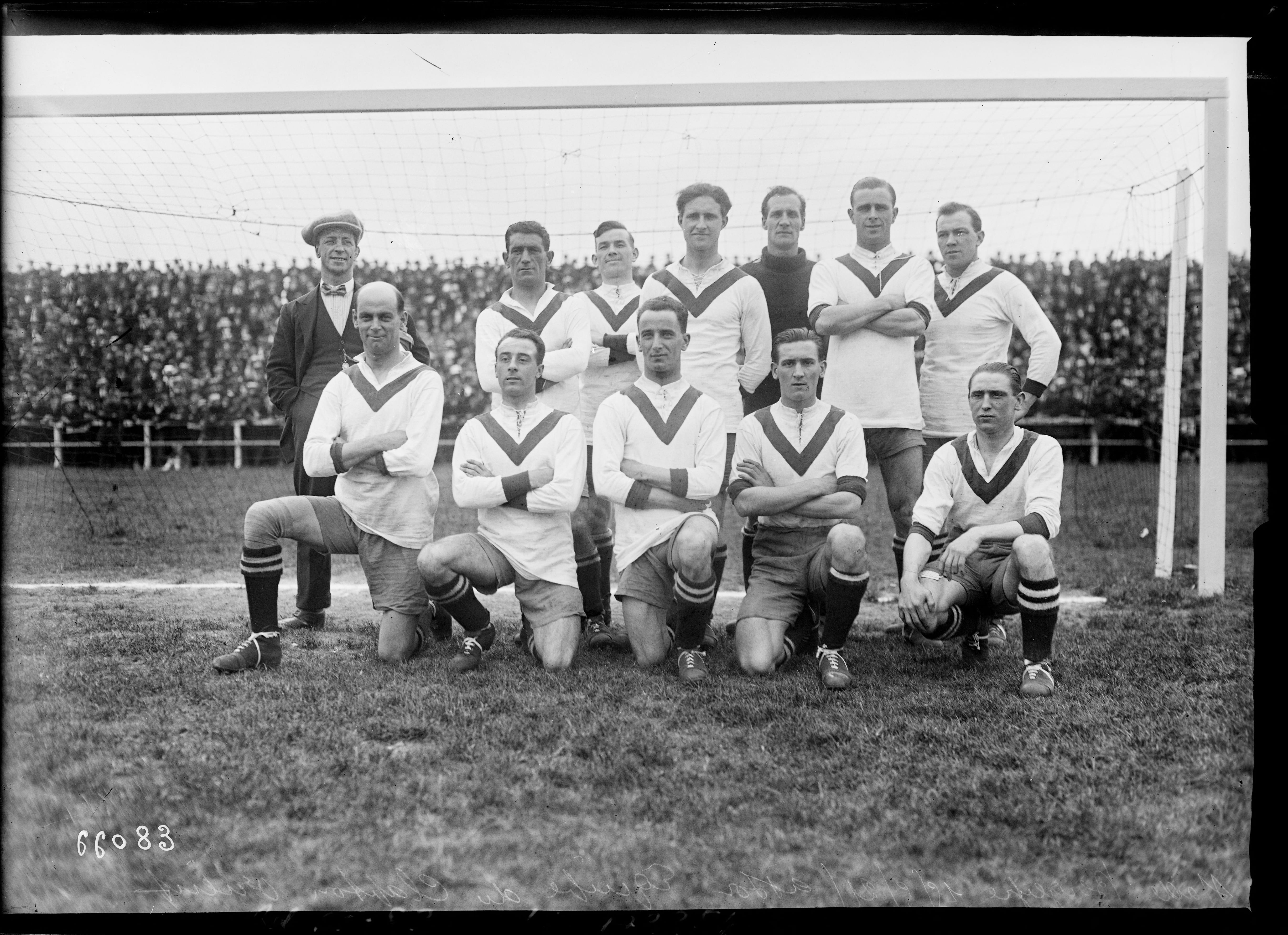
Agence Rol · 1921
An English Club in Paris, May 1921
A London side lines up at the Bergeyre — the missionary fixture, photographed at last.
Football was taught by demonstration, on tour, in the spring.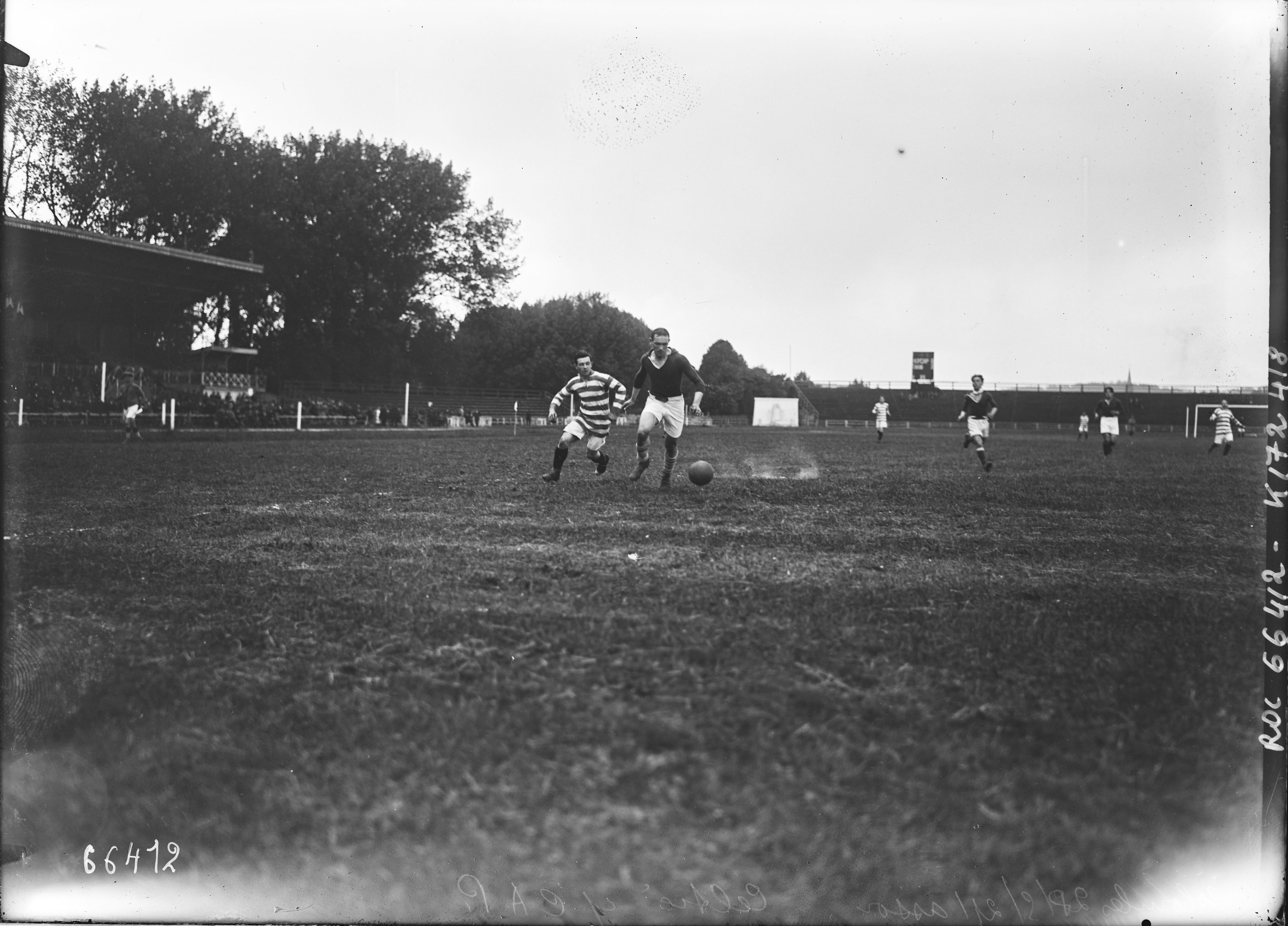
Agence Rol · 1921
Glasgow at Colombes, May 1921
A Scottish side against a Paris one — the Scots brought the passing game and everyone copied it.
What the Continent learned, it learned in a Scottish accent.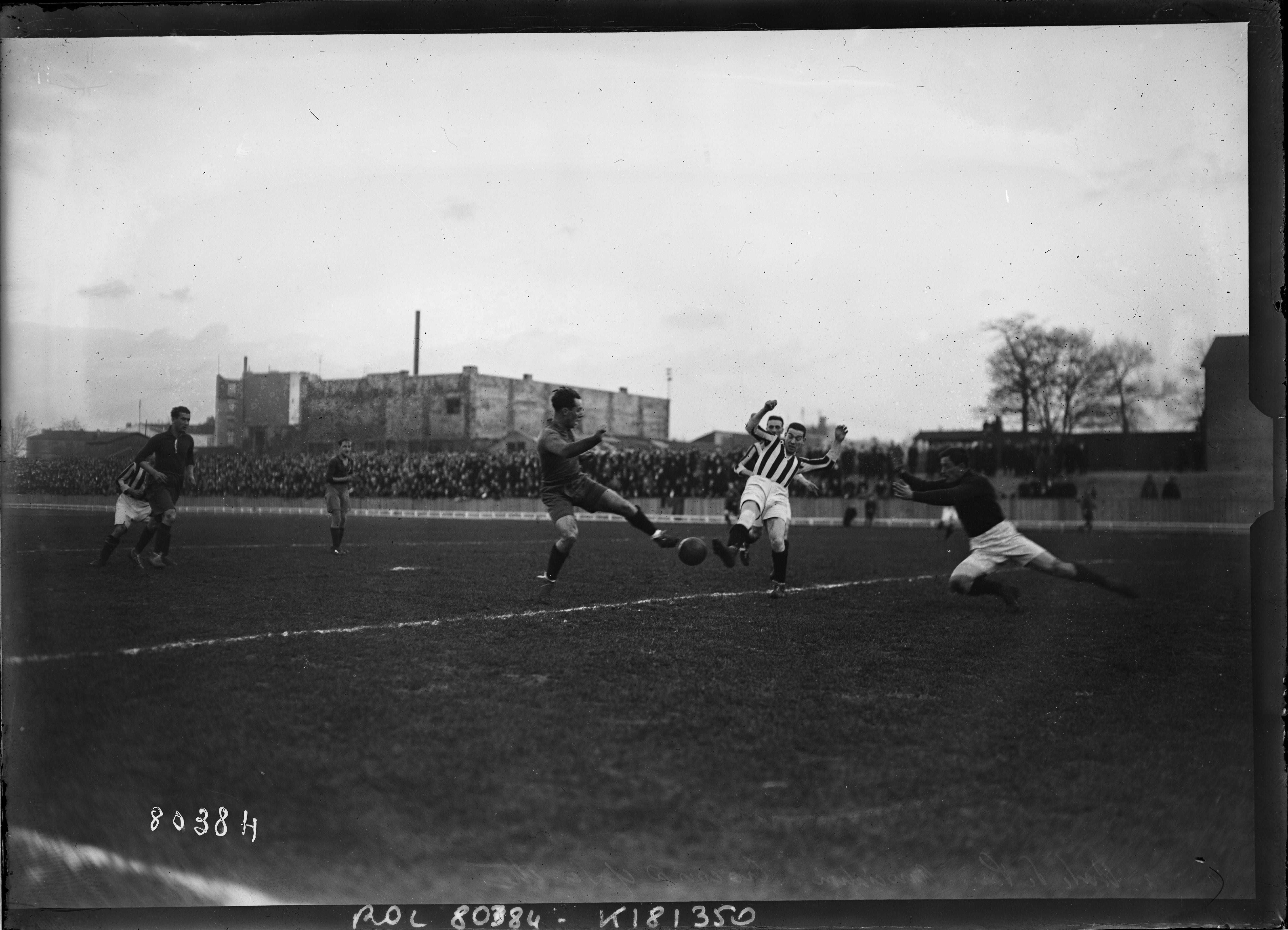
Agence Rol · 1922
Kraków v. Geneva, New Year’s Eve 1922
A Polish club against a Swiss one at Saint-Ouen, on the last day of the year.
The fixture list organised Europe before the treaties did.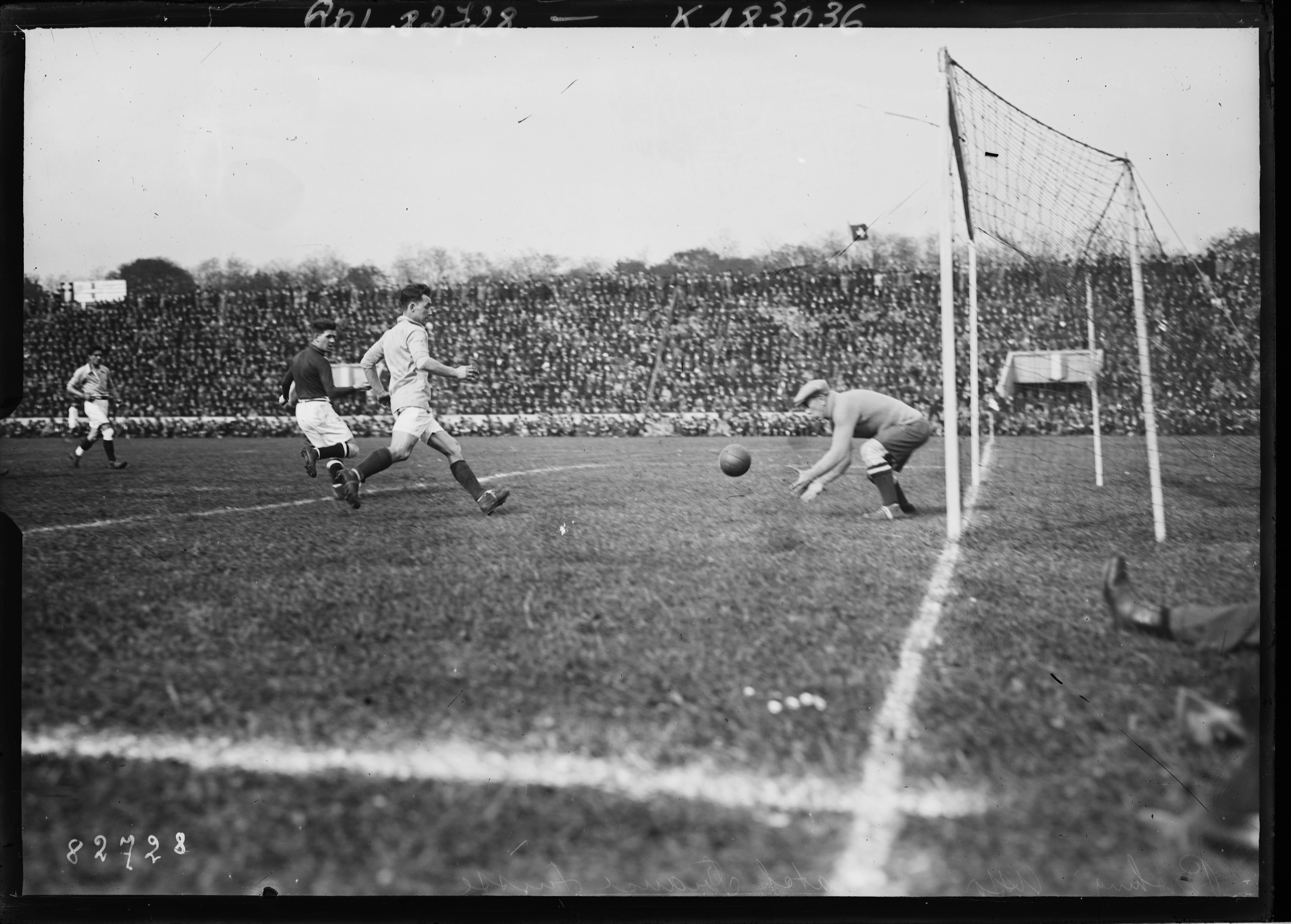
Agence Rol · 1923
France v. Switzerland, April 1923
The neighbours’ international at the Pershing — the fixture that taught France the modern game.
The rivalry that improves you is the one you play every year.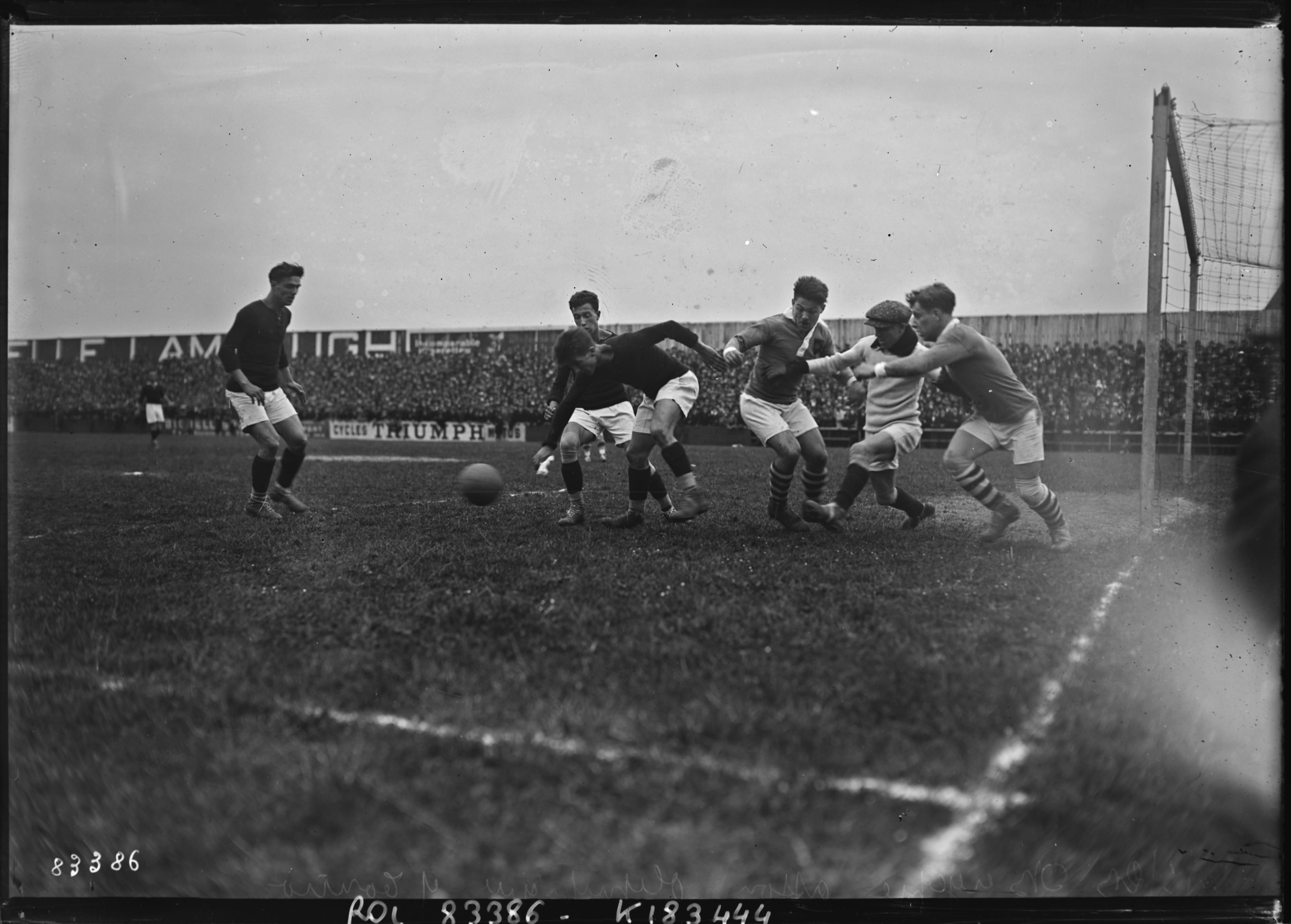
Agence Rol · 1923
Turin at the Bergeyre, May 1923
An Italian club in Paris — calcio arriving as a visiting professional standard.
Nothing improves a league like a visitor who is plainly better.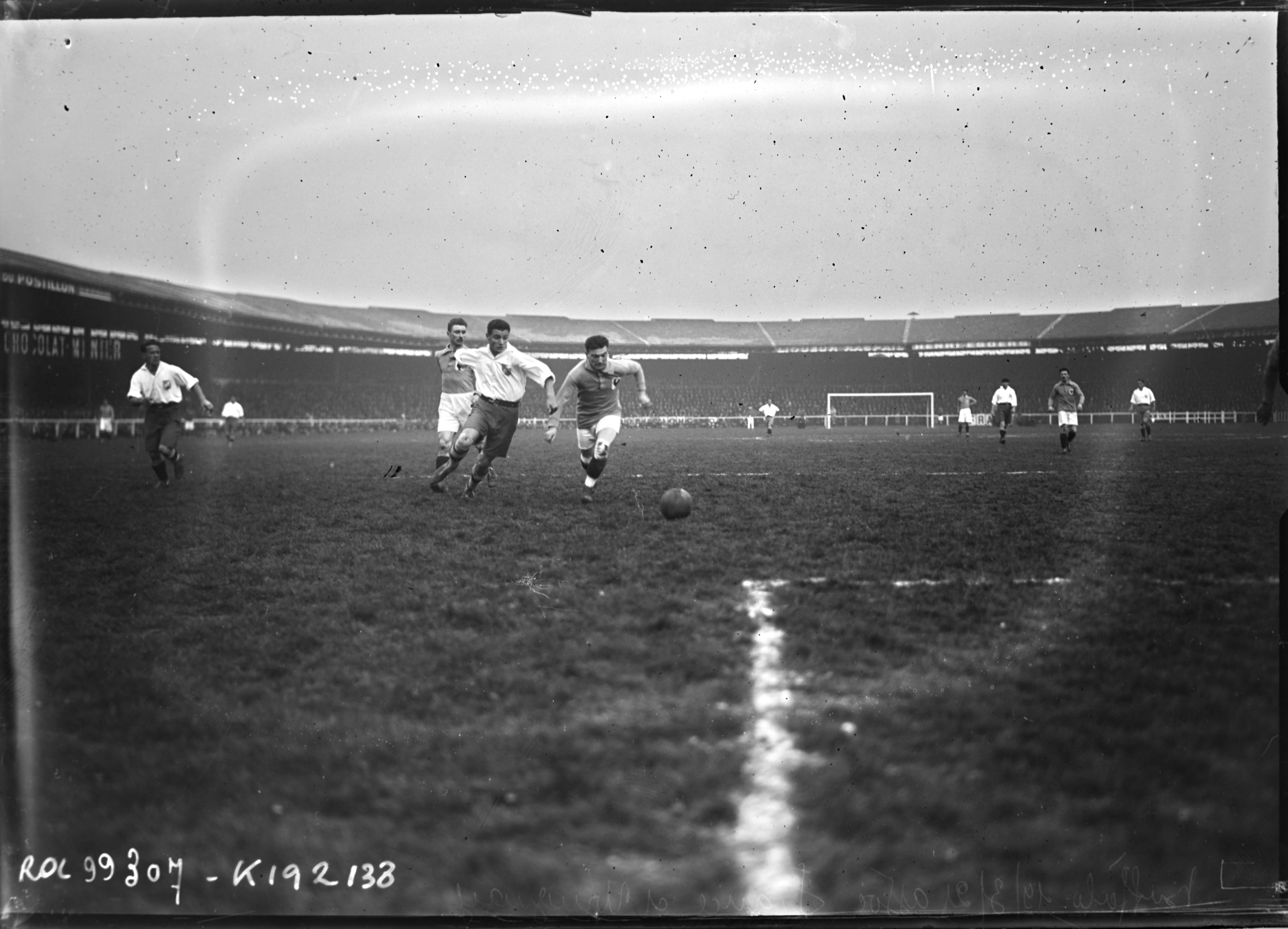
Agence Rol · 1925
France v. Uruguay, March 1925
The Olympic champions come back to Paris — and the crowd came to see how it was done.
Uruguay did not join European football. It corrected it.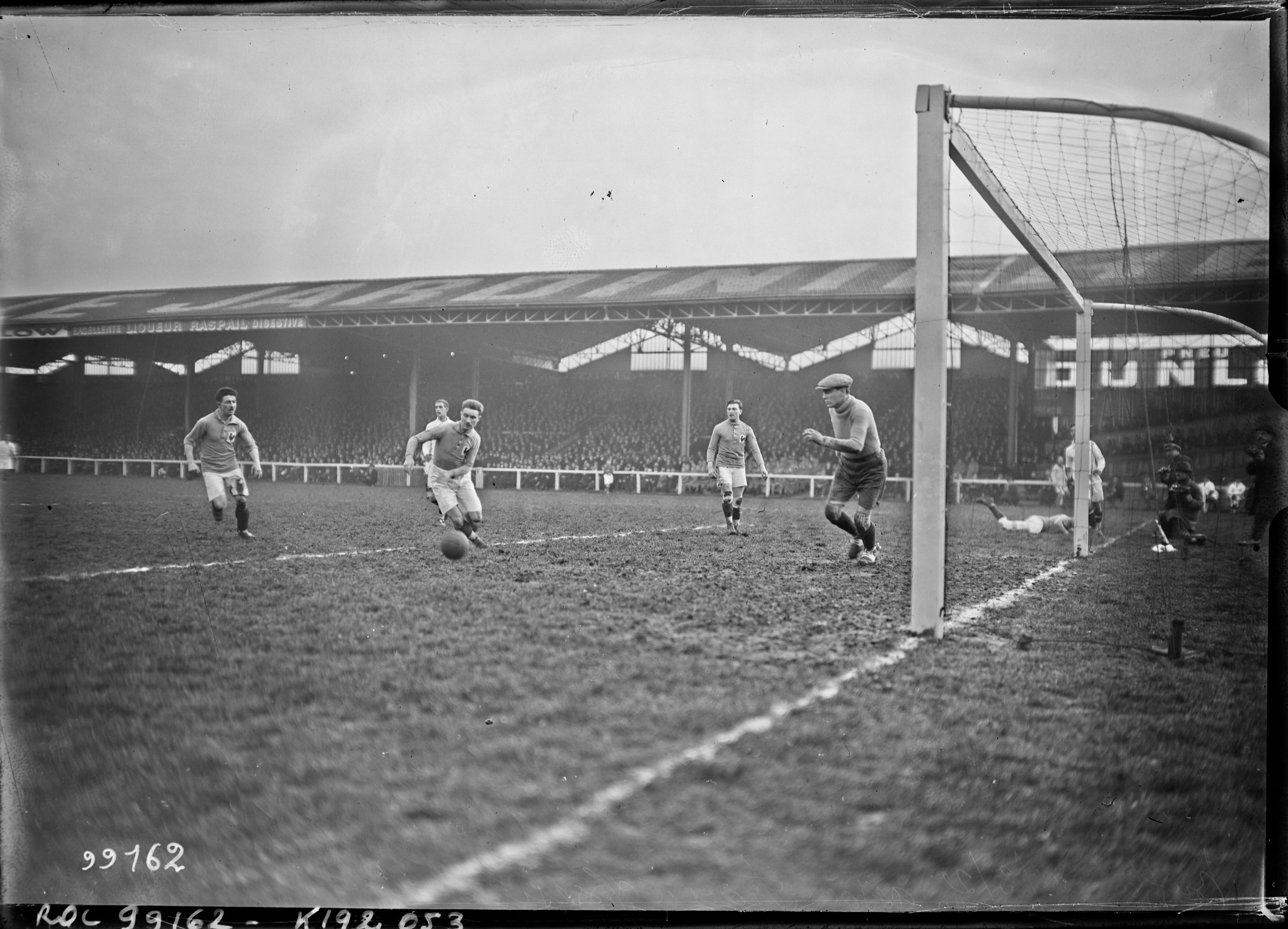
Agence Rol · 1925
France v. Brazil, March 1925
Brazil in Paris, four days before Uruguay — South America arriving twice in one week.
Two Sundays in March, and the centre of gravity moved.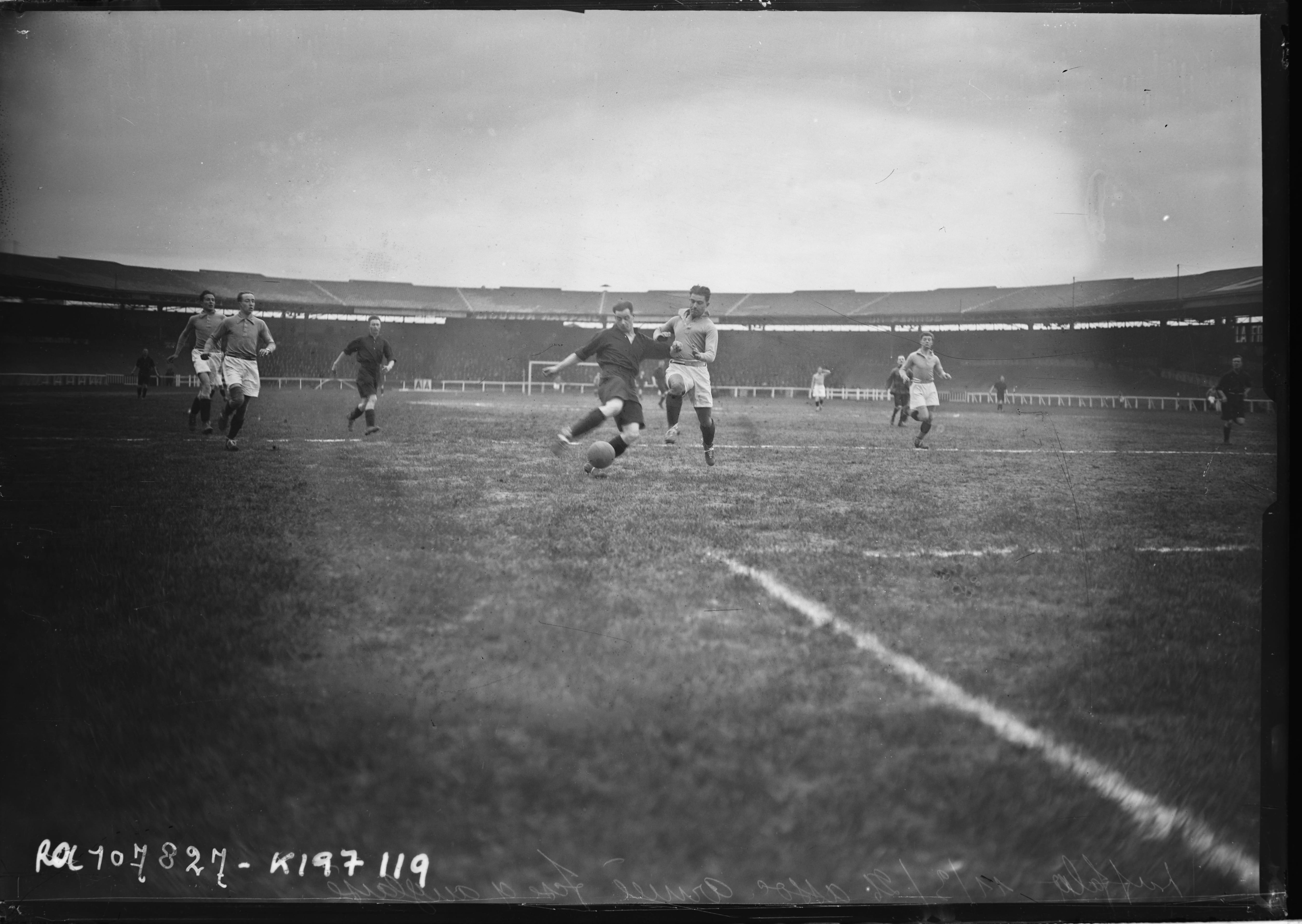
Agence Rol · 1926
The Armies at the Buffalo, March 1926
A French army side against a British one, eight years after the guns — football as the safe rematch.
Some rematches are arranged precisely so that nothing is at stake.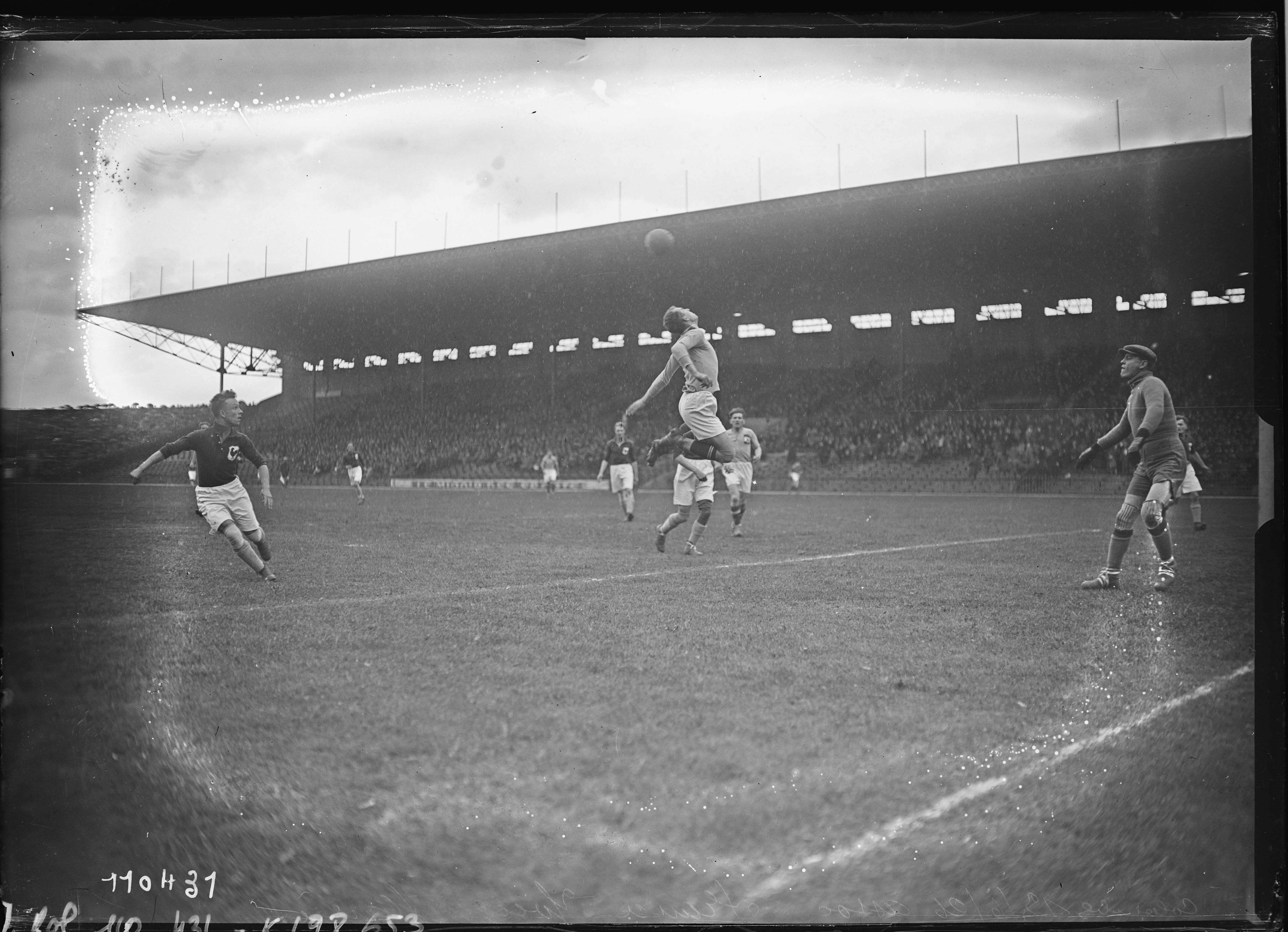
Agence Rol · 1926
France v. Yugoslavia, June 1926
A country seven years old plays an international at Colombes.
The century decided that nations come with an eleven.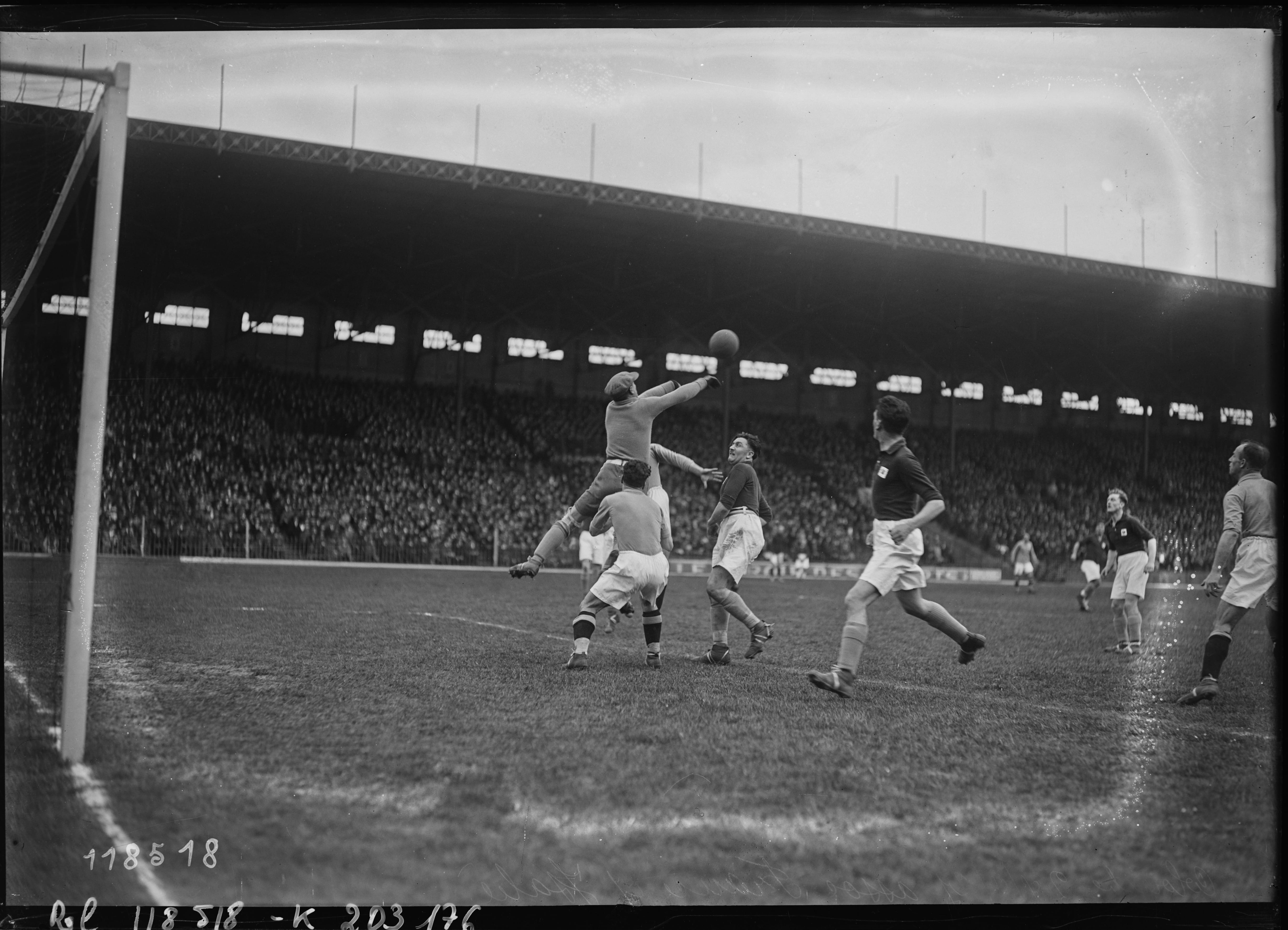
Agence Rol · 1927
France v. Italy, April 1927
The last of the Rol football plates — the neighbours, at Colombes, in the year everything got serious.
The photograph is ordinary. That it survives is not.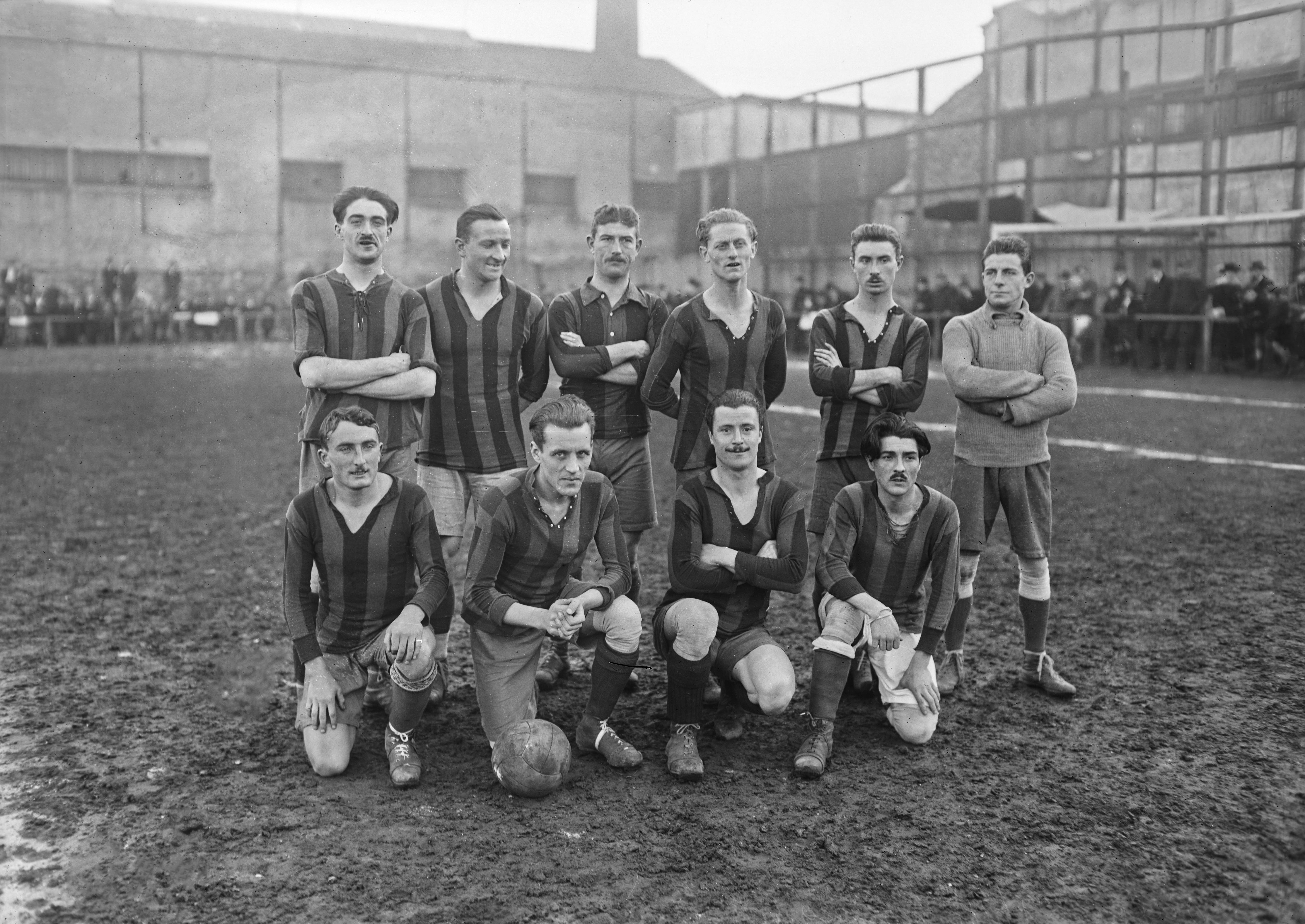
Unknown photographer · 1920
A Saint-Ouen Eleven, 1920
The working-class club of the Paris north, in the first season after the war.
French football’s heartland was the ring of workshops.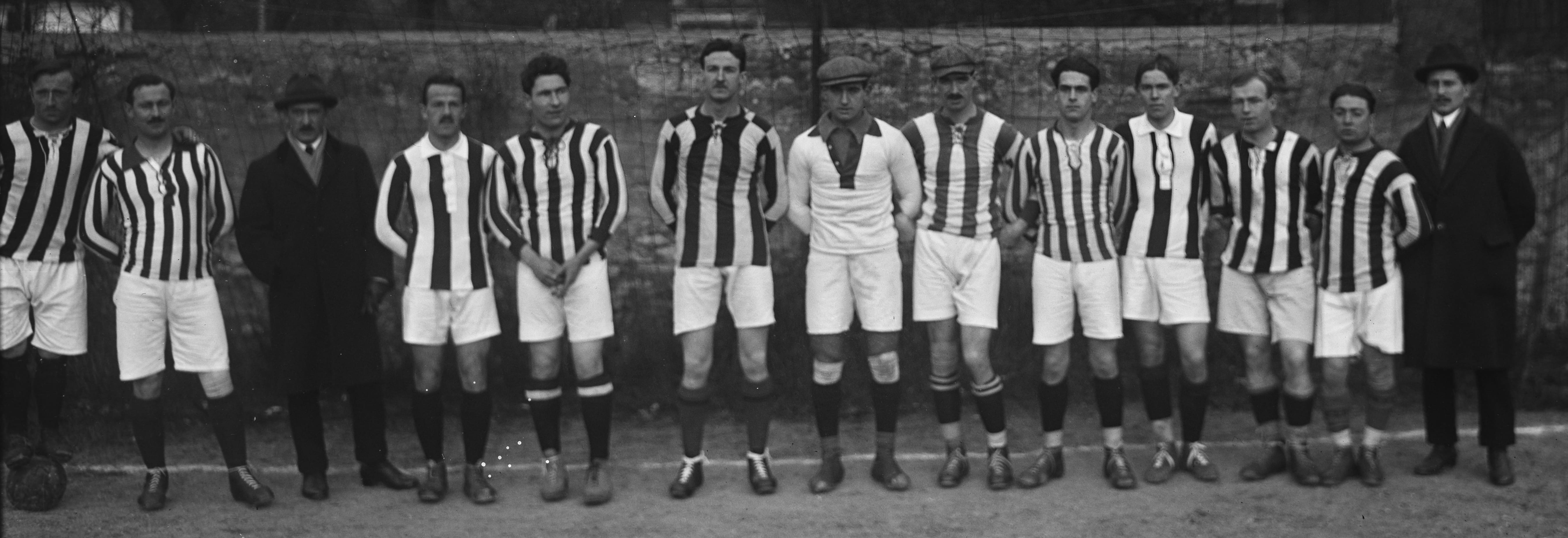
Unknown photographer · 1920
A Geneva Eleven, 1920
A panoramic team plate nearly three times as wide as it is tall — the whole club, ground included.
A portrait not of people but of a Sunday.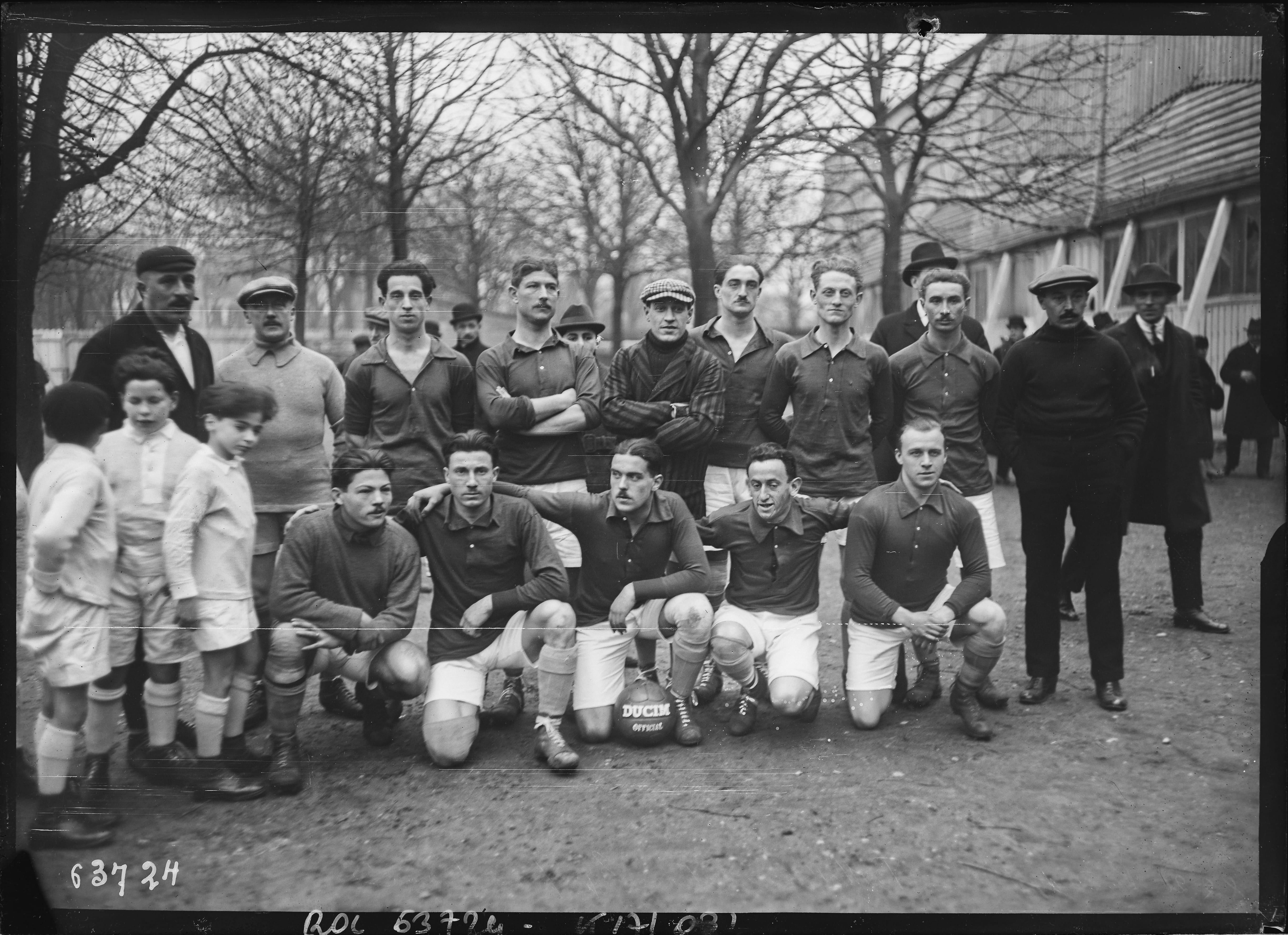
Agence Rol · 1921
The France Eleven, Parc des Princes, 1921
A national side at the Parc — the eleven that had to be assembled from a country still learning.
Every football country has this photograph in its past.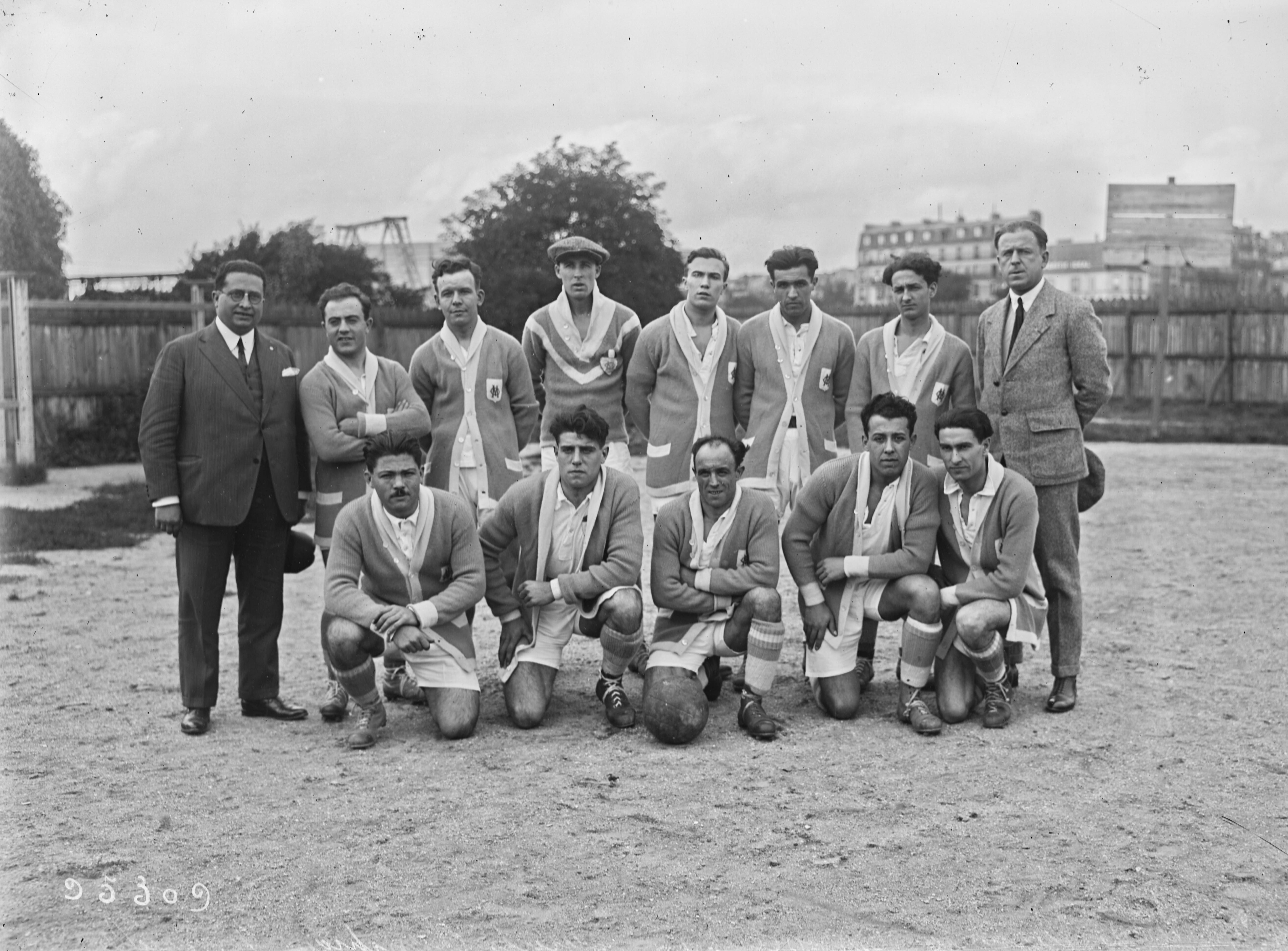
Unknown photographer · 1924
A Marseille Eleven, 1924
The south of France at the Stade Élisabeth — a port city’s club, up in Paris.
Football came ashore in the ports, and they never gave it back.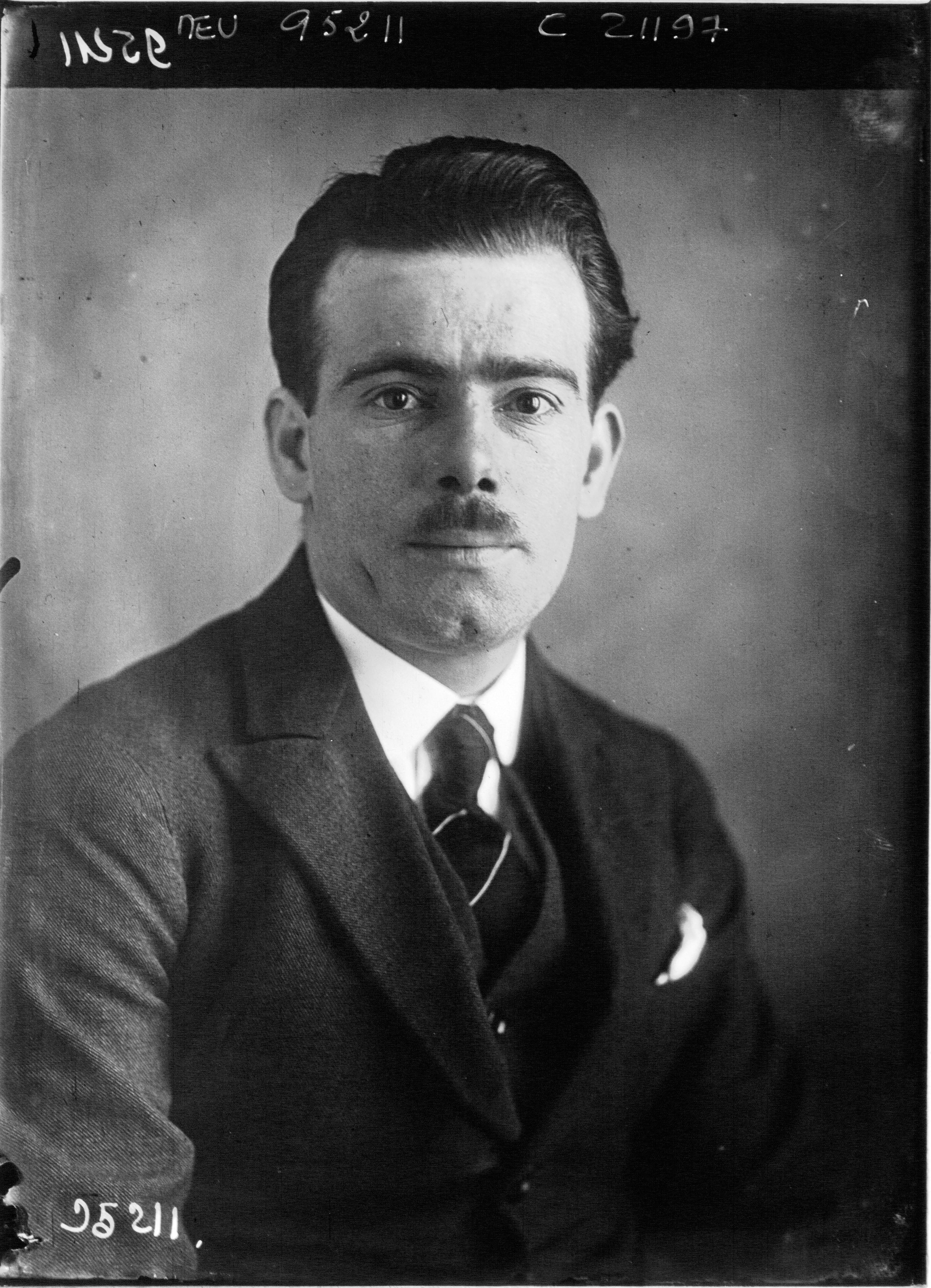
Agence Rol · 1922
A Player, 1922
The single-figure studio portrait — a footballer photographed the way an actor was.
Someone decided a player was worth a portrait.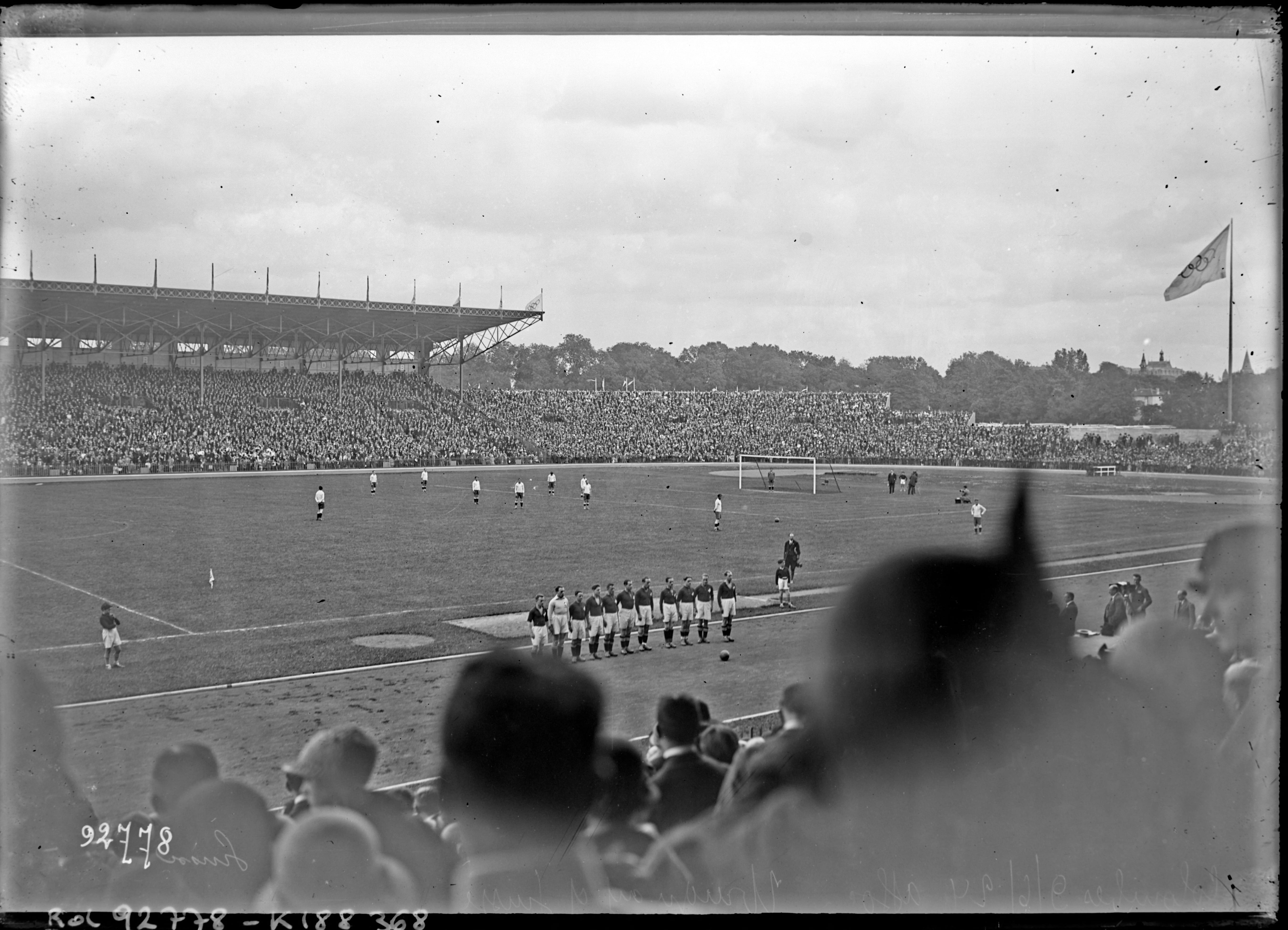
Agence Rol · 1924
The Olympic Final, Colombes, 9 June 1924
Uruguay against Switzerland for the world title before there was a World Cup.
Won by a country of a million and a half.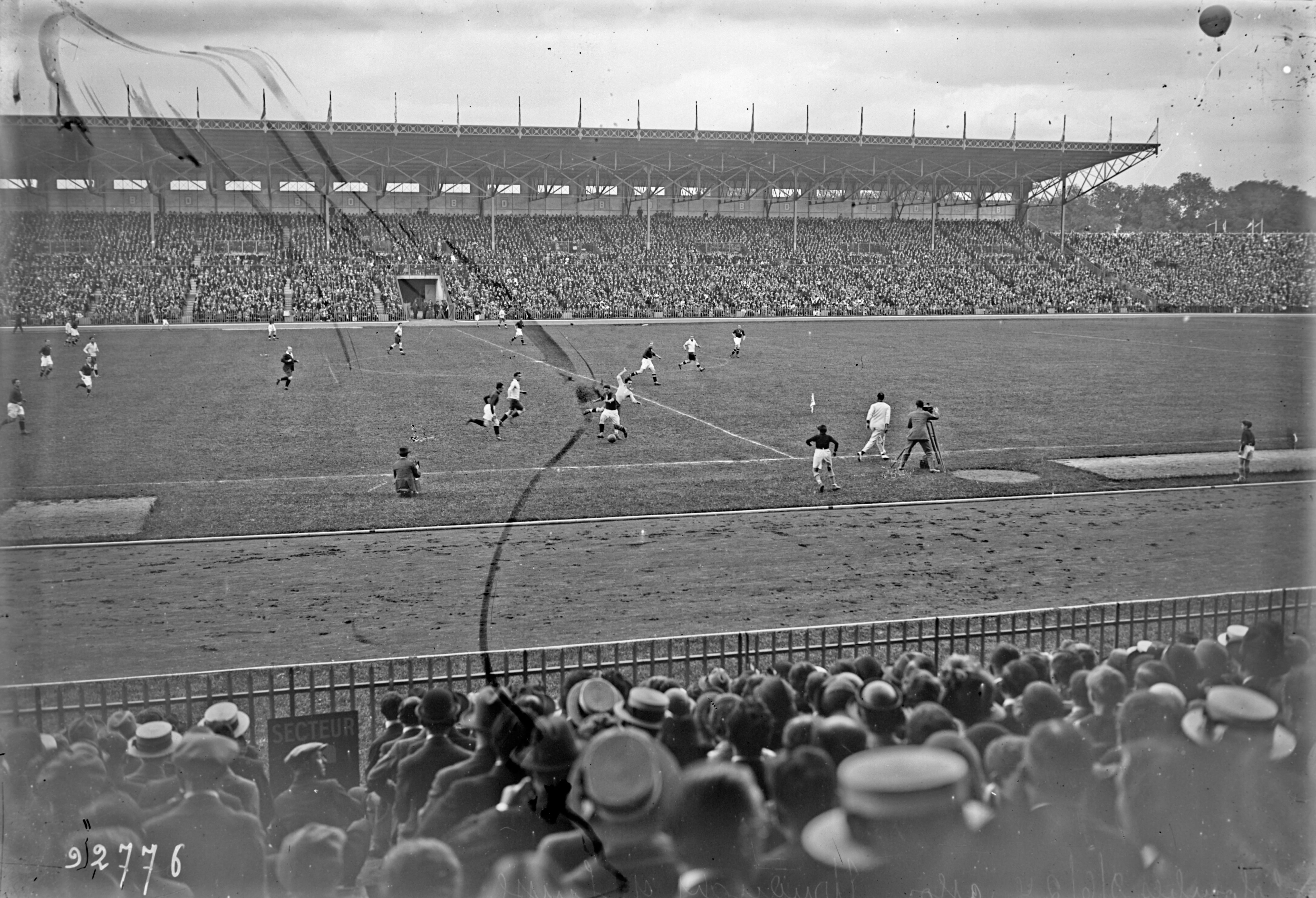
Unknown photographer · 1924
Colombes, the Final in Play, 1924
The 1924 final from the terrace side — the match that made Uruguay the game’s teachers.
They came to win a tournament and left having changed the subject.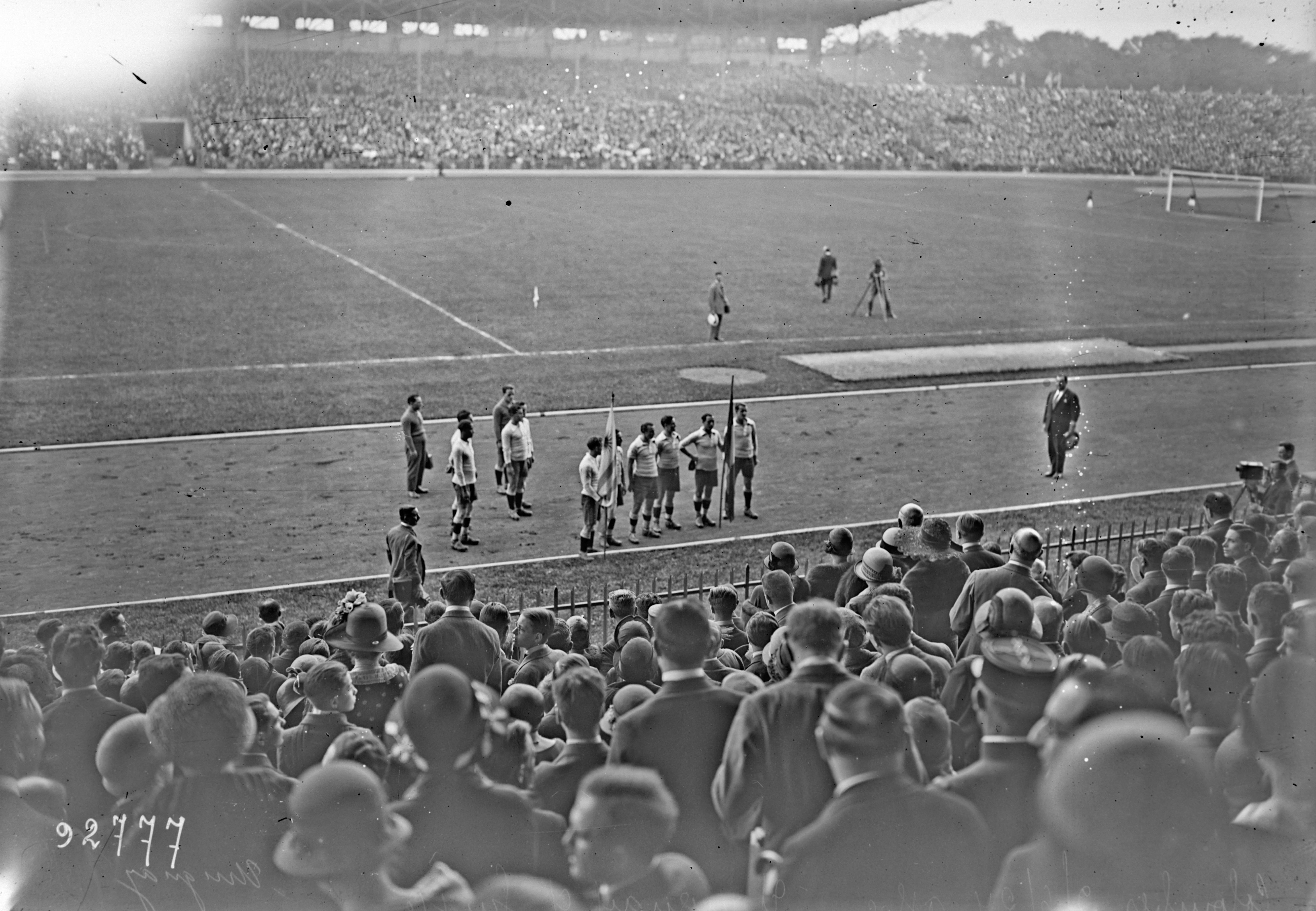
Unknown photographer · 1924
The Uruguay Eleven, Colombes, 1924
The team photograph of the first world champions, taken on the day.
The same eleven men, twice, six years apart.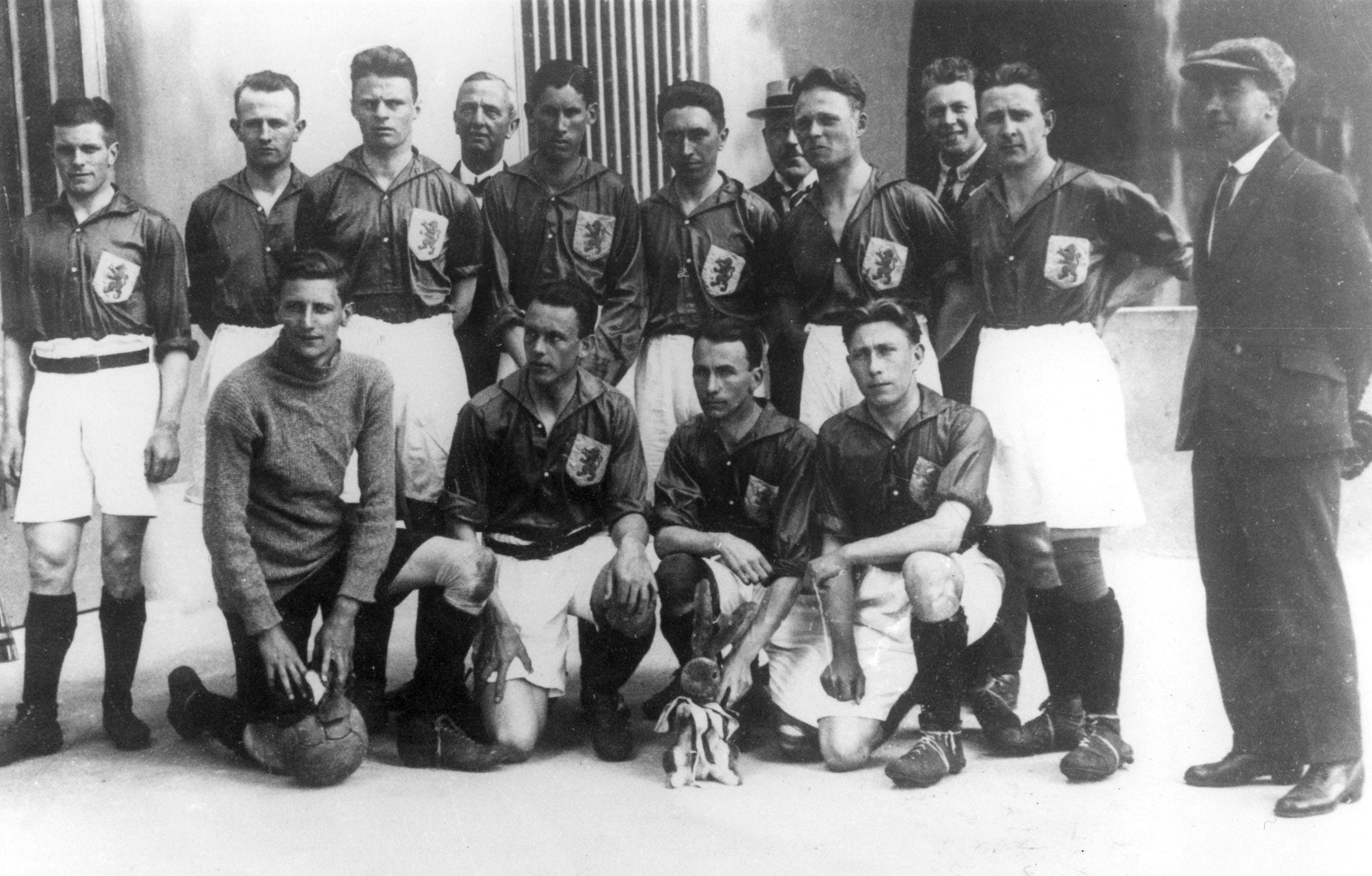
Unknown photographer · 1924
The Dutch Eleven Before Uruguay, 1924
A team photographed minutes before the semi-final that ended their tournament.
Half of football history is the photograph taken just before.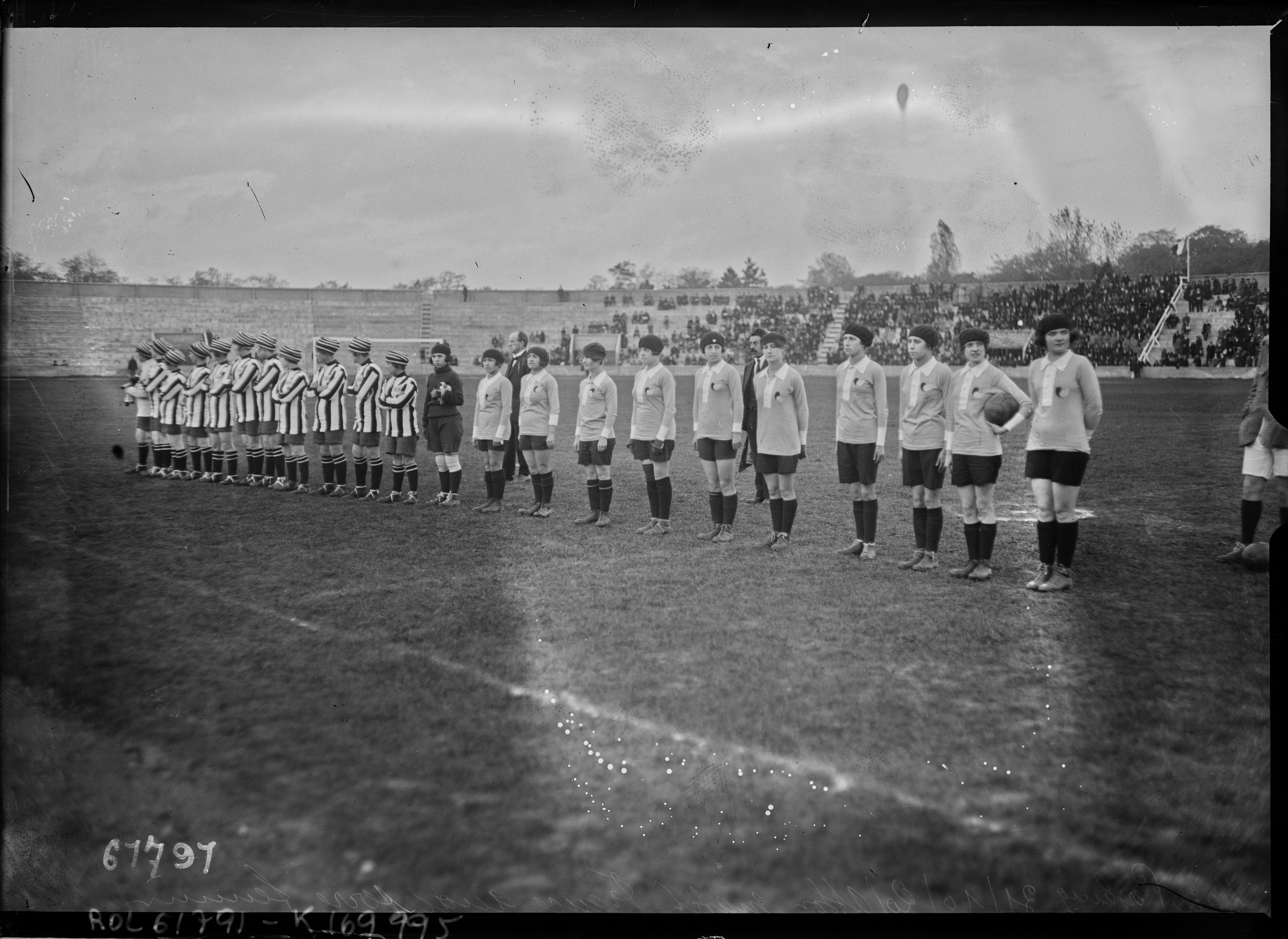
Agence Rol · 1920
France v. England, Paris, 31 October 1920
The women’s international in play — thirteen months before the English ban.
The ban was not a response to failure.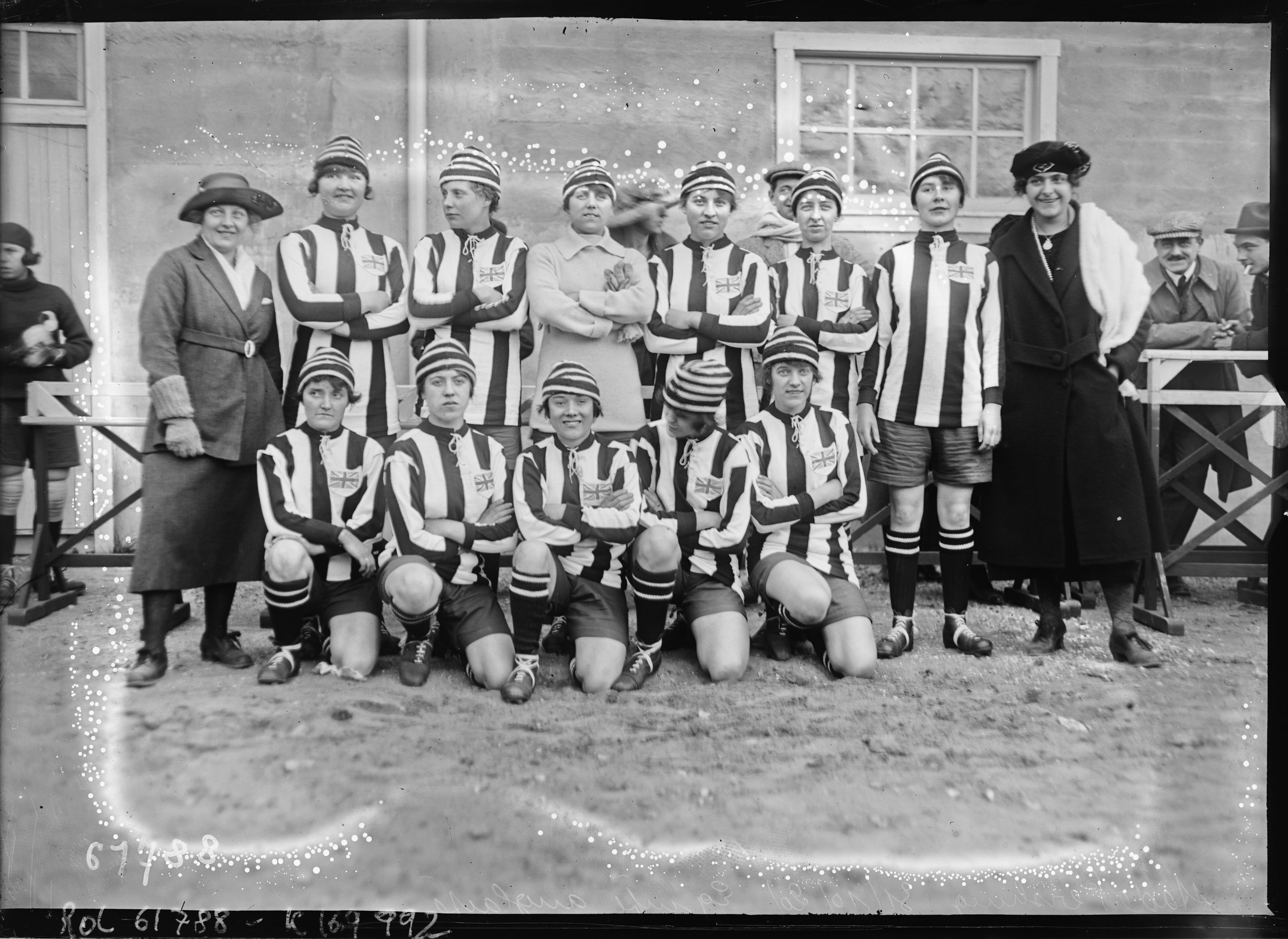
Agence Rol · 1920
The England Eleven, Paris, 1920
The touring side, in the standard pose — arms folded, ball in front, the year on it.
They stood for the same photograph, because they were footballers.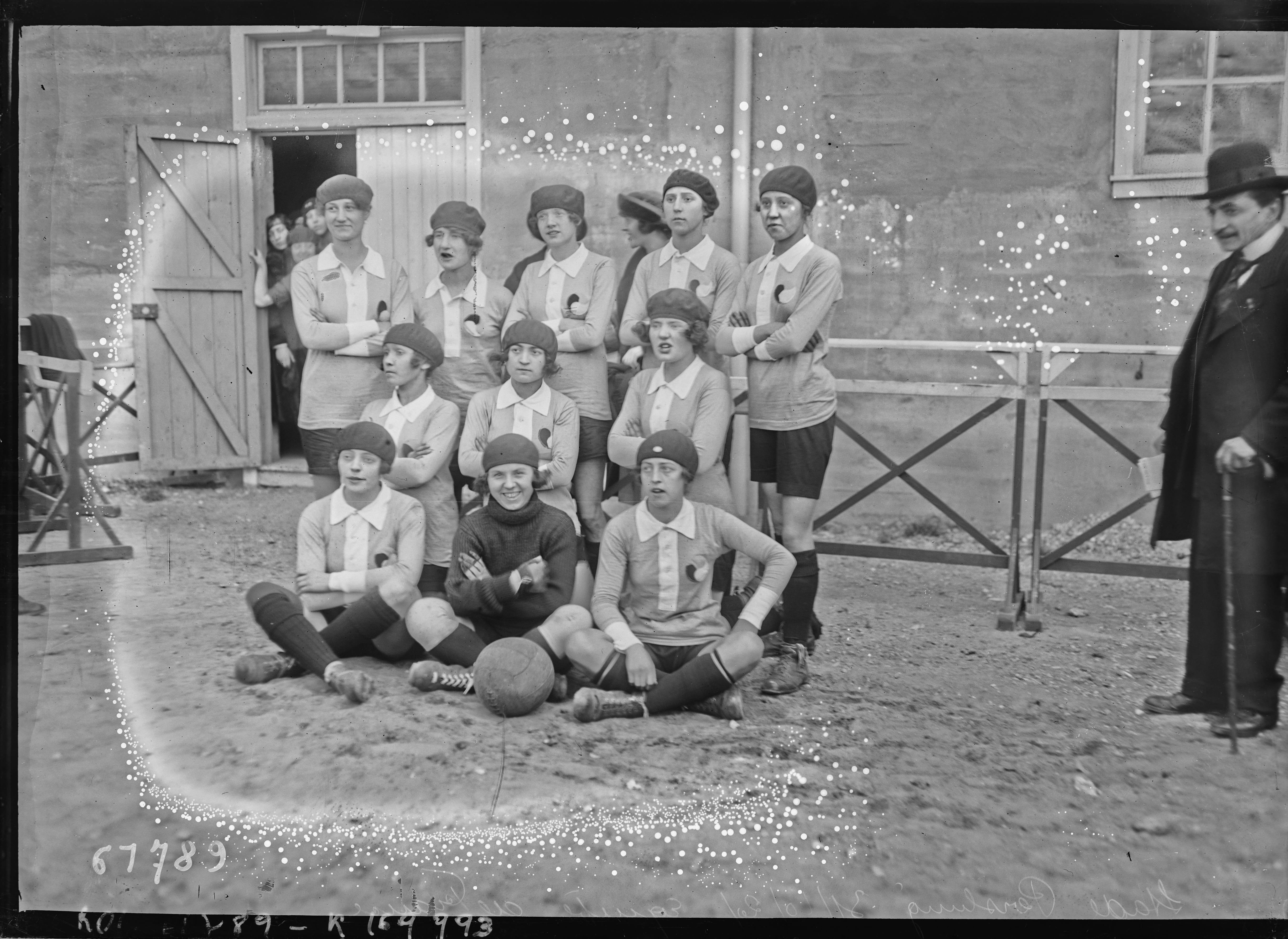
Agence Rol · 1920
The France Eleven, Paris, 1920
The French women’s side — a national team, four years before the men’s game noticed.
The record exists because somebody thought it worth a plate.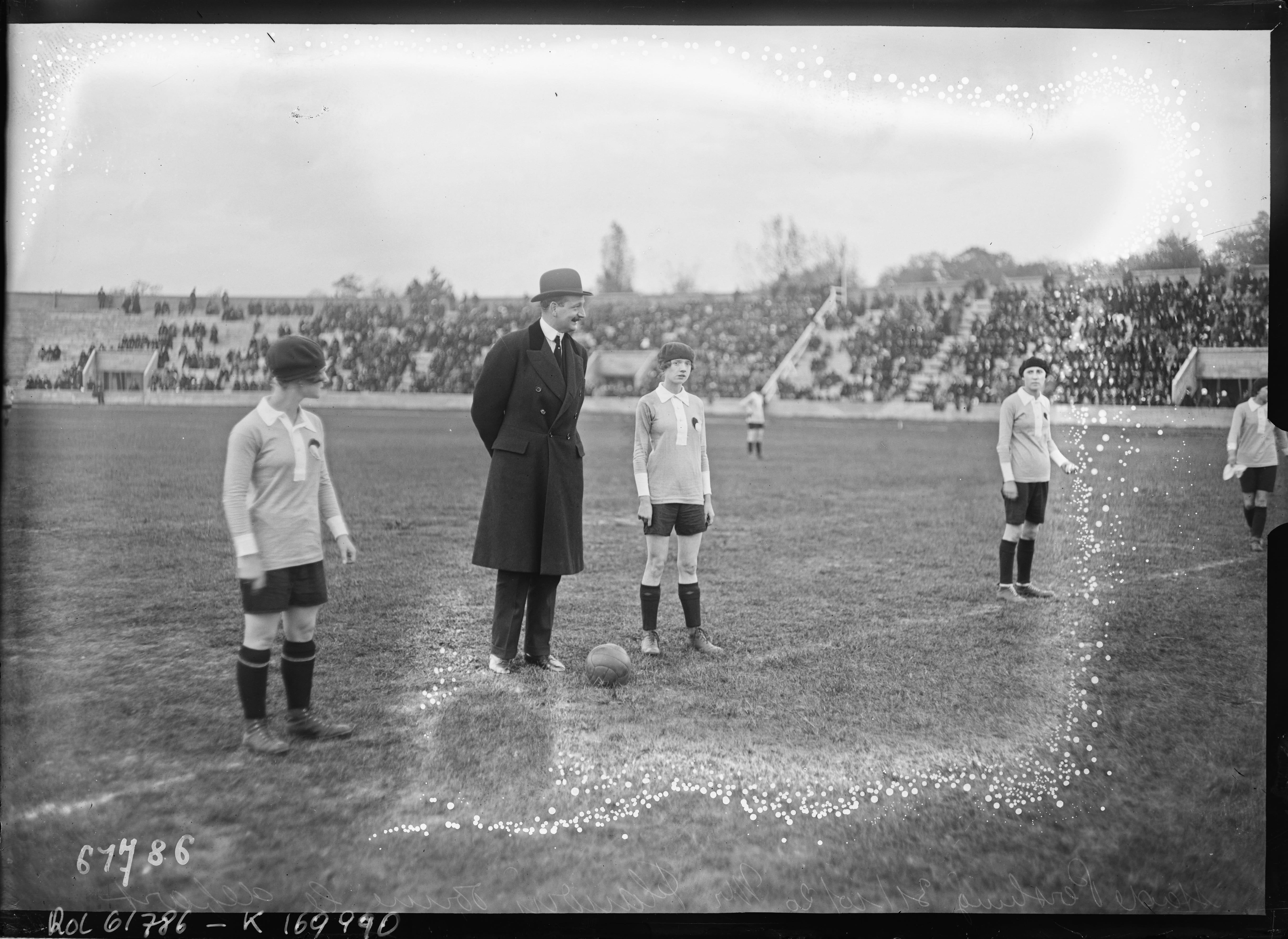
Agence Rol · 1920
The Kick-Off, Paris, 31 October 1920
A government minister starts the women’s international — the establishment, present and approving.
The establishment showed up. Then, deliberately, it left.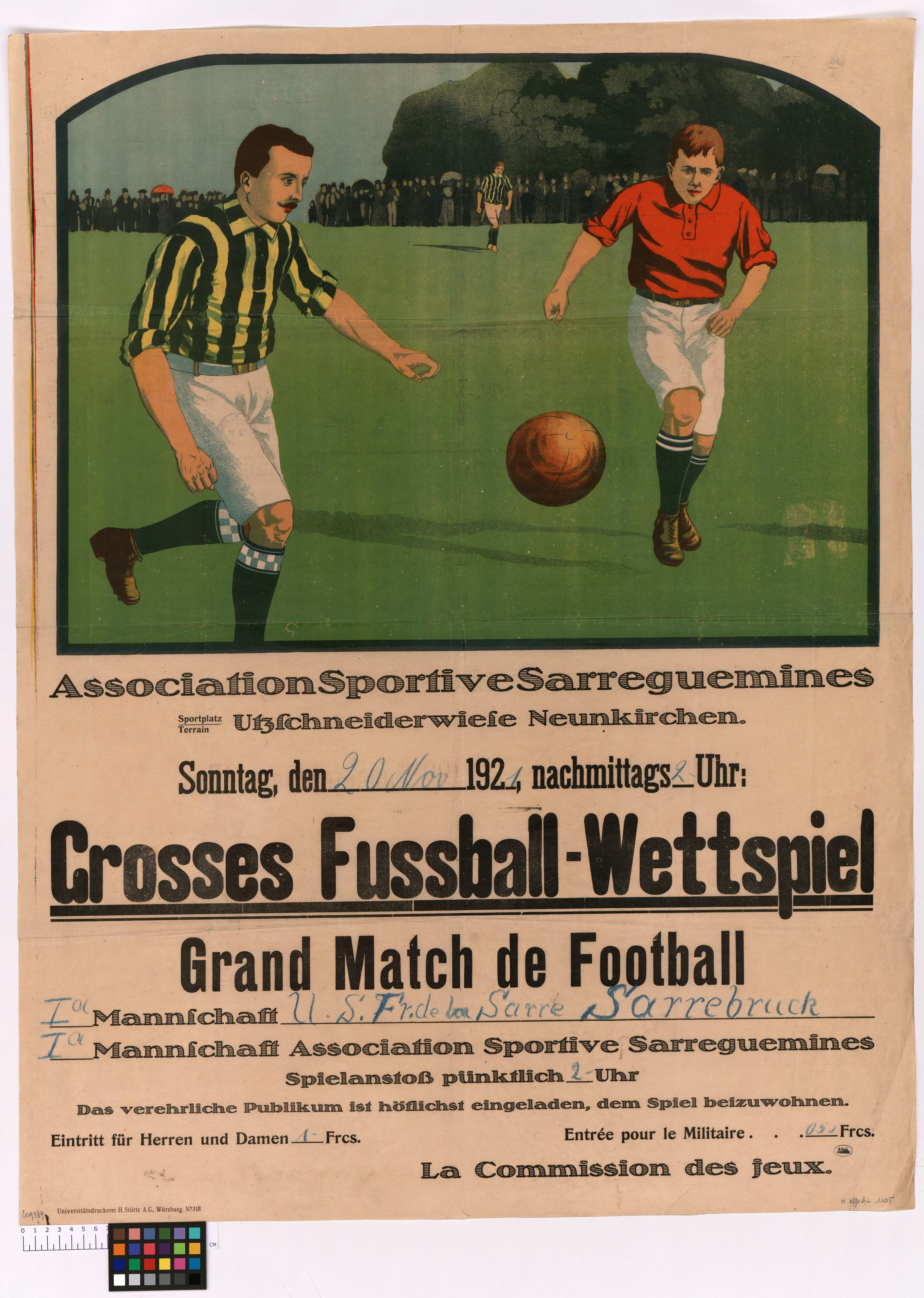
Jobbing printer, Sarreguemines · 1921
Grand Match de Football, 21 November 1921
A jobbing-printer match bill from the Moselle, at nearly thirteen thousand pixels.
A poster is a hierarchy of shouts, well arranged.