The Crowd
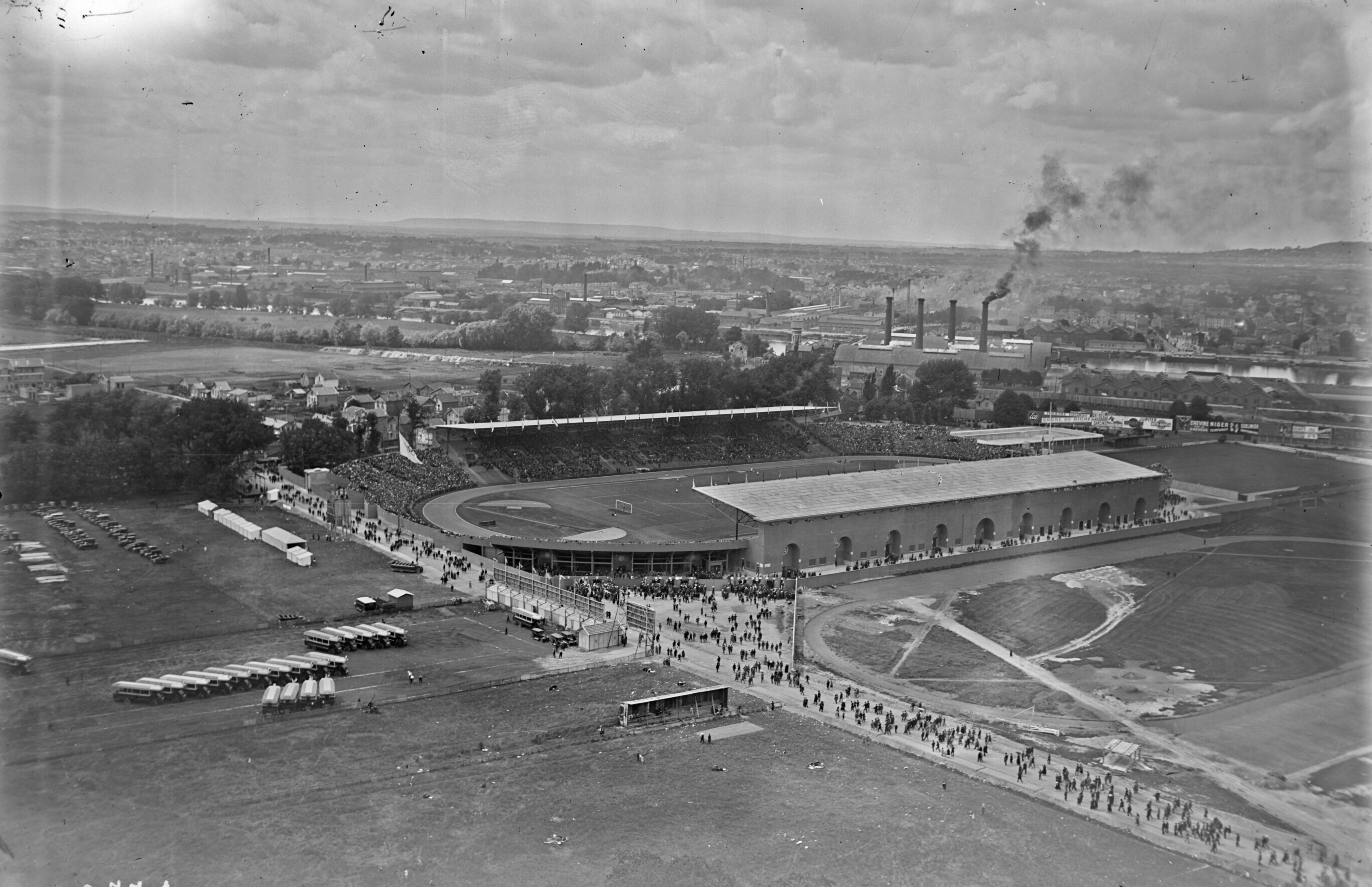
The Crowd for the Olympic Final, Colombes, 1924
Paris walks to Colombes for the first final the world called a world championship.
- Work
- press photograph
- Maker
- Agence Rol
- Date
- 1924
- Ground
- Stade de Colombes, Paris
- Era
- The interwar game · 1919–1930
- Source
- Bibliothèque nationale de France, Gallica · via Wikimedia Commons
Format
The full-resolution scan, colour-managed to the source — yours to print, study, and explore.
Size
$29.00
The story
See it on your wall
The piece, in the room it was made for
The Crowd for the Olympic Final, Colombes, 1924, printed large and framed — in the den, the club bar, the supporters’ bar. Every edition ships ready to become the piece the room is built around.


About this reproduction
- A reproduction of press photograph — Agence Rol, 1924 — from the copy held by Bibliothèque nationale de France, Gallica · via Wikimedia Commons. The source. The work was published before 1931 and is public-domain verified.
- Printed faithful to that source scan — restore honestly, disclose always. We do not re-colour it, complete it, or interpret it; the piece you receive is the image as it survives, halftone grain honored as history, not damage.
- Printed to order on museum-grade cotton-rag stock with pigment inks — the pairing is rated 100+ years.
- Colour-managed to the source; the tone of the paper and the ink is the period’s, not ours.
- Ships in 5–10 business days, rolled in a heavy-wall tube (framed editions ship flat-packed).
- If it arrives less than perfect, we reprint or refund — your choice.

Why our pieces cost more than a poster: a poster is a mass run on wood-pulp stock, colour-corrected to whatever flattered the press that day. This is one sheet, pulled for you, at a size where the maker’s hand is visible — the linework, the halftone grain, the lettering — on materials made to outlast their owner.
From the same hand
Agence Rol · 1908
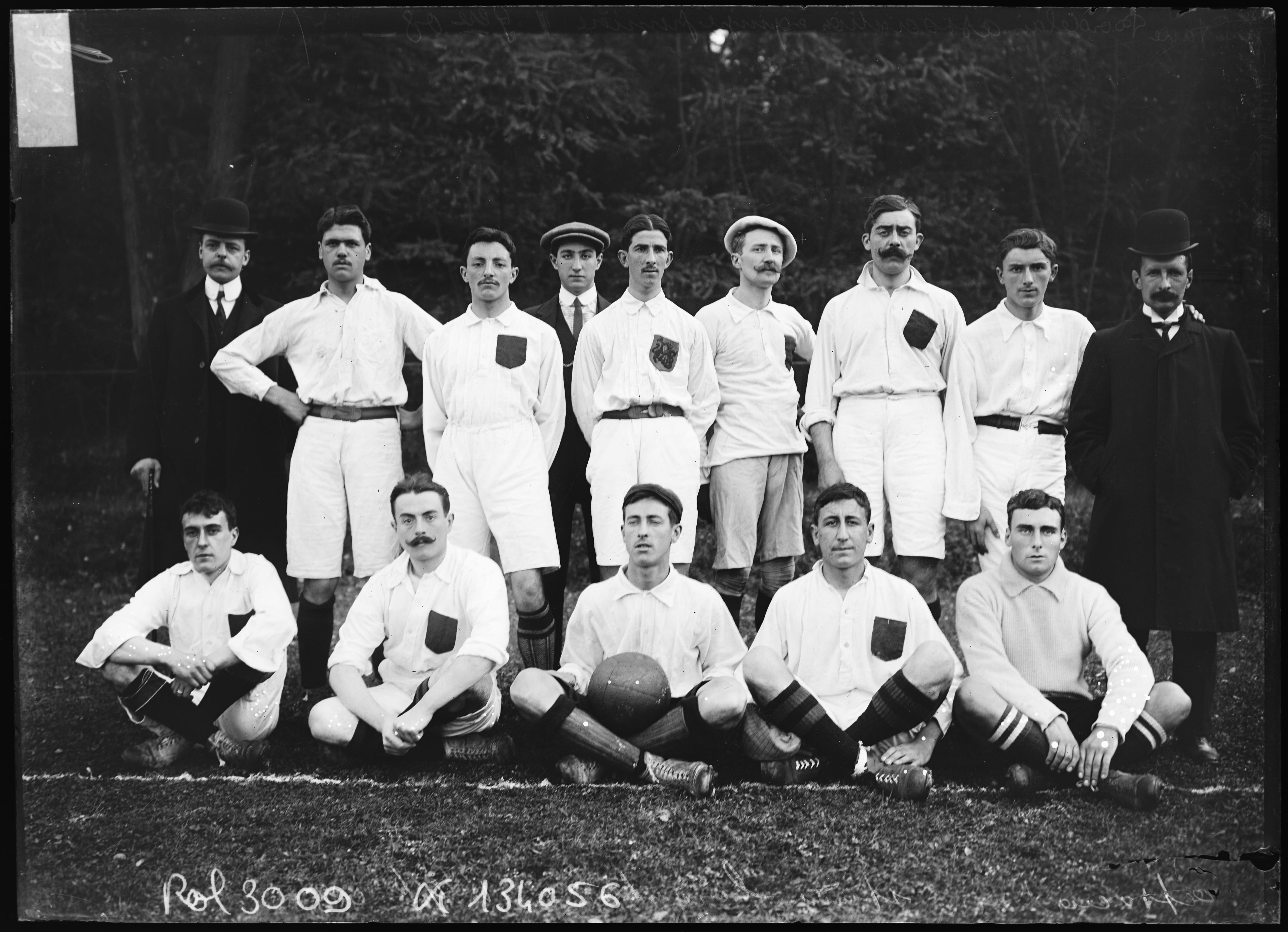
The Bordeaux Ground, 1908
The earliest surviving Rol plate of the French game — a provincial ground before the crowds arrived.
Everything starts on a field with a rope round it.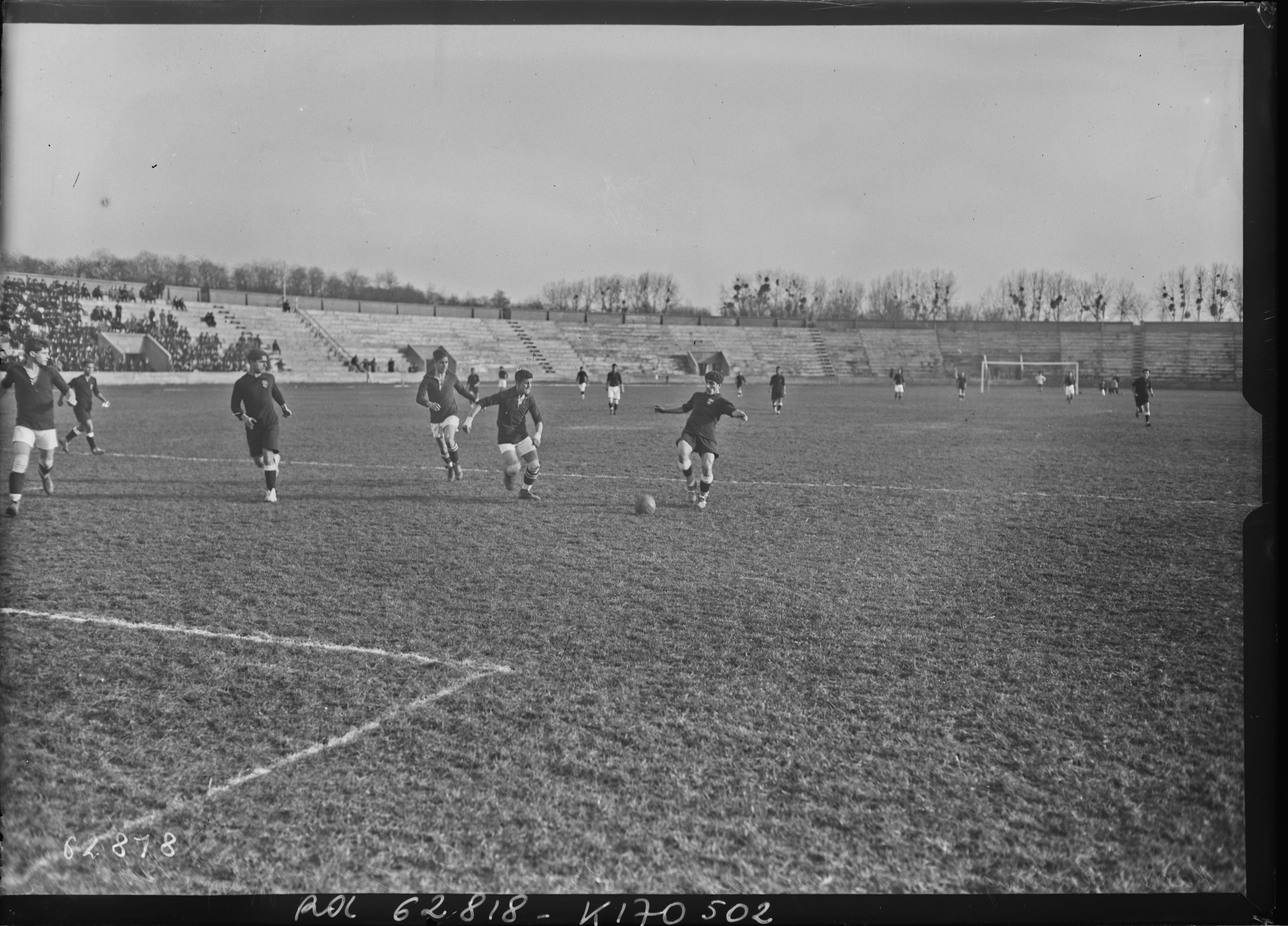
Agence Rol · 1920
Lisbon and Barcelona in Paris, Boxing Day 1920
A Portuguese club against a Catalan one, in France, two days after Christmas — the game already stateless.
The rules travelled faster than anything else Britain exported.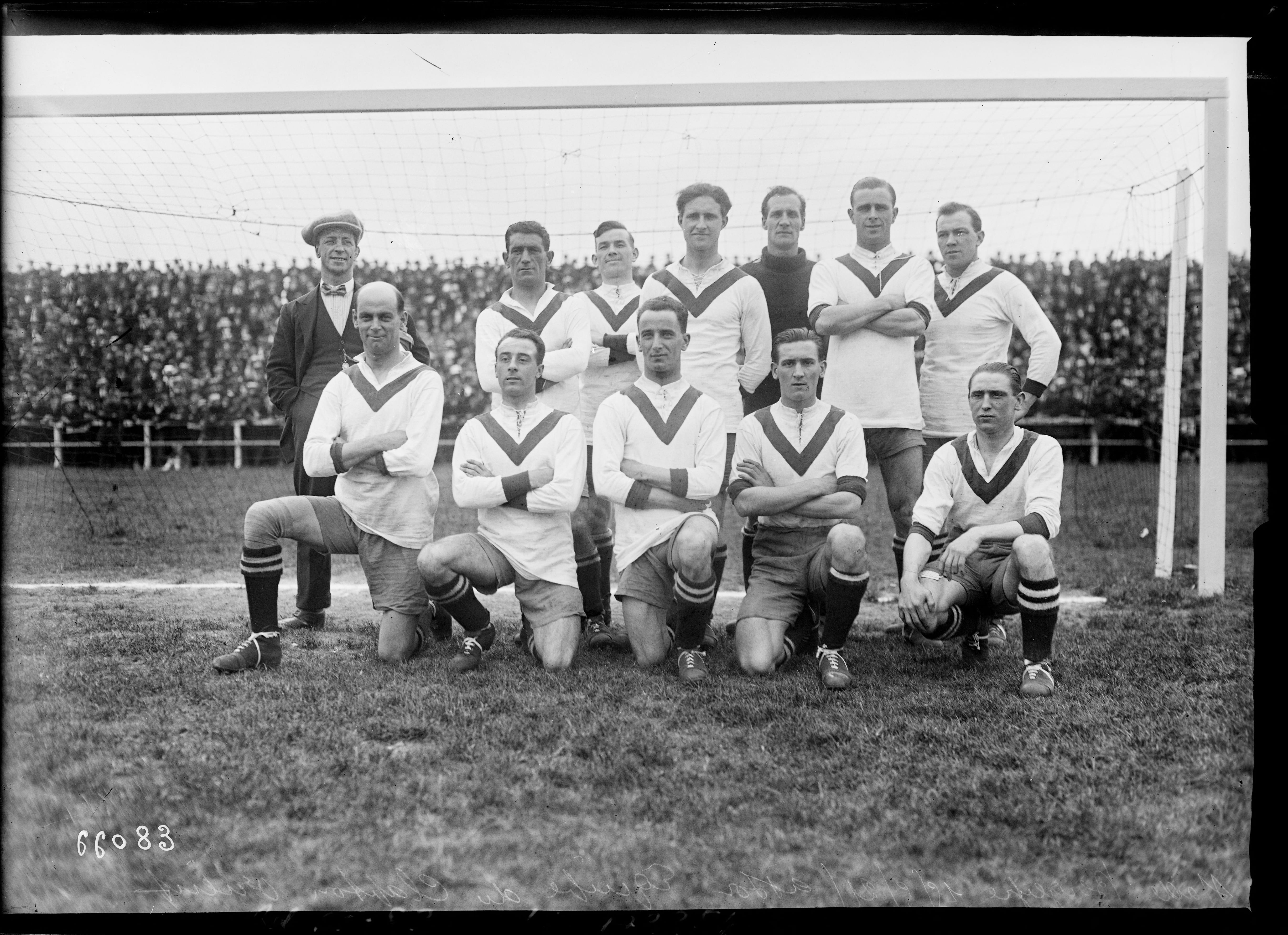
Agence Rol · 1921
An English Club in Paris, May 1921
A London side lines up at the Bergeyre — the missionary fixture, photographed at last.
Football was taught by demonstration, on tour, in the spring.